
IT REALLY doesn’t matter if the so-called PM16 comes from PAS or Bersatu given both core partners in the Perikatan Nasional (PN) opposition coalition have their respective Prime Minister (PM) candidates.
Eventually, PN will decide the candidate in the spirit of the coalition consensus.
However, if the opposition coalition is serious about contending for national power, they should iron out serious concerns with the current educational system.
The controversial and combustible nature of the education system should be meaningfully addressed.
The Pakatan Harapan (PH)-led coalition government seems to be incapable of addressing the problems of higher education particularly pertaining to student admission.
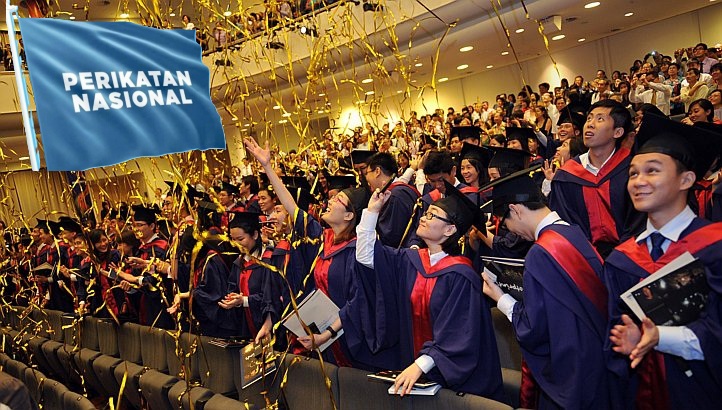
Without fail, non-Malay students – especially those with high grades whether in the matriculation programme or the STPM – tend to feel aggrieved by not getting places in the public universities.

Education reform a necessity
As it is, the Madani government has shamelessly defended the educational system as based on merit without acknowledging the fact that the matriculation programme caters primarily for the Malay students.
At the same time, something that is seldom acknowledged is the fact that foreign students have even outnumbered local students particularly the non-Malays.
Editor’s Note: The Kedah Education EXCO for Education Prof Dr Haim Hilman Abdullah has recently revealed that five leading public universities in Malaysia have a foreign student enrolment of 21.3% – a figure that far exceeds the intake of Chinese and Indian students combined.
Chinese students constitute only 13.5% while Indian students make up an even smaller percentage in these universities, namely Universiti Malaya (UM), Universiti Sains Malaysia (USM), Universiti Kebangsaan Malaysia (UKM), Universiti Putra Malaysia (UPM) and Universiti Teknologi Malaysia (UTM).
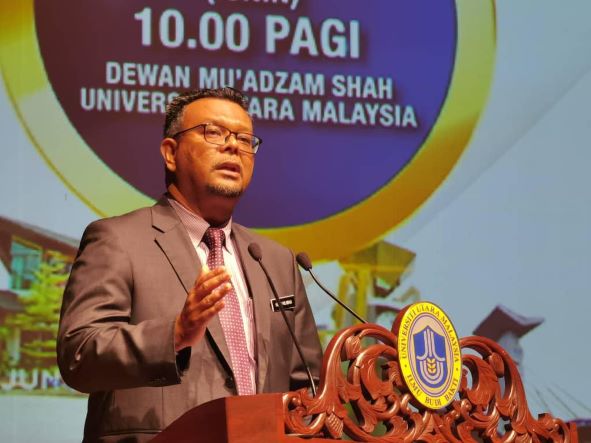
The former UUM vice-chancellor who is now a PAS member further revealed that out of a total enrolment of 611,698 students across 20 public universities, 53,322 (8.72%) are foreign students.
While PN aspires for national power, it refrains from taking a position on what ails the education in public universities in the country.
To date, PAS or Bersatu had refrained from criticising the undemocratic nature of the education system.
Non-Malays are PN’s kingmakers
One wonders how PN could be aspiring for national power without getting the support of the Chinese and Indians who constitute nearly 40% of the Malaysian population.
If PN could outline the necessary and progressive reforms for the educational sector, there is a possibility of attracting the support of the Chinese and Indians.
PN cannot operate in the make belief world that the support from the non-Malay communities is automatic.
While the political support from the Malays is not a serious problem for PN, the issue lies s the support of the Chinese and Indians.
There is necessity for PN to address the various problems faced by the Chinese and Indians in the country.
The Madani government has reached a saturation point in terms of addressing the concerns of the Chinese and Indians.
Is PN prepared to offer a substantive alternative rhetoric in gaining their political support?
As far as PAS is concerned, the Islamist party’s non-Muslim support wing (DHPP) might not be the model that it should rely upon. – Sept 19, 2025
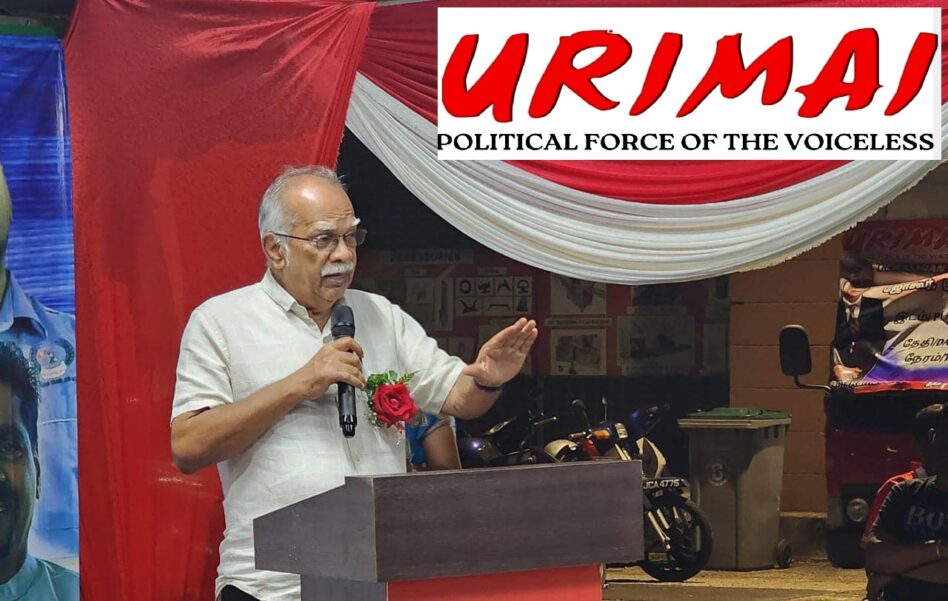
Former DAP stalwart and Penang deputy chief minister II Prof Ramasamy Palanisamy is chairman of the United Rights of Malaysian Party (Urimai) interim council.
The views expressed are solely of the author and do not necessarily reflect those of Focus Malaysia.