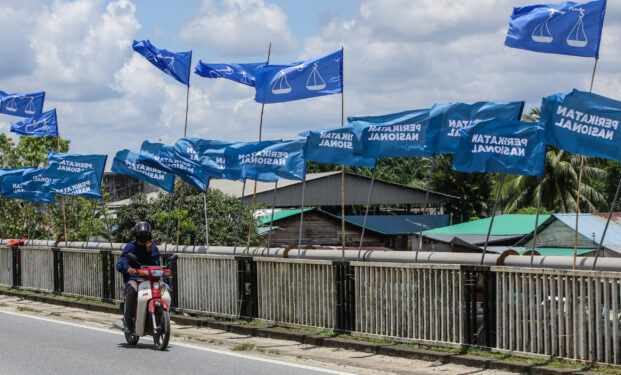

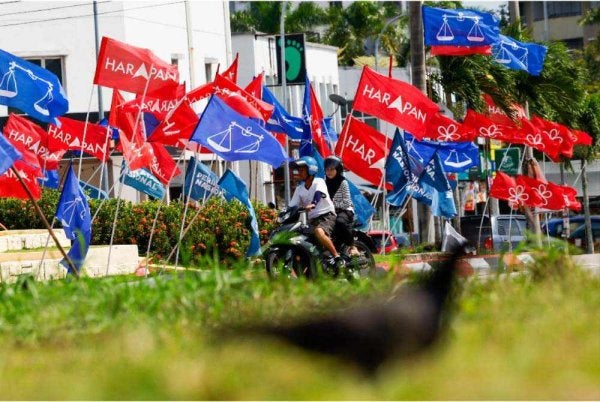
THE electoral alignment between BN and PN in the Negeri Sembilan state election created a game-changing wave of cross-transfers of votes.
This left no single party with a majority to govern independently, according to political analyst Liyana Marzuki.
Unlike the previous state election in Johor, where PN failed to capture seats and opposition votes swung largely to BN, the strategic pact in Negeri Sembilan paid off, delivering 18 seats to BN and 7 to PN.
However, with 19 seats needed to form a government, BN fell just short of a solo majority.
The outcome gives PN significant leverage to demand key executive council portfolios, proving that their grassroots collaboration works and setting a strong precedent for upcoming polls in states like Melaka, says Liyana.
For PH, the polls proved to be a reality check after the coalition surrendered six seats under heavy pressure from the united BN-PN front and shifting non-Malay voter sentiment.
While PH leaders have blamed their losses on opposition narrative-spinning around race and religion, the core driver of voter dissatisfaction was economic burden rather than identity politics, she noted.
Small business owners, middle-class families, and progressive voters felt the squeeze from policies such as e-invoicing, tax adjustments, and subsidy rationalisation.
She warned that without immediate self-reflection and tangible economic relief, voters who once rejected BN could increasingly view them as a viable, familiar alternative, risking PH’s status as a multi-term government.
On the opposition side, PN successfully expanded its regional footprint from five to seven seats, carving out crucial inroads into the West Coast.
Yet, its momentum was clouded by friction with the royal institution following moves by alliance figures that challenged traditional protocols surrounding the Yamtuan and local Undangs.
Ultimately, she said, the royal institution emerged as the firmest pillar amid the political manoeuvring.—Aug 2, 2026
Main image: sinarharian.com