
ONE of the essential principles of conservation is recognising that natural, cultural and historical heritage do not always exist in separate compartments. Sometimes they are part of the same landscape, and protecting one means protecting the others.
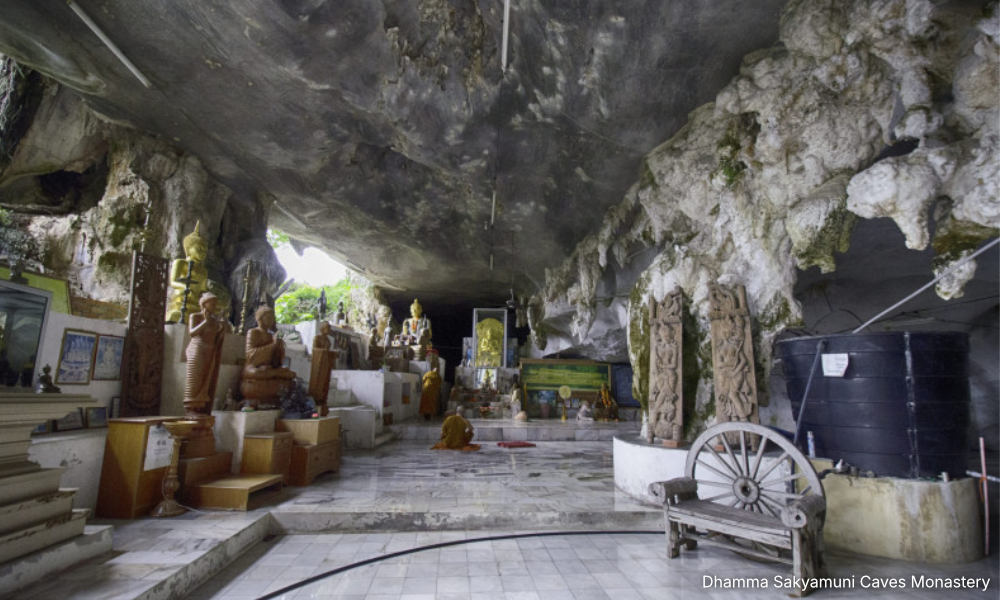
The century-old Dhamma Sakyamuni Caves Monastery at Gunung Kanthan, Chemor, Perak, is one such place.
The monastery is built within the limestone caves of Gunung Kanthan, one of the limestone hills within the Kinta Valley National Geopark. Its future has been closely tied to the fate of the hill, which has already been extensively affected by quarrying.
About 80% of Gunung Kanthan has reportedly been cleared for quarrying, leaving the remaining areas particularly important for biodiversity and conservation.
The hill is home to rare and endemic species, including the critically endangered Kanthan trapdoor spider, Liphistius kanthan. Conservationists have also highlighted rare flora and other fauna found in the area.
The monastery’s situation is also not simply a question of a proposed eviction.
In 2023, the Court of Appeal allowed Associated Pan Malaysia Cement to evict the monastery’s occupants from the land.
The dispute has continued through further legal proceedings, while heritage and environmental groups have repeatedly called for the protection of Gunung Kanthan and the monastery.
This legal history makes it even more important for the authorities to consider the issue beyond the immediate question of land possession.
A century-old cave monastery is not an ordinary building that can simply be relocated and replaced elsewhere. Its cultural and religious significance is inseparable from the caves and limestone landscape in which it has existed for generations.
Nor can Gunung Kanthan be treated simply as a source of limestone.
The hill forms part of the distinctive karst landscape of the Kinta Valley and contains geological and biological values that cannot be recreated once destroyed.
Badan Warisan Malaysia has previously described Gunung Kanthan as having geological, biological, cultural, tourism and recreational values that could be irreversibly lost through quarrying.
This is why the monastery should not be viewed as an obstacle to an environmental discussion. It is part of that discussion.
The Perak government should therefore take a holistic approach to the future of Gunung Kanthan.
The question should not simply be whether a particular parcel of land can legally be quarried, but what Malaysia stands to lose when an irreplaceable landscape and its associated cultural heritage are damaged or destroyed.
Perakians should demand clear, long-term policies for protecting environmentally and culturally significant sites such as Gunung Kanthan.
The Kinta Valley National Geopark cannot have much meaning if some of its most valuable limestone landscapes remain vulnerable to irreversible destruction.
There must also be room for meaningful dialogue between the state government, the quarry operator, the monastery, conservationists and heritage organisations.
Economic activity matters. The quarrying industry supports jobs and supplies materials needed for development.
But economic value should not automatically override environmental and cultural value, particularly when the resource being destroyed cannot be restored.
Once a limestone hill is blasted away, we cannot grow it back.
Once a unique species disappears, we cannot simply bring it back.
And once a century-old place of worship embedded within that landscape is lost, moving its occupants elsewhere does not recreate its history.
The question facing Perak is therefore bigger than the fate of one monastery.
It is whether we are prepared to protect the natural and cultural heritage that gives our state its identity, even when doing so requires difficult choices.
Gunung Kanthan has already lost much of its original landscape to quarrying.
We should not wait until there is nothing left to protect before deciding that it was worth saving.
Some things can be replaced. Gunung Kanthan cannot. ‒ Aug 18, 2026
Ronald Benjamin is a human resources practitioner based in Ipoh. He is currently secretary of the Association for Community and Dialogue.
The views expressed are solely of the author and do not necessarily reflect those of Focus Malaysia.
Main image: Dhamma Sakyamuni Caves Monastery