
THE four states that make up SG4 – Kedah, Kelantan, Terengganu and Perlis – have long been among Malaysia’s less developed economies.
Together, they are home to approximately 5.7 million people and cover more than 38,000 sq km, yet contribute less than 10% of national gross domestic product (GDP), despite accounting for roughly one-fifth of the country’s population.
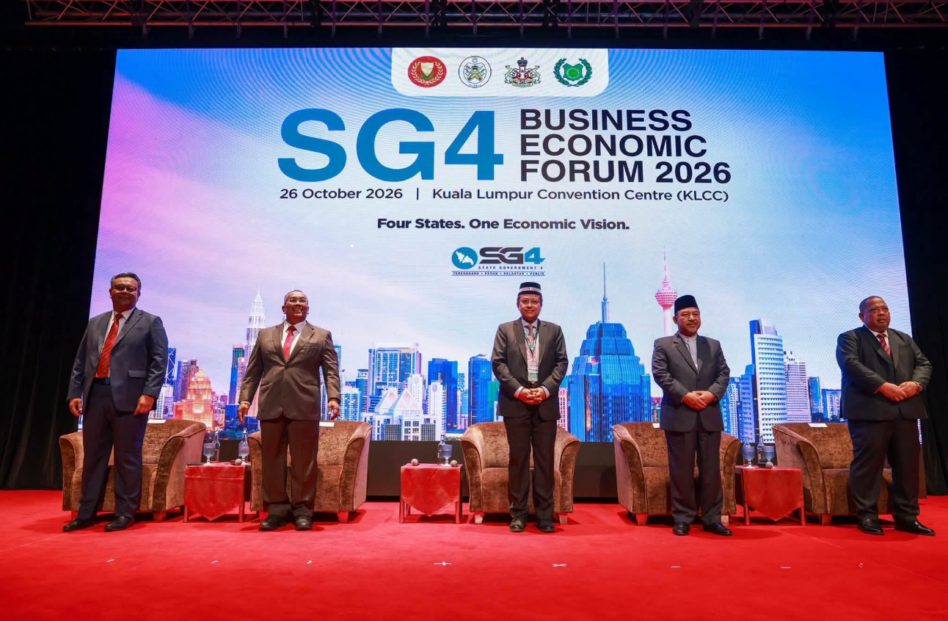
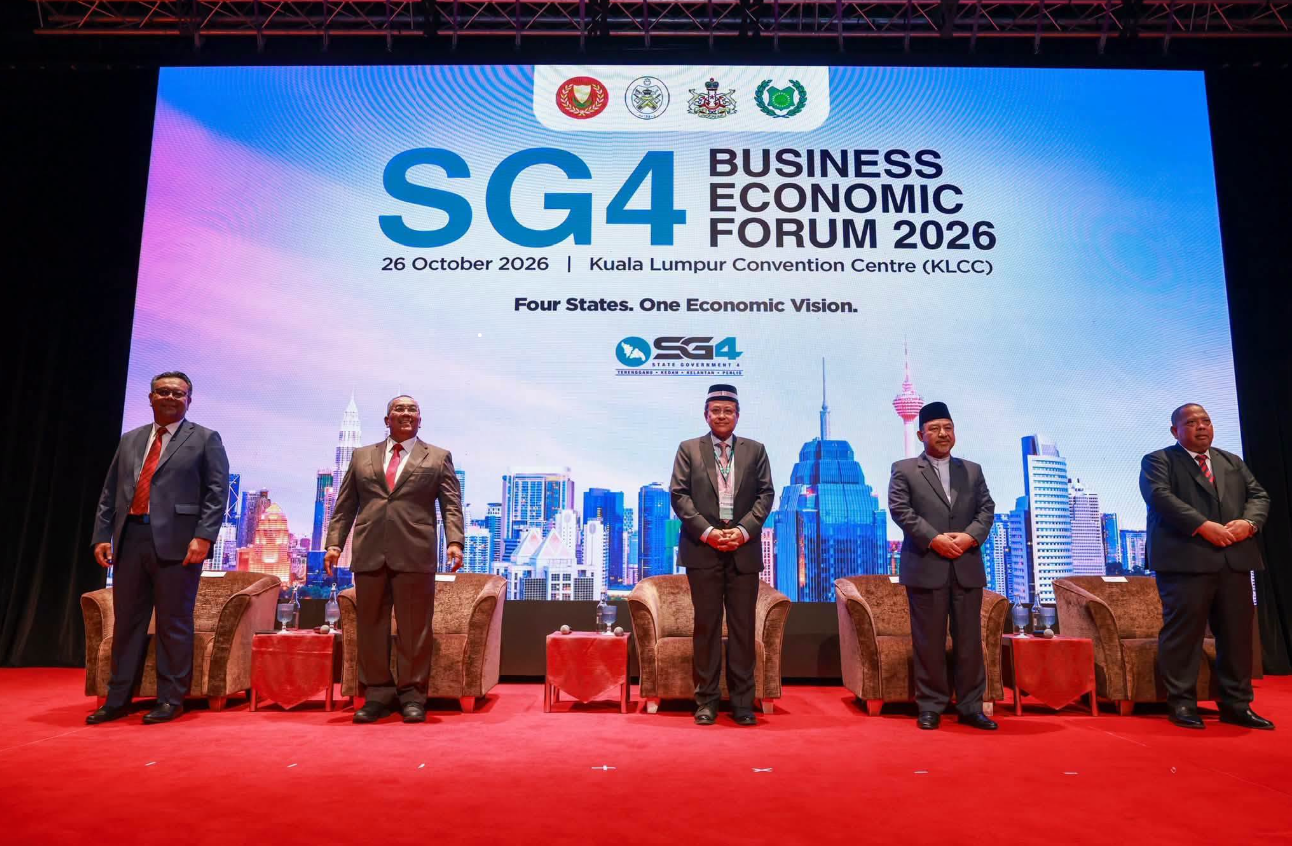
At the Kuala Lumpur Convention Centre on Oct 26, the coalition’s leaders gathered for the SG4 Business and Economic Forum 2026 under the theme “Four States. One Economic Vision”, seeking to demonstrate that this narrative can be reversed.
The headline message, delivered through a speech read on behalf of adviser Tun Dr Mahathir Mohamad, was one of untapped potential.
SG4 was described as a “sleeping giant” with the land, resources and strategic geography to become a productive economic region if its four states pooled their strengths rather than competed with one another.
The forum’s discussions, however, revealed a grouping still grappling with the fundamental tension between its economic ambitions and political origins.
One of the clearest messages was that SG4 must resist relying on raw commodity extraction, particularly in relation to rare earth elements (REE).
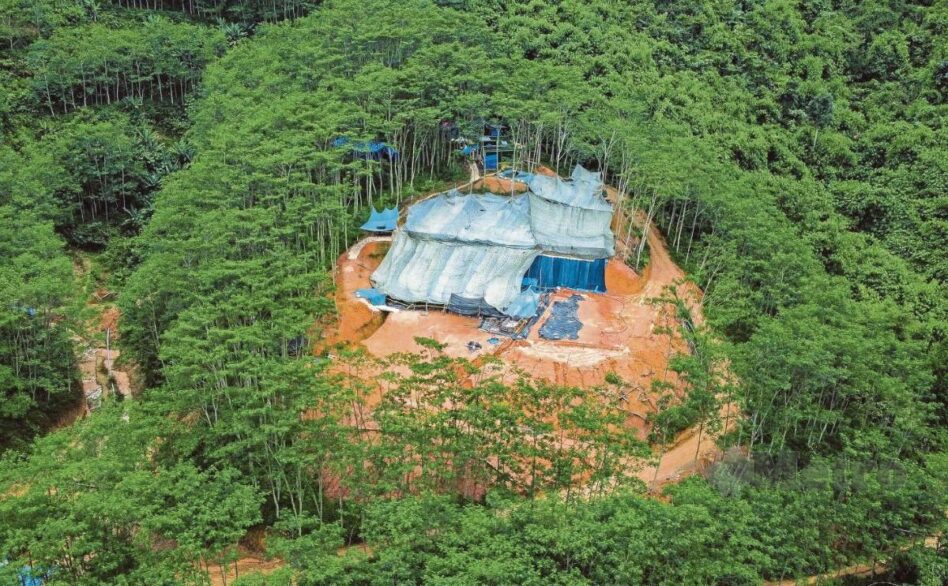
Dr Mahathir’s prepared remarks cautioned against simply “retrieving and selling” REE, arguing that greater returns would come from downstream processing and value-added activities.
This is a welcome departure from the resource-dependent model that has left some resource-rich but economically underdeveloped regions struggling to translate natural wealth into broad-based prosperity.
The forum also presented a cluster-based approach to regional integration. Rather than treating the four states as separate investment destinations, SG4 Group Sdn Bhd – the jointly owned company in which each state holds a 25% stake – aims to present them as a coordinated investment platform.
Its economic agenda covers infrastructure and logistics, trade and investment, agriculture and food security, education and human capital, and new resources and future income generation.
Each state brings different strengths and ambitions: Kedah’s manufacturing and semiconductor ecosystem, Kelantan’s agricultural potential, Terengganu’s oil and gas resources, and Perlis’s cross-border trade opportunities with southern Thailand.
Dr Mahathir’s speech also ventured into cultural commentary, warning that “shortcuts, quick profits, corruption” and a departure from Islamic principles of honesty had hindered Malay progress.
He noted that SG4’s predominantly Malay Muslim population placed particular importance on the responsibility to demonstrate ethical leadership.
More significantly, the political cohesion of SG4 faces questions. Recent changes in Perlis’s political leadership have raised concerns about whether the grouping can maintain a consistent four-state commitment.
While Perlis remains part of the SG4 platform, political changes within a member state could complicate the continuity of regional economic planning.
An economic bloc whose political alignment may shift with electoral outcomes presents challenges for investors seeking regulatory certainty and long-term policy commitments.
The forum’s organisers emphasised that SG4 would work alongside federal agencies such as the Malaysian Investment Development Authority (MIDA) and the Northern Corridor Implementation Authority (NCIA), rather than compete with them.
Nevertheless, a grouping formed by opposition-led state governments seeking greater economic autonomy may still face political sensitivities in its dealings with Putrajaya.
The forum’s commitment to people-centred development, including quality employment, local entrepreneurship and inclusive growth, is commendable.
Consolidating smallholders under professional management to support large-scale commercial agriculture is a sensible structural proposal. Recognising that SG4’s greatest asset is its people, rather than its minerals, is also economically sound.
But the gap between ambition and implementation remains considerable. The forum offered no detailed human capital roadmap, specific skills-training commitments aligned with the semiconductor and downstream mineral industries it hopes to attract, or clear timelines for regulatory improvements that could make the states more attractive to investors.
Dr Mahathir’s absence due to health reasons, with his son Tan Sri Mokhzani Mahathir delivering his prepared speech, also highlighted the project’s association with a prominent political figure rather than a fully institutionalised leadership structure.
The SG4 Business and Economic Forum 2026 succeeded in presenting a coherent regional economic narrative and bringing all four state leaders together to articulate their ambitions in the language of investment and industrial development.
Its emphasis on value-added REE processing, coordinated industrial development and cross-border trade is strategically sound.
What remains unproven is whether SG4 can transcend its political origins. Investors need confidence that its economic institutions can withstand electoral changes, that its commitment to good governance extends beyond rhetoric, and that its relationship with the federal government will be defined by cooperation rather than political rivalry.
The sleeping giant has stirred. Whether it rises will depend not on the vision presented at a forum, but on the institutions, policies and decisions that follow. ‒ Nov 2, 2026
The author is affiliated with the Tan Sri Omar Centre for STI Policy Studies at UCSI University and is an Adjunct Professor at the Ungku Aziz Centre for Development Studies, Universiti Malaya.
The views expressed are solely of the author and do not necessarily reflect those of Focus Malaysia.
Main image: Facebook/Rohani Ibrahim