


TECH hardware companies could benefit from greater domestic sourcing as localisation of supply chains may improve operating margins and inventory efficiency amid the ongoing semiconductor upcycle.
According to Kenanga Research, every 10-percentage-point (ppt) increase in local procurement is associated with a 0.52ppt improvement in operating margin and an 8.7-day reduction in inventory days.
The findings are based on an assessment of nine Malaysian technology hardware companies covering 2023 to 2025, using 27 company-year observations and 18 year-on-year changes for regression analysis.
However, Kenanga cautioned that localisation does not automatically translate into stronger financial performance, as operating dynamics and supplier relationships remain important considerations.
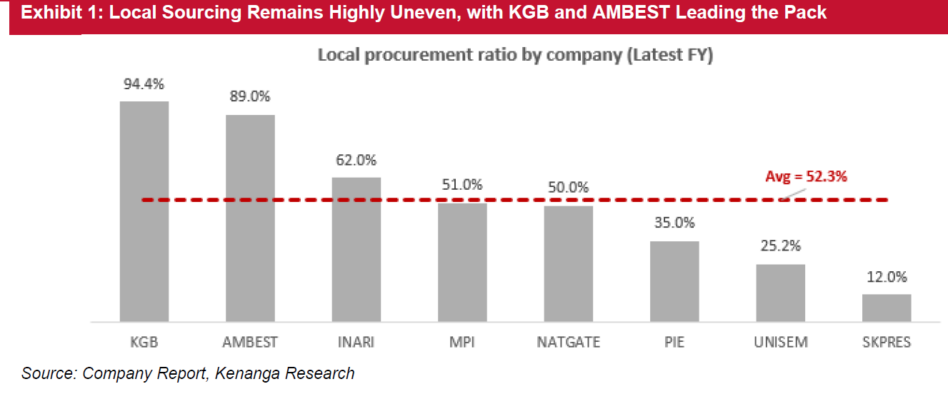
The average local procurement ratio among the companies stood at 54.4% in 2025, with KGB recording the highest domestic sourcing exposure at 94.4%, followed by AMBEST Group at 89%, UWC at 71.4% and Inari Amertron at 62%.
Conversely, SKP Resources had the lowest local procurement ratio at 12%, followed by Unisem at 25.2%, reflecting differences in manufacturing activities, availability of qualified local suppliers and customer-specific sourcing requirements.
In terms of localisation progress, NationGate Holdings recorded the largest increase, with its local procurement ratio rising 18ppt from 32% in 2023 to 50% in 2025. PIE Industrial followed with a 12ppt increase, while KGB recorded an 11.8ppt improvement.
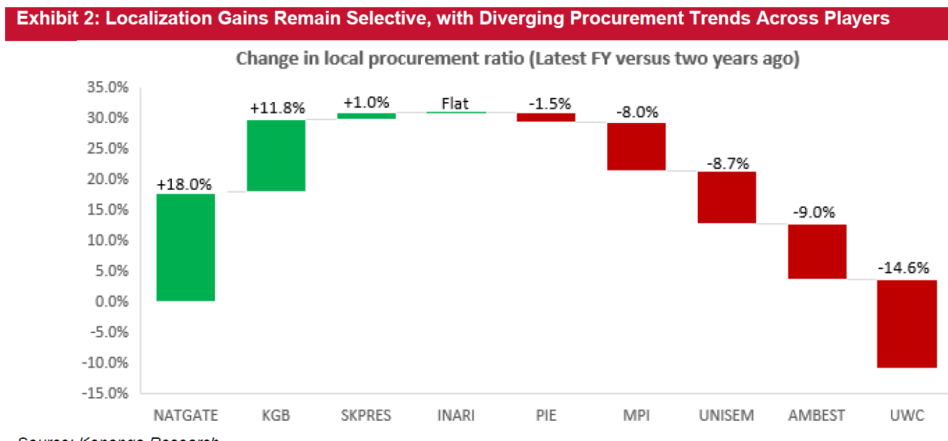
However, UWC experienced the largest decline of 14.6ppt, followed by AMBEST and Unisem, which recorded decreases of 9ppt and 8.7ppt respectively.
Despite the potential benefits, Kenanga’s regression analysis found that every 10ppt increase in domestic sourcing was associated with a 14.2-day increase in the cash conversion cycle, suggesting that supplier payment terms could offset some inventory-related improvements.
The research also highlighted contrasting company performances. KGB improved its operating margin by 6ppt to 15% alongside higher local sourcing, while NationGate’s margin declined 9.1ppt to 3.2% despite a significant increase in domestic procurement.
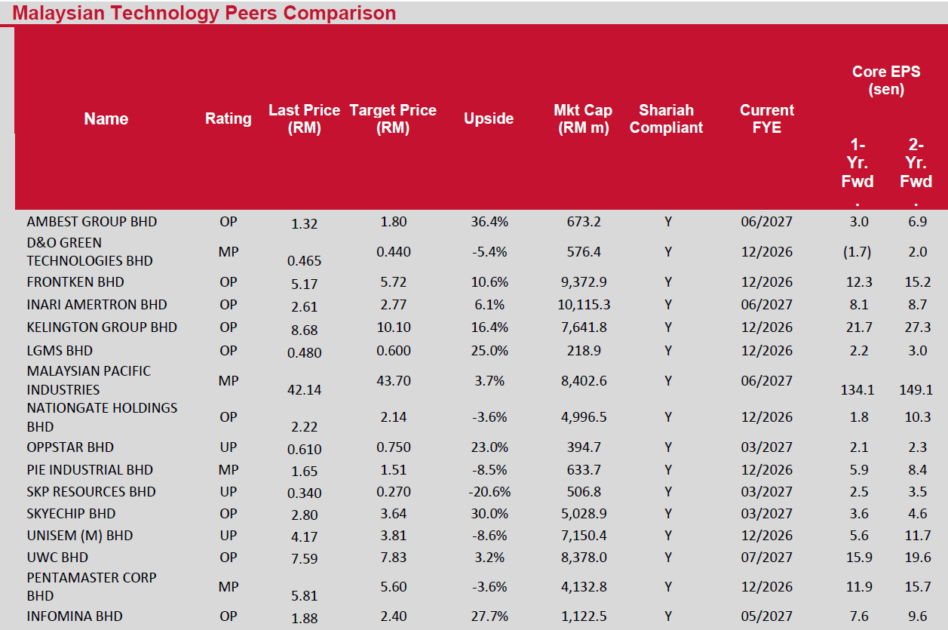
Kenanga said localisation should be viewed as an execution advantage rather than an immediate earnings catalyst, particularly as semiconductor demand accelerates and manufacturing capacity tightens.
A stronger domestic supplier network could improve production continuity, delivery reliability and responsiveness to customer orders.
Nevertheless, Kenanga maintains a NEUTRAL rating on the technology sector, noting that companies must balance domestic sourcing with supplier diversification, cost competitiveness and quality requirements.—Oct 30, 2026
Main image: MIDA