
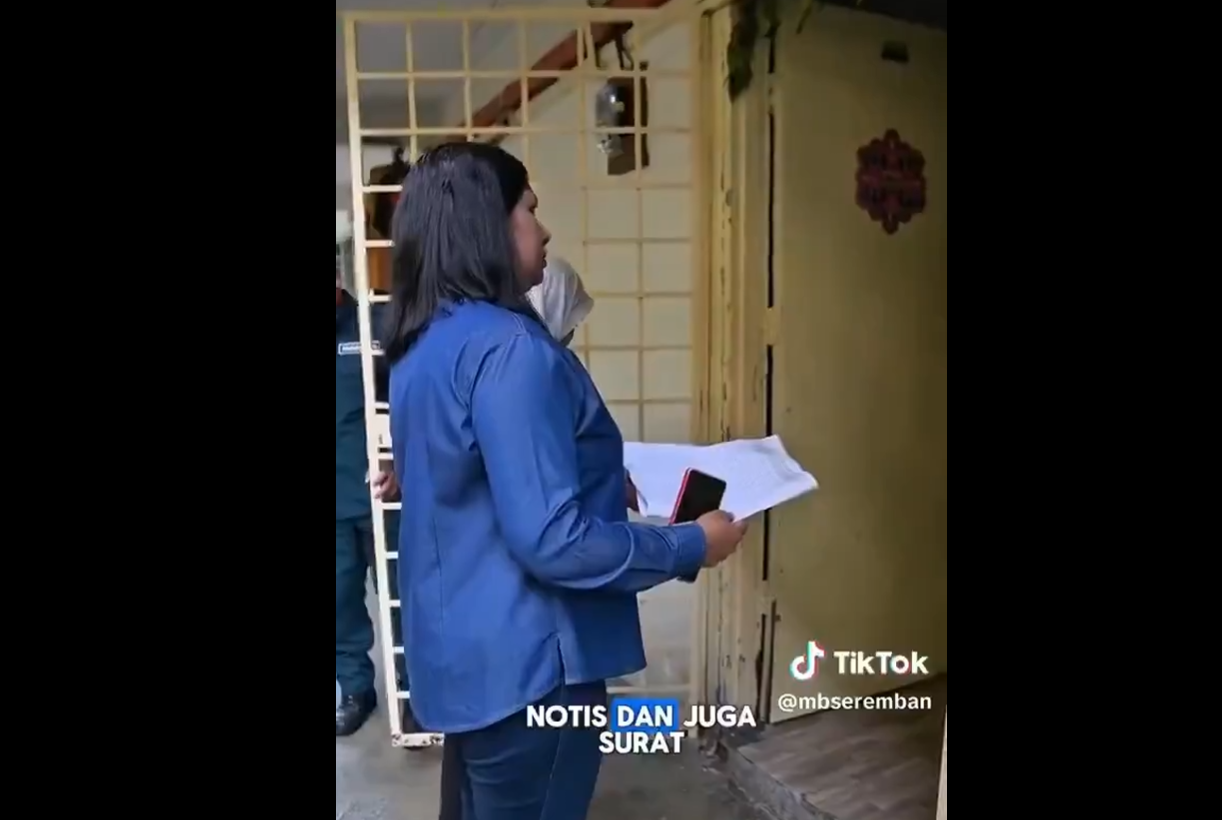
RESIDENTS of a government flat are facing the removal of their doors after authorities reportedly moved to take action against occupants who have allegedly failed to pay rent for years.
The issue was highlighted in a social media post by X user Abg Long, who claimed that some residents had been living in the government housing for as long as 19 years without paying rent.
According to the post, the monthly rental was only RM150, but one tenant had accumulated arrears of about RM34,000 after years of non-payment.
The post also raised concerns that some of the people occupying the flats were not even officially registered tenants.
Note, however, that this is not new, having happened several years back as covered in an old post on Focus Malaysia.
Regardless, the reported enforcement action has drawn attention to the difficulties faced by authorities in managing public housing, particularly when units remain occupied by people who have outstanding rental payments or whose occupancy status has not been properly documented.
The reported decision to remove doors represents a particularly drastic form of enforcement, potentially leaving affected units inaccessible and signalling that the authorities are moving to regain control of housing that has allegedly been occupied without proper rental arrangements.
Sewa cuma rm150 sebulan.
Tak bayar 19 tahun. Tunggakan 34k. pic.twitter.com/Bt9YHzywXH— Abg Long (@AbgLongUdang) August 18, 2026
At the heart of the issue is the question of accountability in government-subsidised housing.
Such flats are intended to provide affordable accommodation for eligible households, with low rental rates designed to make housing more accessible to those who need it.
However, prolonged non-payment could place a financial burden on housing authorities while also preventing other eligible applicants from accessing the limited supply of affordable units.
The presence of unregistered occupants adds another layer to the problem. Without proper records, authorities may find it difficult to determine who is legally entitled to remain in a unit, while legitimate tenants may also face uncertainty over their status.
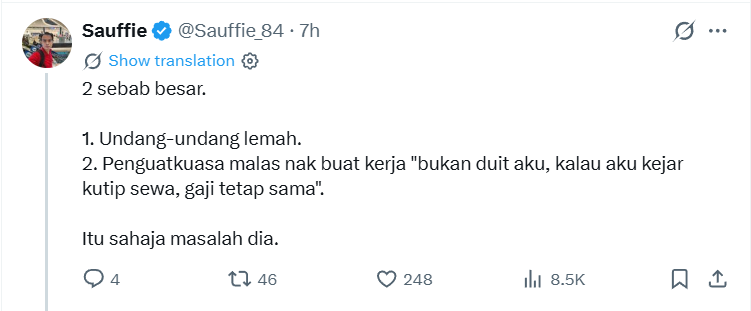
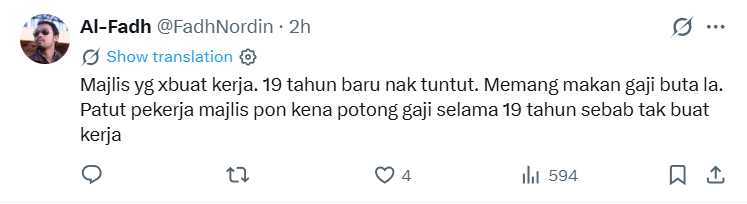
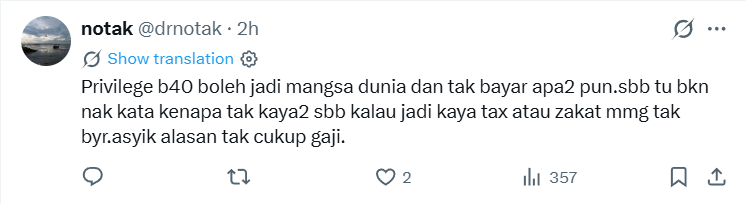
Netizens have much to say about it too:

The case highlights the need for stronger monitoring of government housing, including regular verification of tenants, clearer enforcement procedures and mechanisms for residents facing genuine difficulties in meeting rental obligations.
While residents should have access to affordable housing, subsidised accommodation also comes with responsibilities.
The reported RM34,000 arrears from a RM150 monthly rental underscore the scale of the problem when those obligations go unenforced for years.
The authorities’ latest action could therefore serve as a reminder that government housing is a public resource, one that needs to be managed fairly, transparently and sustainably.—Aug 19, 2026
Main image: @AbgLongUdang (X)