
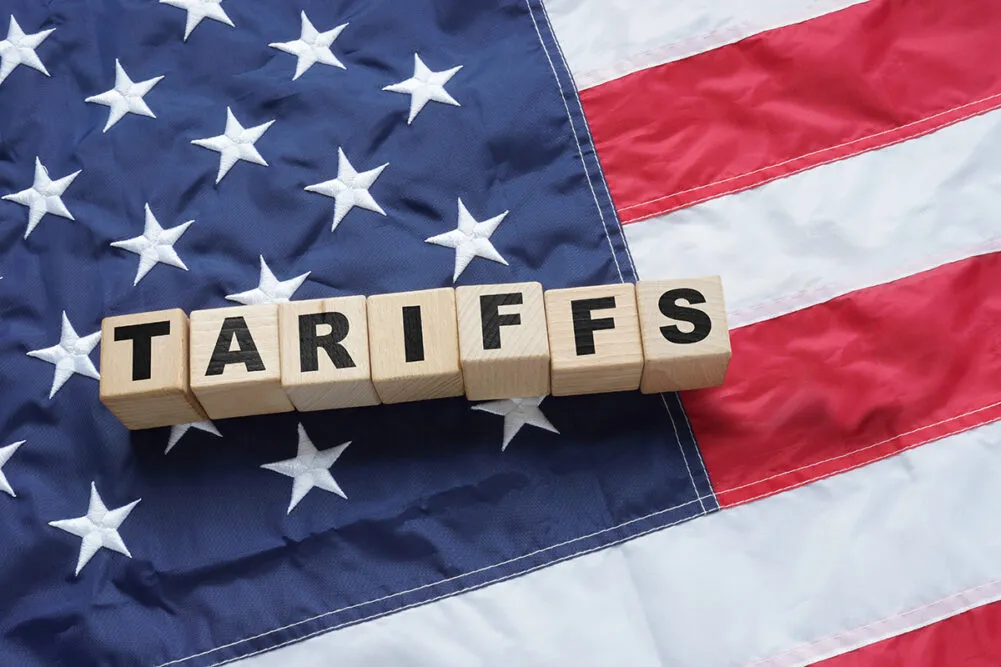
IN A 6 to 3 vote, the US supreme court found that the reciprocal tariffs that were enacted under the International Emergency Economic Powers Act (IEEPA) as unlawful.
Swiftly thereafter, President Trump ordered, under Section 122 of the trade act of 1974, to raise tariffs to 10% via order which he later said would be increased to 15% (maximum allowable).
Treasury secretary Scott Bessent had also added that the 2026 revenue from tariffs would remain. Thus, Kenanga interprets that instead of sweeping tariffs, sector specific tariffs would be increasingly in play.
While tariffs under IEEPA have been over-ruled, those under the powers of Section 301 and also Section 232 are intact.
The former relates to addressing unfair trade practices affecting American commerce, while the latter of Section 232 provides the president authority to impose restrictions on imports that threaten US national security.
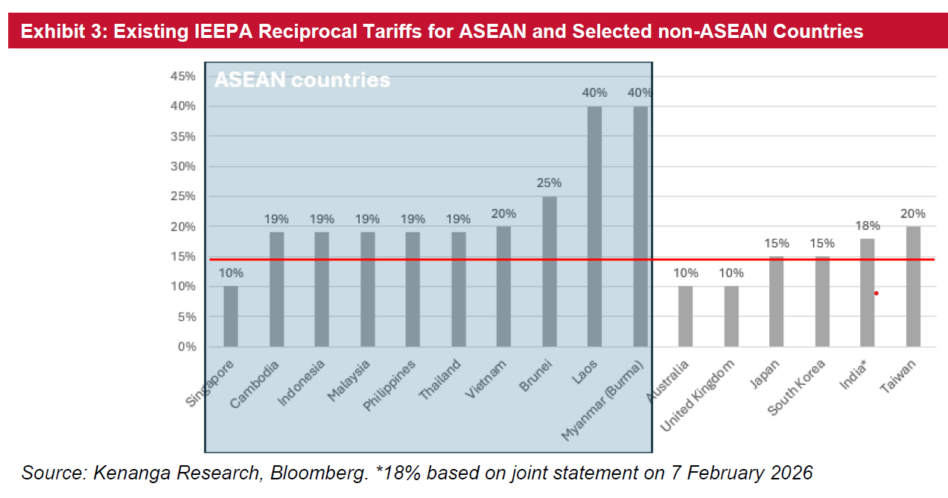
Kenanga’s base case is that Malaysia would for now honour the agreement that has been entered into; the agreement, has yet to be ratified.
Trump’s trade representative, Jamieson Greer, has said that Malaysia and Cambodia would be taxed at negotiated rates of 19%, despite the universal rate being lower.
Countries that have agreements with US tariffs include Indonesia and Cambodia (all signed but not locally ratified).
Usually, the agreement has to be put through the paces for domestic lawmaker approvals, and the agreement will come into force 60 days after exchange of documents.
ASEAN countries, by virtue of mostly having a reciprocal tariff rate higher than the 15% should from optics benefit from interest.
“From a relative basis, we expect a roll-back of reciprocal tariffs would not likely result in Malaysia emerging as the chief beneficiary, given the fact that US trade deficits stack behind Thailand, Vietnam albeit slightly better than Indonesia,” said Kenanga.
Kenanga foresees there is room for negotiation of the Trade Agreement, as the Ministry of Trade and Industry have said that Reciprocal Trade Agreement with US can’t be reversed, but there would be opportunity to request for renegotiation on grounds of unfair elements.
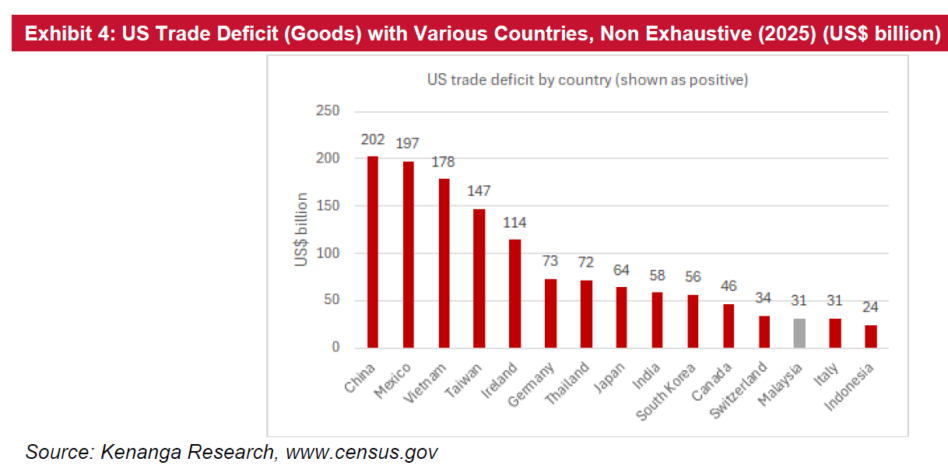
The incentive for other governments to gain a competitive advantage by entering into trade deals early is likely diminished, and thus those that have entered into agreements may also look to renegotiate lower.
Indonesia, which has also finalised a deal recently to lock in a 19% rate on exports, have said it is ready to face all possibilities, adding that agreed-upon tariff exemptions items will prevail.
“For the near term the ability to get to a lower tariff rate would naturally benefit exporters, although we think that it is too soon to call at this juncture,” said Kenanga.
Kenanga highlighted that exporters may benefit, including gloves, manufacturing including plastics and packaging. —Feb 23, 2026
Main image: Megat Faizal Musa & Co