
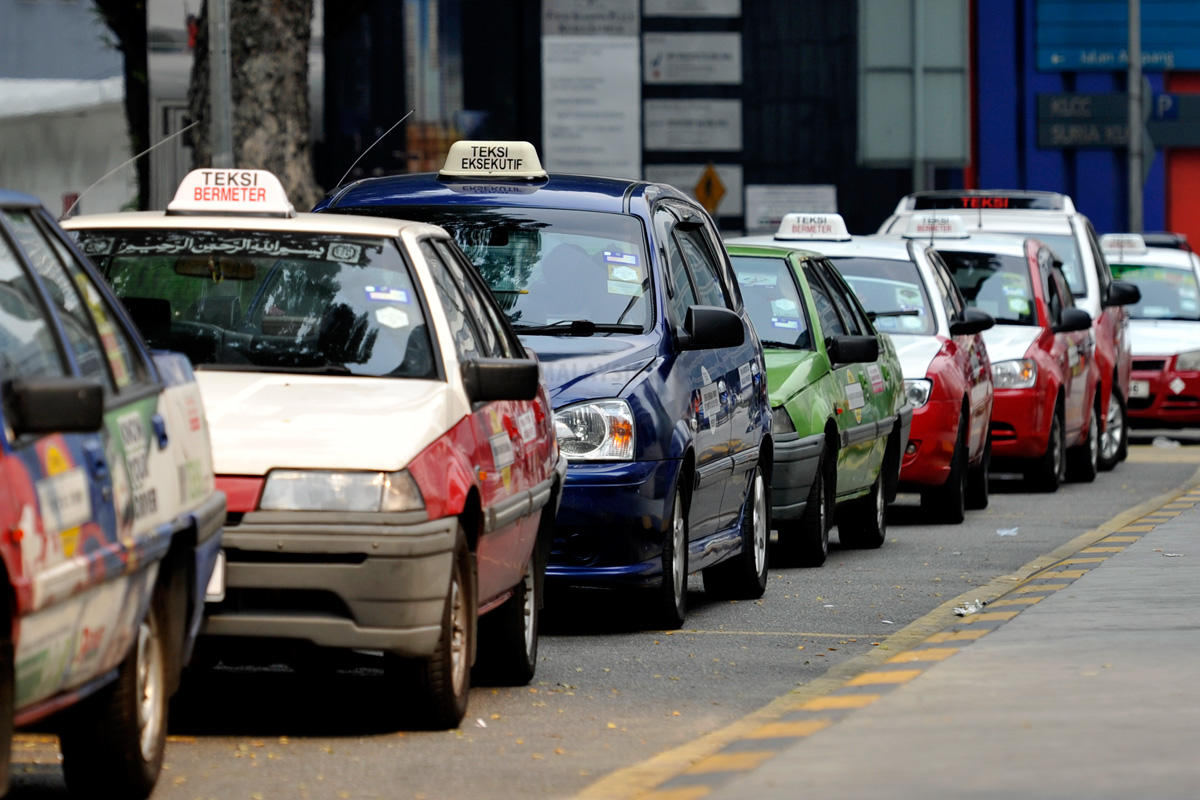
AT its height in April 2014, there were 75,550 ‘taxis’ in the peninsula, comprising 39,531 budget taxis, 3,111 executive taxis, 3,132 airport taxis, 996 limousine taxis, 17,378 hire cars which were taxis not using meters, and 11,402 hire-and-drive vehicles which were for rental and driven by customers.
Their numbers have since plummeted, particularly metered taxis in the Klang Valley, with only about 5% remaining. It would be difficult to spot and flag one down.
As they are hardly used by foreigners, the allocation could be better spent training other tourism frontliners such as tour van drivers often acting as driver guides.
Nearly all classroom courses conducted by training providers are not effective, although the programmes may look good on paper and meet standard criteria.
This is because they are more like briefings with the speaker unveiling impressive facts and figures plus a long list of dos and don’ts for participants to digest and remember.
Needless to say, without demonstration and practice in such briefings, all are forgotten in no time. It would be more effective for information to be forwarded using PDF files or videos for interested participants to study in advance.
They could be encouraged to learn if told there would be a short objective test during the course.
This has worked wonderfully well in 1999 when I was a trainer for Malaysia Host, which was later renamed Mesra Malaysia.
Malaysia Host started as Canada Host, a world-class training programme developed in conjunction with the World Expo at Vancouver in 1986 and distributed all over the world.
As per international norm, the number of participants was limited to 25, as the trainer must be able to assess the performance of every participant during training.
Half the total scores are awarded by the trainer and the other half from objective tests. No certificate will be awarded for failing either in participation or objective test.
Not many trainers have the experience in driving taxis or training taxi drivers. I have both plus insight knowledge of the industry, having written hundreds of published articles on taxi drivers and e-hailing services, which was formally legalised in 2017 when amendments to two Acts were passed in Parliament.
E-hailing companies have full control of their drivers and those found to have transgressed could be swiftly suspended.
As such, they are on guard and likely to behave to ensure passengers do not complain. If drivers need training, the e-hailing companies have the resources and means to conduct them.
Earlier in 2014, I was engaged by the Land Public Transport Commission (SPAD) to conduct training for 1,000 Teksi 1Malaysia (TEKS1M) drivers in Kuala Lumpur, Penang and Johor Baru.
I also conducted training for hire car drivers operating pink vans in Pangkor, and Teksi Wanita for the leading taxi company in Kuala Lumpur.
But I was not involved in the earlier Tourism Taxi Ambassadors programme launched in July 2012 by the then prime minister Datuk Seri Najib Razak at Dataran Putra.
In attendance were then tourism minister Datuk Seri Dr Ng Yen Yen, several cabinet ministers and more than 500 taxi drivers.
Training had commenced earlier in March and as of June 28, about 2,315 taxi drivers have been selected to undergo training.
It was reported that some 4,000 taxi drivers will be appointed as ambassadors after they have completed a one-day course at the Malaysian Tourism Centre.
During the launching ceremony, Najib told taxi drivers they are the “pulse of the ecosystem” for tourism as they meet and interact with tourists who come to the country, and well-trained taxi drivers can help shape and improve tourists’ perception of Malaysia.
But alas, this was not to be. Later, a local reporter looking very much like a Caucasian tourist went undercover and approached more than 10 taxi drivers in Kuala Lumpur.
All refused to use the meter and quoted exorbitant fixed fares, except for one charging RM10 for a short distance.
Her report “KL cabbies living up to the worst taxi drivers in the world reputation” was published by a local newspaper on Oct 7, 2012.
LondonCabs.co.uk had ranked Kuala Lumpur as having the worst taxi drivers in the world in 2014 and 2015. All the ‘training’ and calling them Tourism Taxi Ambassadors came to naught.
Likewise, it did not prevent BN from suffering its worst General Elections in 2013 by winning only a simple majority, and would go on to lose it in 2018.
The government of the day cannot count on taxi drivers as a vote bank. It would be better to train other tourism personnel, and there are 3.54 million to choose from. ‒ Oct 14, 2025
YS Chan is master trainer for Mesra Malaysia and Travel and Tours Enhancement Course and an Asean Tourism Master Trainer. He is also a tourism and transport business consultant.
The views expressed are solely of the author and do not necessarily reflect those of Focus Malaysia.
Main image: VOCKET