
THE government has commenced the feasibility study on the Trans-Borneo Railway (TBR) project in June, which is due by Jun 2026 with an allocated cost of MYR7 mil funded under the 12th Malaysia Plan.
“The TBR project is estimated to cost MYR63.3 bil. Potential payoffs for Sabah and Sarawak include deeper cross-border integration, lower logistics costs, and new growth in tourism, agriculture, and resource-based industries,” said RHB.
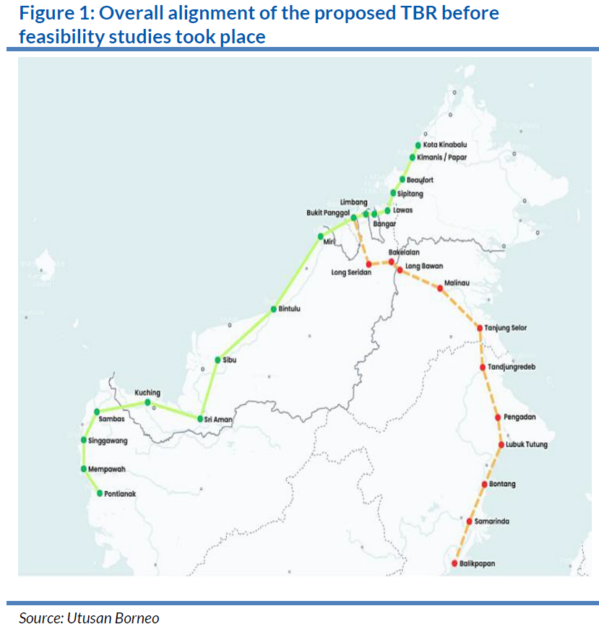
Under the ongoing feasibility study, a preliminary alignment has been proposed for the TBR project, which will be further refined.
Datuk Dr Jerip Susil, the Deputy Transport Minister of Sarawak mentioned that the state is exploring the possibility of integrating the TBR with the Kuching Urban Transportation System (KUTS), which includes additional expansions in subsequent phases for the Red Line of the Kuching Autonomous Rapid Transit (ART) to ensure seamless connections between TBR services and local public transport.
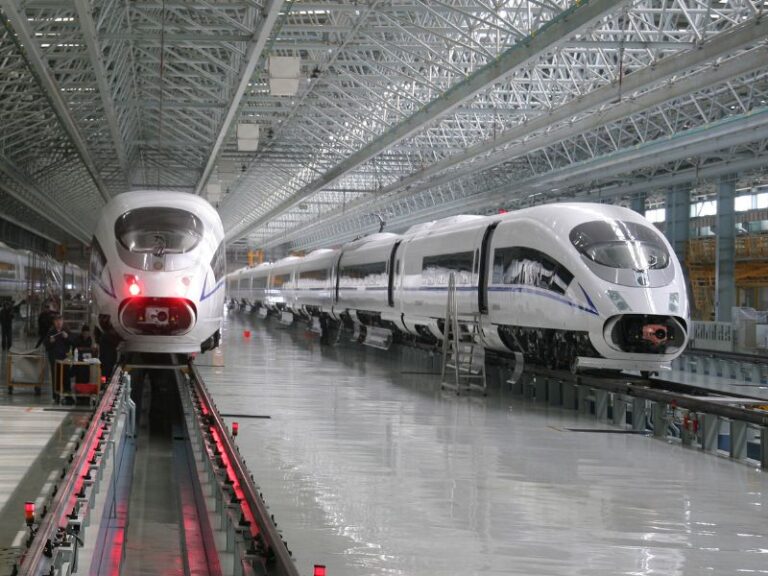
Brunei-based Brunergy Utama claimed it would undertake the TBR project estimated at USD70 bil for two phases, involving a route spanning over 1,600km with trains capable of reaching speeds of up to 350km/h.
However, the Minister of Transport Loke Siew Fook stressed at that time that the project remains a proposal. Such plans for a TBR appears to be apt as plans for Kalimantan’s (Indonesia) railway line has started in 2019 for Banjarmasin-Tanjung (196km) and Banjarmasin-Palangkaraya (194km).
Upcoming plans for Kalimantan’s railway network will expand the stretch to a total of 2,428km in various phases covering destinations such as North Kalimantan and Pontianak.
If Sarawak, Sabah, and Brunei do not leverage on this proposed project, they may stand to lose a great opportunity to reap the benefits from better cross-border flows in light of Indonesia’s new political capital city Nusantara in Kalimantan.
While funding mechanisms have yet to be determined, RHB does not discount the possibility of an expedited rollout should funding be backed by the private sector.
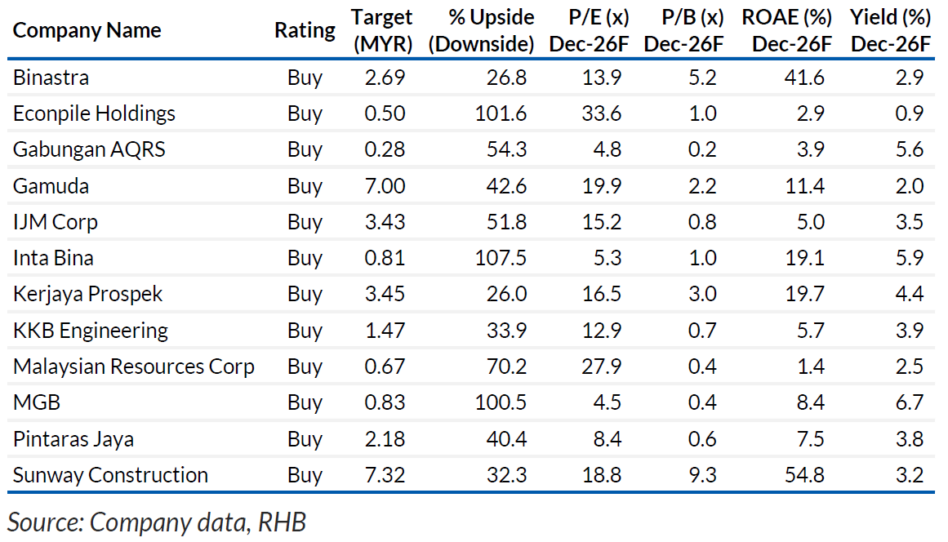
“Hence, we view a faster-than-expected rollout to be a catalyst not just for Sarawak-based contractors such as Ibraco and KKB Engineering, but also for Malaysian contractors, especially ones with rail credentials, for example, IJM Corp that was also involved in the Kuching ART,” said RHB.
Key risk identified by RHB is the longer-than-expected delays in contract rollouts. —Dec 23, 2025
Main image: Brunergy Utama