
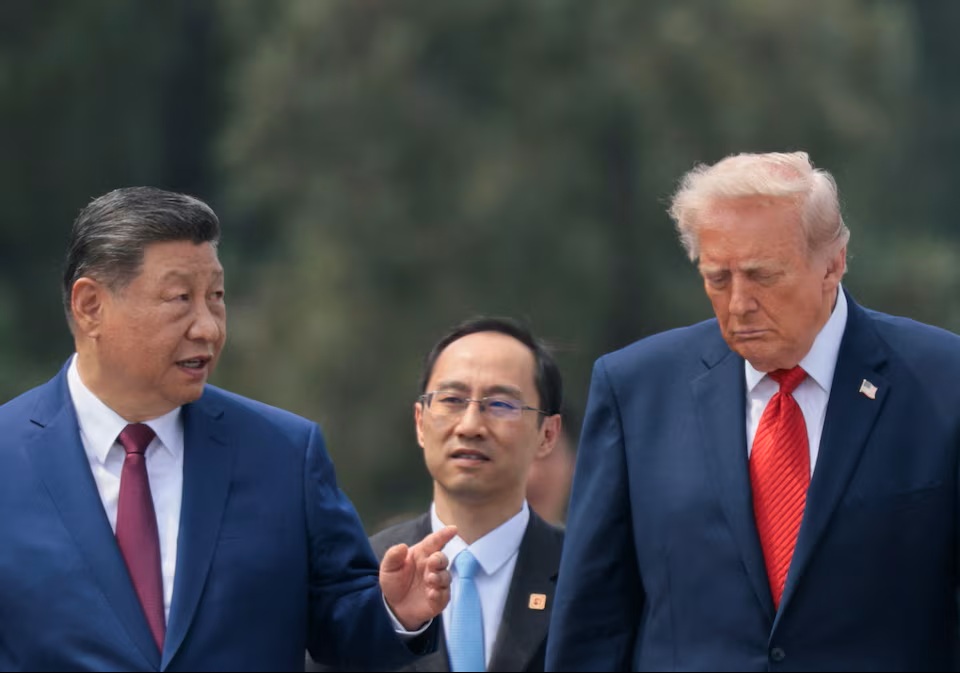
THE THREE-DAY meeting between US President Donald Trump and Chinese President Xi Jinping in Beijing from May 13 to 15 marked Trump’s first official trip to China since returning to the White House, as well as the first visit by a sitting US president to the country in almost 10 years.
During the talks, both leaders touched on a wide range of strategic and economic issues, including bilateral trade, Taiwan, restrictions on semiconductor exports, artificial intelligence, the Iran conflict, maritime stability in the Strait of Hormuz, energy security and broader geopolitical risks.
The visit was accompanied by notably warmer diplomatic messaging, with both Washington and Beijing emphasising the importance of preserving “strategic stability” and preventing further strain in relations.
Despite the more conciliatory tone, the meeting concluded without a sweeping deal or formal joint statement.
Still, China indicated it may consider lowering certain tariffs and expanding access for selected US agricultural exports such as soybeans, wheat and beef, suggesting both countries are exploring tactical measures to ease trade friction ahead of the upcoming US election season.
Despite discussions on AI and technology competition, there was no announced rollback of US semiconductor restrictions, no reopening of advanced technology transfers, and no durable framework for tech cooperation.
The structural US-China technology rivalry remains intact. Xi reportedly warned that mishandling Taiwan could push the two countries into conflict.
Trump maintained strategic ambiguity and avoided committing publicly on Taiwan defence or future arms sales.
This indicates geopolitical risk around Taiwan remains elevated. The summit was heavily shaped by Middle East tensions.
Trump sought China’s help in ensuring the Strait of Hormuz remains open and in preventing Iran from obtaining nuclear weapons.
While both sides broadly aligned rhetorically, no concrete breakthrough emerged. Rare earth export controls and supply-chain security were discussed, but there was no major resolution or easing of restrictions.
This remains a strategic leverage point for China and a vulnerability for the US.
Recent geopolitical developments also reinforce the importance of supply-chain resilience, particularly as rising cross-strait tensions highlight the risks of overdependence on a single semiconductor and manufacturing hub.
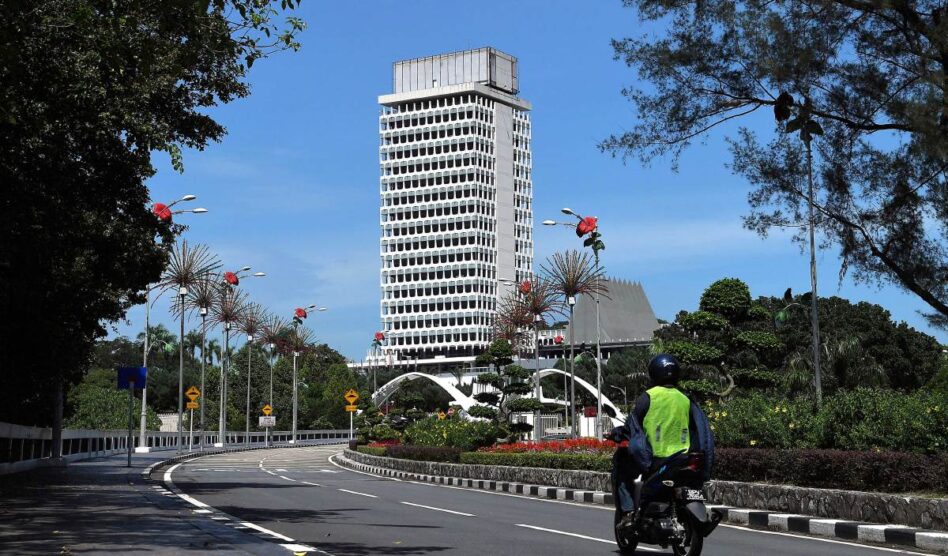
This should continue to support Malaysia’s medium- to long-term investment proposition within the regional manufacturing and technology ecosystem.
In particular, Malaysia stands to benefit from ongoing relocation and expansion activities across semiconductor assembly & testing, E&E manufacturing, AI infrastructure, data centres, and supporting industrial ecosystems, as multinational corporations increasingly prioritise geographic diversification and operational redundancy amid persistent geopolitical uncertainties.
In a more severe Taiwan escalation scenario, the urgency to diversify semiconductor back-end operations and regional manufacturing footprints could accelerate materially, potentially strengthening Malaysia’s strategic positioning within global technology supply chains.
In this environment, several Malaysia-listed technology and semiconductor-related companies could emerge as relative medium- to long-term beneficiaries of accelerated supply-chain diversification and semiconductor regionalisation trends, although near-term volatility would likely remain elevated in any severe Taiwan escalation scenario. —May 18, 2026
Main image: Reuters