


THE local power and utilities sector faces a largely neutral impact from Budget 2027, although renewable energy (RE) investments and new electricity supply arrangements could provide growth opportunities, said TA Securities (TA).
The research house maintained its Overweight recommendation on the sector, citing structural catalysts including tight power generation supply, new gas-fired capacity, and expanding RE deployment besides other factors.
Budget 2027’s key new catalysts include RM1.5 bil allocated for a Centralised Solar Park serving government buildings and RM1 bil under KWAP’s Dana Iklim+ for green investments, including RE and decarbonisation initiatives.
However, TENAGA Nasional Bhd’s RM15 bil grid investment and UEM Lestra’s 1GW hybrid solar project in Johor largely represent existing commitments rather than fresh catalysts.
TA noted that the minimum wage increase from RM1,700 to RM2,000 could raise costs for solar engineering, procurement, construction and commissioning (EPCC) contractors.
Nevertheless, the impact is expected to be limited as technical staff generally earn above the minimum wage and additional costs could be incorporated into future contracts.
Changes to the Green Investment Tax Allowance framework, which exclude solar projects for business purposes while retaining eligibility for self-consumption assets, could marginally increase required tariffs by less than one sen per kWh for commercial solar developers.
TA also expressed disappointment over the absence of an extension to the SuRIA Home initiative, which offers eligible residential solar installations rebates of RM600 per kWac, capped at RM3,000.
Meanwhile, a new 250MW Feed-in Tariff quota for 2027 is expected to benefit non-solar renewable energy players involved in biogas, biomass, waste-to-energy and mini-hydro projects.
The CRESS Acceleration Package could provide a more significant catalyst.
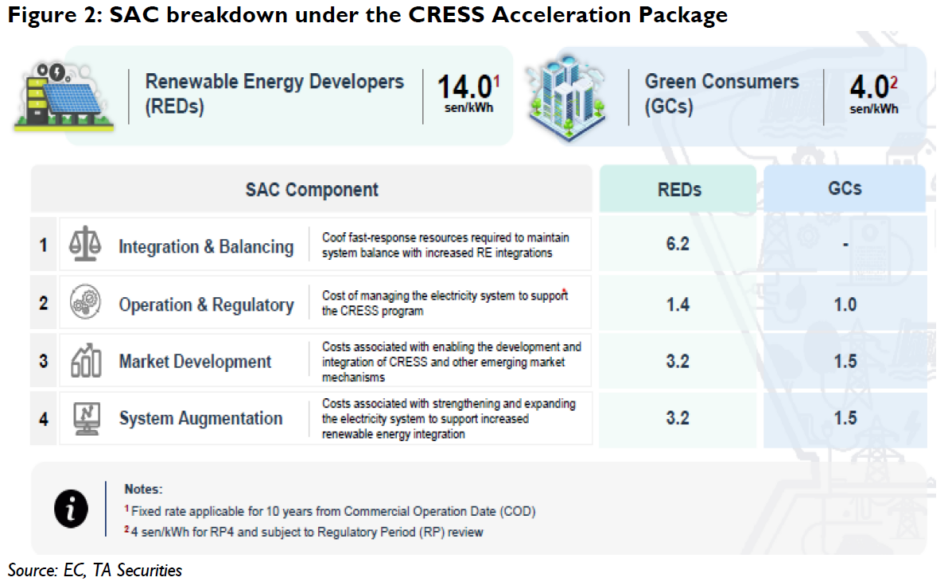
It reduces System Access Charges from 20 sen to 18 sen per kWh and introduces a minimum 10-year contract tenure, improving project bankability and electricity cost competitiveness.
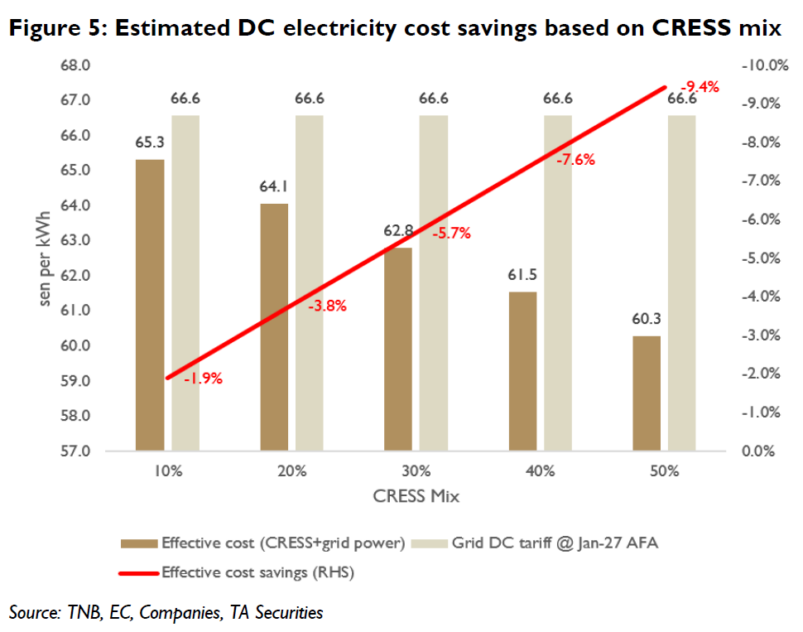
For data centres, TA Securities estimates that CRESS electricity could become increasingly attractive against grid power as fuel adjustment surcharges rise.
The effective grid tariff could reach 66.6 sen per kWh in January 2027, compared with an estimated CRESS supply cost of 54 sen.
With a December 2028 commercial operation deadline, CRESS project development is expected to accelerate over the next two years, benefiting solar contractors and asset developers.
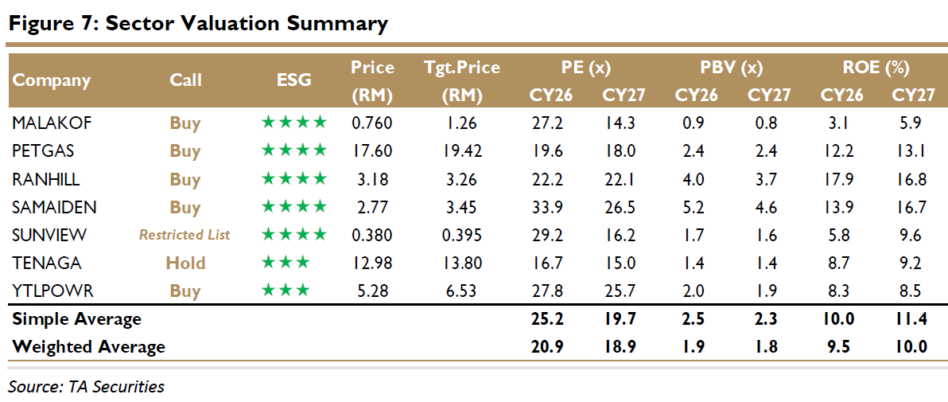
TA Securities’ top picks are Samaiden, Malakoff and YTL Power International.
Key risks identified by the research house include adverse policy changes, project delays, higher supply chain costs and unscheduled plant outages.—Oct 16, 2026
Main image: Interactive Investor.UK