THE death of Professor Jason Arday has become more than a tragic episode in British academia. It raises difficult questions about what can happen when allegations of academic misconduct, institutional accountability, media scrutiny, social media and personal vulnerability collide.
Arday, who became Cambridge University’s youngest Black professor in 2023, resigned on Aug 5 following intense public scrutiny over allegations involving plagiarism, his academic record and aspects of his personal history.
He was later found dead in London. Police have said his death was unexpected and is not being treated as suspicious.
It would be wrong to conclude that the allegations caused his death. That causal link has not been established. But it would also be wrong to ignore the extraordinary sequence of events that preceded it.
His family described a sustained campaign of abuse and misinformation, while supporters criticised the scale and tone of media coverage. Arday himself wrote that relentless accusations, speculation and public commentary had taken a profound toll.

The lesson is not that universities should shield academics from legitimate scrutiny. Academic integrity must be protected. Plagiarism allegations deserve serious investigation, and public-interest journalism has a legitimate role in exposing wrongdoing.
Cambridge has announced an independent investigation into the circumstances surrounding Arday’s appointment and is reviewing its research misconduct policies.
The deeper problem is what happens when due process is overtaken by public judgment.
The controversy involving Nathan Cofnas illustrates that complexity. Ghent University has suspended Cofnas as a precaution while conducting a preliminary disciplinary investigation into his public statements about Arday.
At the same time, it has reaffirmed that academic freedom remains fundamental while stressing that it also carries responsibilities.
That distinction matters for Malaysia.
If a similar case emerged here, we should resist two equally damaging instincts: defending someone immediately because of race, religion, political affiliation or institutional status, or condemning them before the facts have been independently established.
Malaysia needs a culture of investigate first, judge later.
Universities should have confidential and independent mechanisms for handling allegations involving plagiarism, research misconduct, fabricated credentials and professional misconduct.
Complaints should be assessed by qualified investigators rather than becoming battles fought on social media.
Procedural fairness matters for everyone. Complainants deserve to be heard, while accused academics deserve an opportunity to respond, protection against retaliation and access to appeal.
These are not merely ethical aspirations. The Malaysian Qualifications Agency already requires higher education providers to maintain clear plagiarism policies and fair disciplinary procedures.
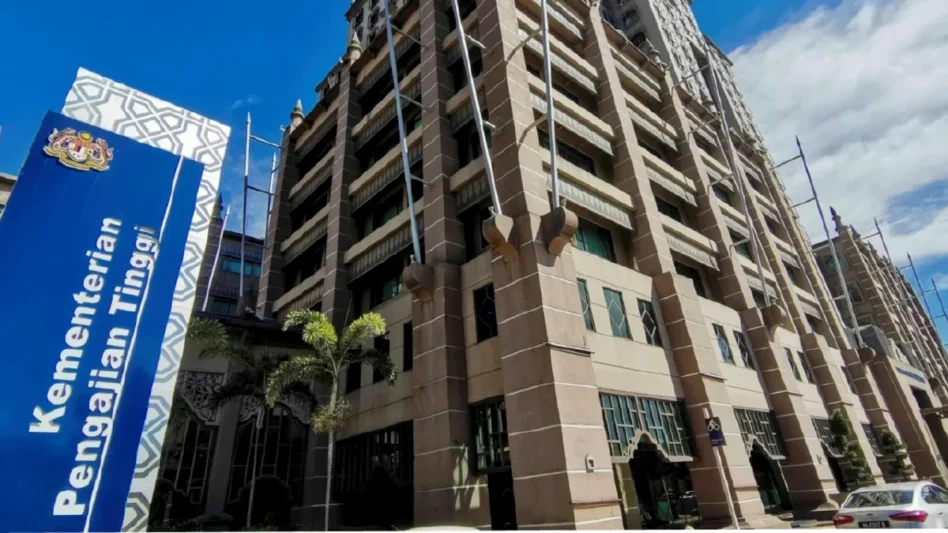
The Higher Education Ministry should build on those foundations by developing a national framework for handling high-profile academic misconduct cases across both public and private institutions.
Such a framework should establish minimum standards for investigations, confidentiality, media communication, whistleblower protection and conflicts of interest.
Universities should also recognise that academic integrity and academic welfare are not competing objectives.
When allegations become highly public, institutions should activate welfare support alongside disciplinary processes.
Confidential counselling, psychological support, designated welfare officers and protection from workplace harassment should become part of responsible case management.
The objective is not to determine guilt through counselling, but to ensure that nobody facing an institutional investigation is left psychologically isolated.
The media has responsibilities too. Investigative journalism should expose genuine misconduct, but allegations are not convictions.
Responsible reporting requires distinguishing carefully between verified facts, allegations, responses and unresolved questions.
The same principle applies to social media. The digital age has made everyone a potential publisher, but not everyone is an investigator. Reposting allegations without verification can inflict reputational damage that may be impossible to undo.
Finally, universities should ensure that senior academic appointments undergo robust verification.
Cambridge’s own review of its appointment processes is a reminder that institutions should strengthen safeguards before similar crises emerge, not after.
The Arday tragedy should not become an argument for silencing criticism or protecting powerful academics from accountability.
It should remind us that universities must protect academic freedom, uphold academic integrity, guarantee due process and provide meaningful welfare support at the same time.
A university should remain a place where truth can be questioned without fear, while accountability is pursued without allowing the process itself to become the punishment. ‒ Aug 28, 2026
R. Paneir Selvam is Principal Consultant at Arunachala Research & Consultancy Sdn Bhd (ARRESCON), a think tank specialising in strategic national and geopolitical analysis.
The views expressed are solely of the author and do not necessarily reflect those of Focus Malaysia.
Main image: Unsplash/Declan Sun