
HALAL certification is an issue that is of the utmost importance to observant Muslims. Hence there are numerous resources online to help Muslims determine if a particular product meet the required Islamic standards.
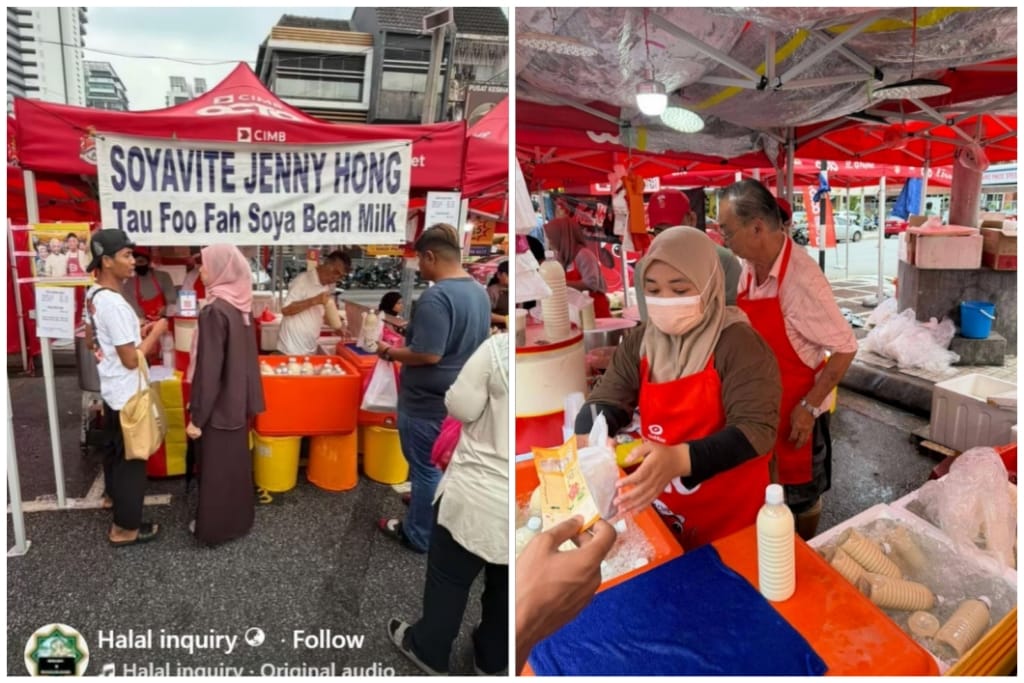
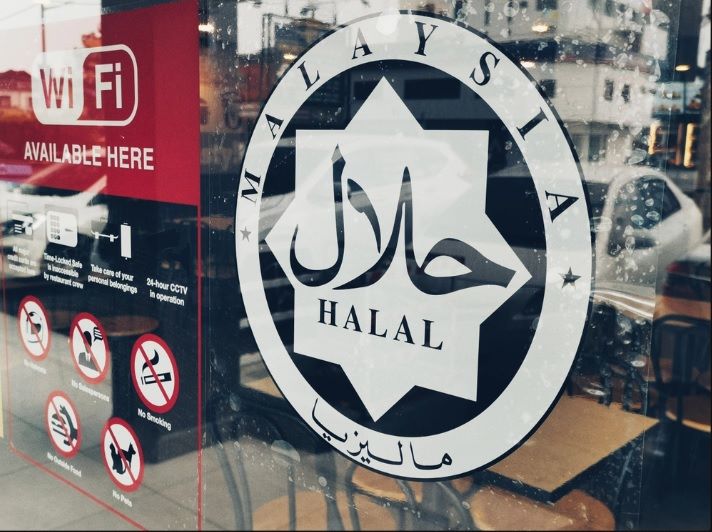
One such site is Halal Inquiry on Facebook that highlights (usually) popular diners and whether they possess the requisite and all-important halal certification from the Department of Islamic Development Malaysia (JAKIM).
Some businesses try to get round this by employing Muslim staff, thus insinuating that they would NOT be complicit in serving non-halal fare to their brethren.
There are also many food & beverage (F&B) outlets that simply paste a notice declaring that they source all ingredients from halal suppliers to provide Muslim diners peace of mind or declare their establishments as “Muslim-friendly”.
As highlighted by Halal Inquiry, this just doesn’t cut the mustard. Using Soyavite Jenny Hong stall at the Taman Tun Dr Ismail Ramadan bazaar as a prime example, it was pointed out that the enterprise was NOT halal certified by JAKIM.
Although the stall employed Muslim staff, the poster urged Muslim diners to be wary.
It was even noted that despite the signboard clearly declaring it is a Chinese-owned enterprise, Muslim customers were seen flocking to buy its products (Halal Inquiry claimed that its checks revealed that the business is owned by two Chinese ladies who operate under Syarikat Soyavite Best Trading).
The poster also went to the extent of sharing a declaration by the Selangor Mufti department (dated Feb 26 last year) which read:
The ruling on eating at non-Muslim places that provide halal food and do not have JAKIM halal recognition can be ruled as DOUBTFUL which Muslims must avoid and stay away from.
Muslims are urged to stay away from doubtful matters because it is a syarak (Islamic law) requirement. Obtaining a halal certificate from JAKIM is a guarantee that the food provided by a premises is halal.
Just to make the point abundantly clear, Halal Inquiry added: “However, there is no denying that choosing food prepared by MUSLIMS is preferable given it is a virtue to seek out food that is halal and toyyiban (wholesomely hygenic)”
The post has generated 2.6K likes, 1K comments and 592 shares with many halal-conscious observers agreeing that Muslim consumers need to avoid such food businesses given concerns of porcine contamination in the manufacturing process.
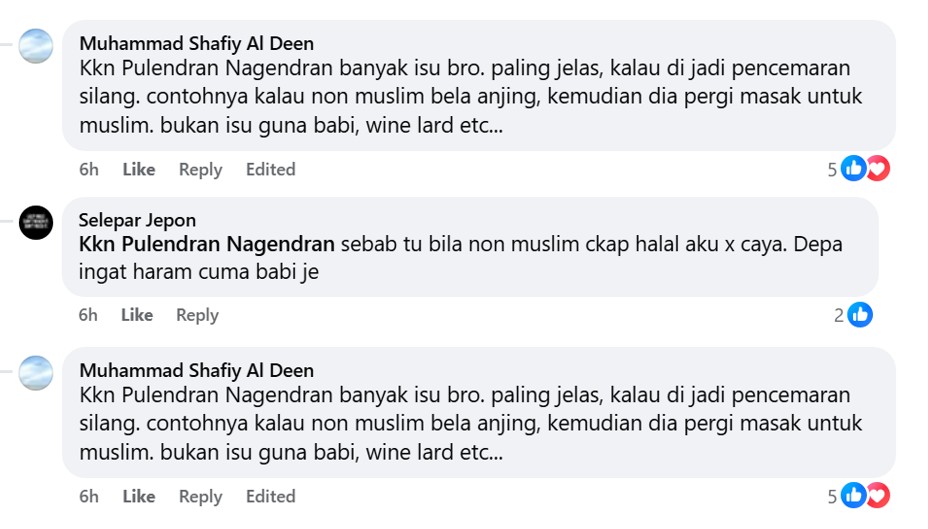
A few also pointed to having Muslim staff is no guarantee that the fare is halal. Moreover, Muslim foreign workers may be used to differing standards, thus Malaysian Muslims need to be extra vigilant.
A legitimate concern or otherwise, a commenter claimed that Indonesian Muslim vendors “even don tudung to sell pork satay”.

Another declared that it was not that Malay customers did not want to support Chinese-owned businesses. It is simply that consuming halal food is obligatory for Muslims to conform with.

Of course, Muslim consumers are well within their rights to insist on halal certification if any business wants their patronage. Muslim customers are also free to choose which business they wish to support.
But it does seem odd to highlight only a non-Muslim-owned business at a Ramadan bazaar to magnify this issue.
All other Muslim-owned enterprises are also most likely not similarly certified and as rightly pointed out by a number of commenters, halal status encompasses issues of cleanliness and hygiene which many of these Muslim owned businesses fail to adhere to.
This means they, too, are peddling NON-HALAL food and as such should be similarly avoided.
It is completely understandable that Muslim diners demand that the food and drink they ingest meet their religious requirements. However, to ostracise a business simply for the owner’s ethnicity is quite unacceptable when others are also guilty of similar failings. – March 16, 2026