


TOWARDS the media sector, the nine months of calendar year 2025 (9MCY25) adex (advertising expense) weakness stemmed mainly from a sharp decline in digital advertising.
Additional drag came from across-the-board declines in newspapers, radio, and cinema. On a year-on-year (YoY) basis, FTA TV adex in quarter three calendar year 2024 (3QCY24) also contracted, suggesting it likely weighed on YTD adex as well.
“The weakness in digital adex was primarily driven by a steep 40% YoY contraction in adex on youtube.com, reflecting intense competition from social media and search engine platforms,” said Kenanga Research.
Another contributing factor could be the migration of ad inventory to YouTube’s mobile and smart TV apps, which fall outside Nielsen’s measurement scope.
Notably, Nielsen Malaysia’s digital tracking covers only display and video ads on desktop and mobile web pages. Adex on youtube.com has now declined for the 8th consecutive quarter to RM112.4 mil in 3QCY25.
A secondary drag on digidex stemmed from softer activity on paultan.org, as automakers likely held back adex spend in anticipation of deferred new model launches to 4QCY25.
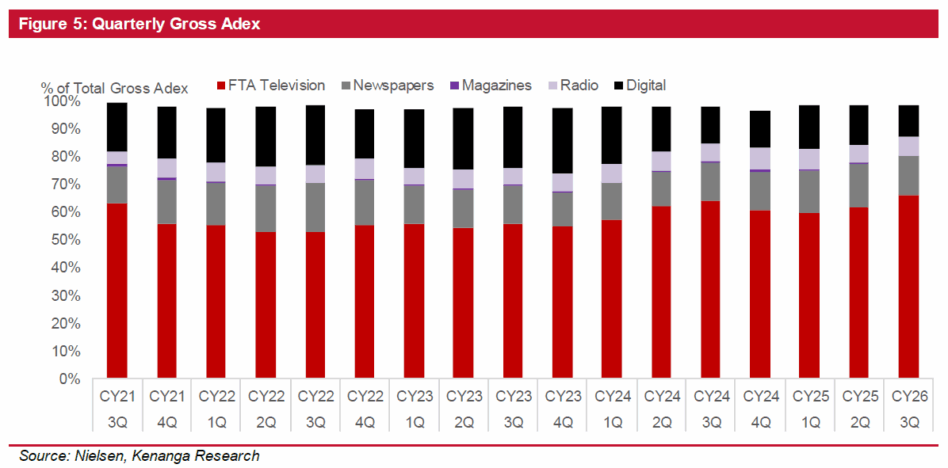
The bulk of the decline in 9MCY25 newspaper adex stemmed from a steep drop in ad spend for The Star. This downtrend was consistent across other publishers under Kenanga’s coverage, including MEDIAC (-20% YoY), primarily weighed down by weaker adex from Sin Chew Daily (-23% YoY).
Then there is MEDIA (-7% YoY), mainly dragged by a sequential plunge in Harian Metro’s adex in 3QCY25 (-19% QoQ) and further compounded by a slump in 9MCY25 adex for the New Straits Times (-3% YoY).
Meanwhile, adex for MEDIA’s FTA channels was softer in 9MCY25 (-1% YoY), primarily due to a dip in NTV7’s adex (-35% YoY), which more than offset gains at TV3 (+8% YoY) and TV9 (+39% YoY).
The combined weakness across MEDIA’s FTA TV and print segments led to an overall 1.1% YoY decline in the group’s 9MCY25 adex, based on Nielsen-tracked channels.
Similarly, softer 9MCY25 adex across both thestar.com.my portal (-15% YoY) and The Star newspaper led to the overall decline in STAR’s total adex (-25% YoY).
The trend is underpinned by AI-powered programmatic advertising, which enables hyper-personalised campaigns tailored to users’ browsing histories, purchasing behaviours, and content consumption patterns.
In contrast, traditional media lack such targeting precision, relying on broad audience estimates and offering limited interactivity or performance feedback. This technological divide has accelerated the migration of advertising budgets toward modern digital platforms, where campaigns can be monitored in real time and deliver stronger engagement and measurable returns.
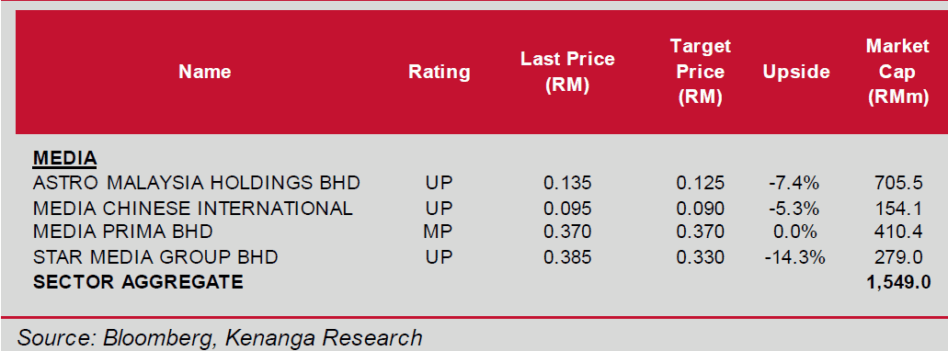
“We maintain our Underweight stance on the media sector, given the continued pressure on profitability stemming from deep-rooted structural challenges,” said Kenanga.
The industry remains weighed down by the growing dominance of digital-first platforms, which benefit from superior technology, leaner cost structures and greater operational agility.
In contrast, incumbent media companies are burdened by the high fixed costs of legacy infrastructure such as broadcast facilities, satellite leases, printing plants, physical distribution networks, which drag on profits and constrain flexibility. —Oct 24, 2025
Main image: AAFT