
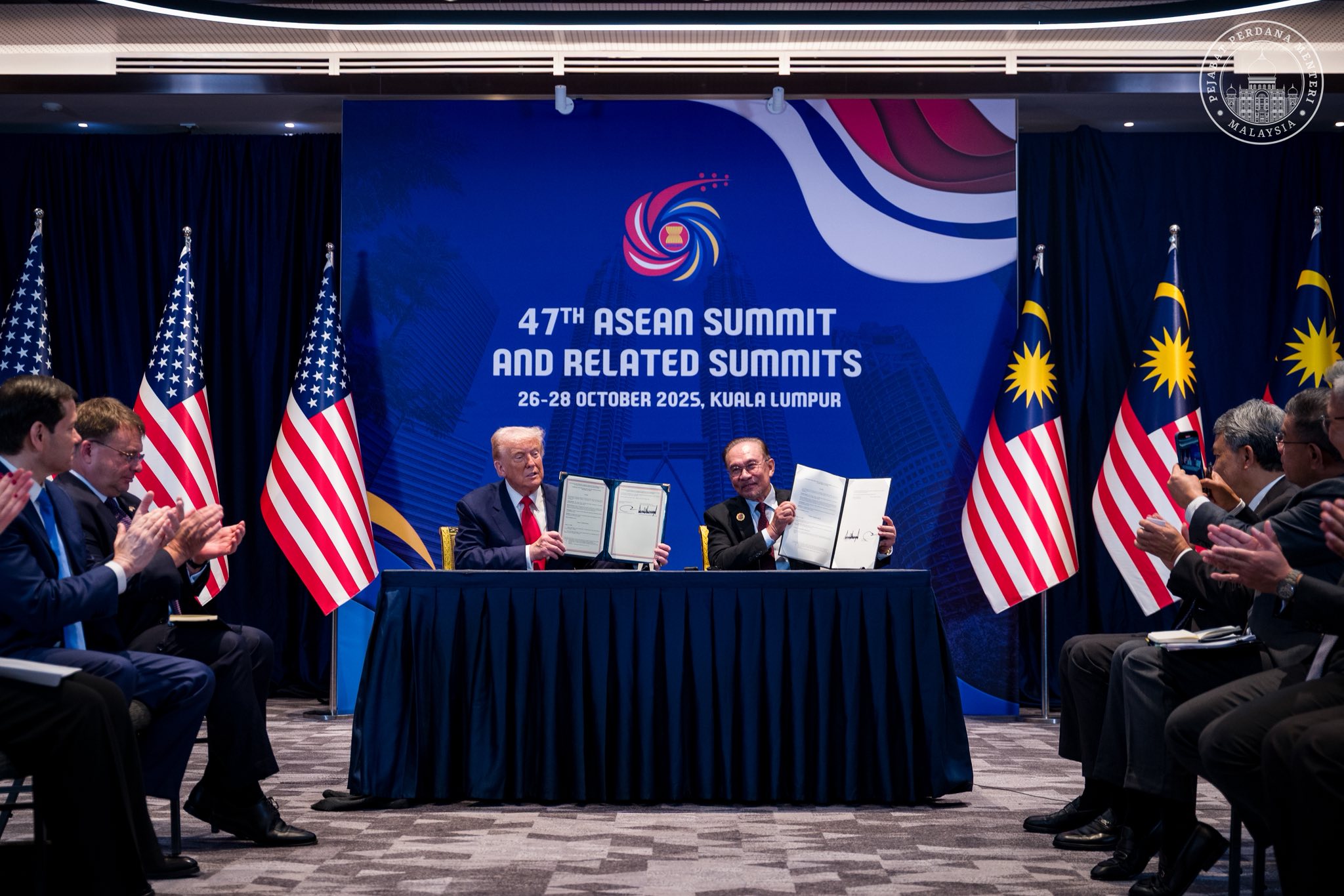
MUCH has been said about the Agreement on Reciprocal Tariff (ART) between Malaysia and the United States.
Unfortunately, much of the public debate has been shaped by misunderstanding rather than fact, with some commentaries quoting isolated provisions without fully appreciating how trade agreements between sovereign nations are structured, interpreted, and implemented.
In my view, the ART is neither a concession nor a capitulation. It represents a carefully negotiated framework that strengthens Malaysia’s strategic position, expands economic opportunity, and reinforces our role as a confident trading nation.
It is also important to recognise that Malaysia does not have a free trade agreement with the United States, unlike Singapore, which faced tariffs despite its Free Trade Agreement (FTA). In this context, the ART provides a structured and calibrated mechanism for bilateral engagement.
Nothing in the agreement overrides the Federal Constitution, Parliament, or Malaysia’s regulatory authority. All provisions remain subject to domestic law.
Malaysia also retains its essential security rights under World Trade Organisation rules, allowing the government to act in the national interest when required. This ensures that policymaking remains firmly in Malaysian hands.
The ART does not force Malaysia to open new sectors to foreign competition. Bumiputera policies, government procurement rules, investment screening mechanisms, and protections for strategic industries remain intact. These safeguards reflect Malaysia’s long-standing development priorities and the clear negotiating positions taken by Malaysian officials.
What the ART provides is greater predictability, faster resolution of trade frictions, and clearer pathways for Malaysian exporters, particularly in high value manufacturing and services.
In a global environment where tariffs and geopolitics increasingly overlap, reducing uncertainty is a practical advantage for Malaysian businesses seeking to expand and invest with confidence.
Credit is due to Tengku Datuk Seri Zafrul Abdul Aziz and the Ministry of Investment, Trade and Industry negotiating team for proactively protecting Malaysia’s access to the United States, our single largest export destination. Malaysian companies exported more than RM200 bil worth of goods to the US last year. Securing stable access to such a critical market is not a luxury but an economic necessity.
The alternative would have been inaction, allowing tariffs to rise to 25% or higher and hoping global conditions remained favourable. Such an approach would have reduced competitiveness, increased business risk, and threatened Malaysian jobs and investment. In this context, taking a proactive negotiating stance was the more responsible option.
Some critics have compared the ART to colonial-era agreements. These comparisons are misleading. The Pangkor Treaty was imposed under colonial conditions and stripped local rulers of authority.
The ART, by contrast, is a voluntary and reversible agreement entered into by a sovereign Malaysia. It does not transfer political or regulatory control to any foreign power.
Malaysia retains full control over its laws and policies. The ART does not force the country to choose between the United States and China.
This balanced strategy is already reflected in Malaysia’s participation in the ASEAN–China Free Trade Area (ACFTA), which strengthens economic integration with China, while Malaysia simultaneously develops structured trade frameworks with the United States.
This approach is consistent with Malaysia’s broader regional role and leadership within ASEAN. Malaysia continues to deepen ties with major economic partners, welcome high quality foreign investment, and position itself as a constructive bridge-builder in a complex regional environment.
In a fragmented global economy, the countries that succeed are those that secure market access, strengthen investor confidence, and protect long term growth. Through the ART, Malaysia has chosen a strategic and measured path based on national interest and economic realism. ‒ Nov 26, 2025
Dr Steven Chong
Bandar Tun Hussein Onn, Selangor
The views expressed are solely of the author and do not necessarily reflect those of Focus Malaysia.
Main image: Prime Minister’s Office/Izzuddin Abd Radzak