
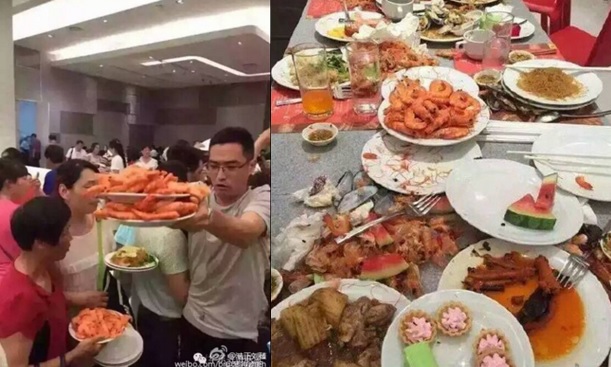
ACCORDING to the Cambridge Dictionary, ‘over-tourism’ means a place gets too many visitors. The crowds harm the local environment, break local rules and make daily life hard for the locals.
This is the scenario being painted by a local hospitality industry staff on the influx of tourists from China.
The warning of stark-looking buffet spreads was posted by @isiluahan_hati on Threads as she laid the blame squarely at the so-called Mainlanders whose appetites know no bounds.
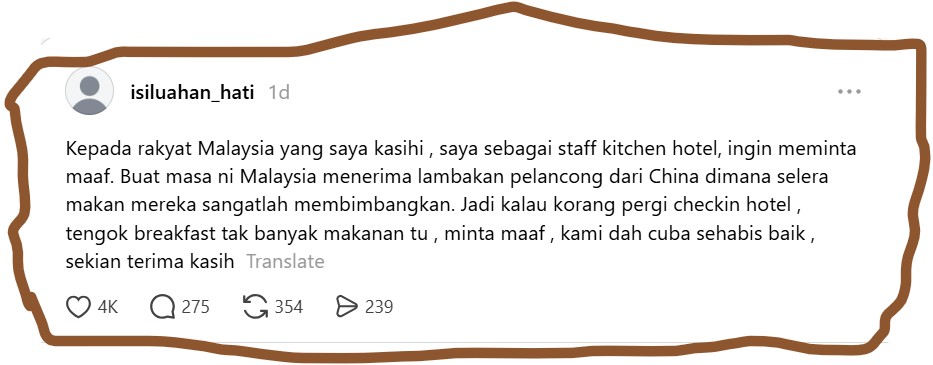
The poster claimed that kitchen staff like herself have put in their best to meet these ravenous demands but extended her apologies to Malaysians who came to breakfast buffets faced with sparse offerings.
Editor’s Note: Malaysia is targeting seven million Chinese tourist arrivals as part of its major Visit Malaysia 2026 (VMY 2026) campaign.
Driven by mutual visa-free policies and strong flight connectivity, China contributed 1.4 million arrivals in 1Q 2026 alone, marking a significant 25.2% year-on-year (yoy) increase.
The so-called apology by the hotel kitchen staff has amassed 4K likes, 275 comments, 354 re-posts and 239 shares at time of publication, denoting the issue of kiasu (literally “scared to lose out” in Hokkien) Mainlander tourists has touched a raw nerve.
More than a few shared similar experiences when checking into hotels that had large contingent of China guests.
Humoungous appetites aside, one commenter noted the lack of hygiene among the hordes of Chinese tourists who handled the bread with their bare hands instead of the thongs provided.
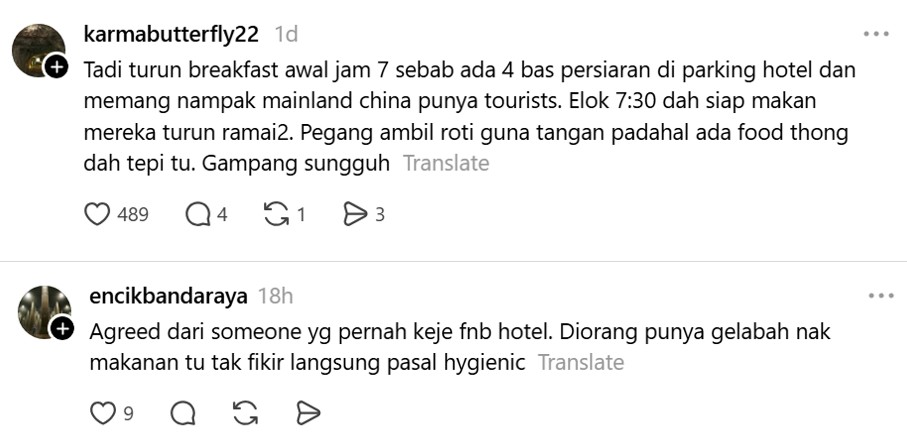
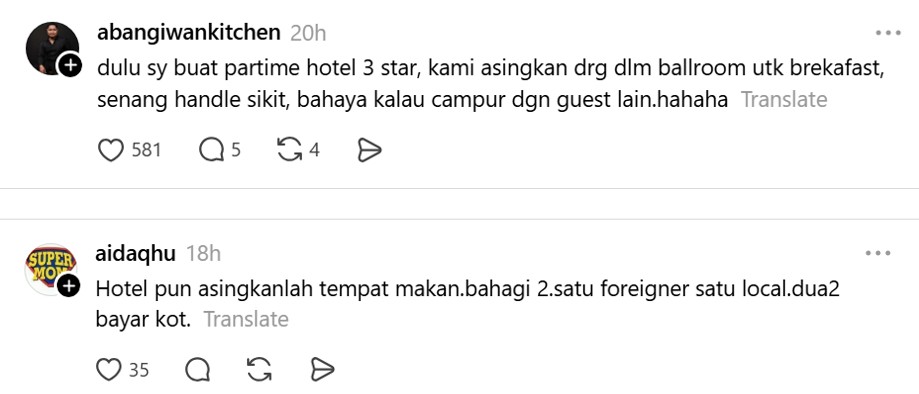
Speaking from first-hand experience, another hospitality industry part-timer claimed that some hotels keep Mainlanders separate in another ballroom.
“Easier to handle and also to avoid unfortunate episodes if they’re allowed to mix with other guests,” he reasoned. This idea was seconded by another commenter who felt that this was only fair to all paying guests.
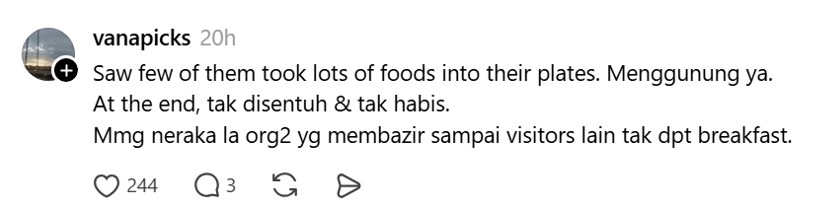
This led to another unsavoury aspect perceived to be prevalent among China Mainlander tourists – they like to waste food. “They would pile foods on their plates and then leave it untouched thus depriving others of breakfast,” groused this unimpressed hotel guest.
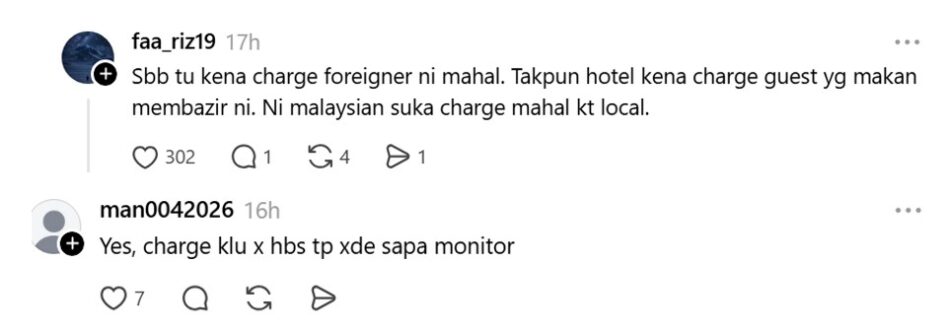
More than one local called for hotels to add a “special tax” for such wanton wastefulness. Why should locals pay for foreigners’ wastefulness.
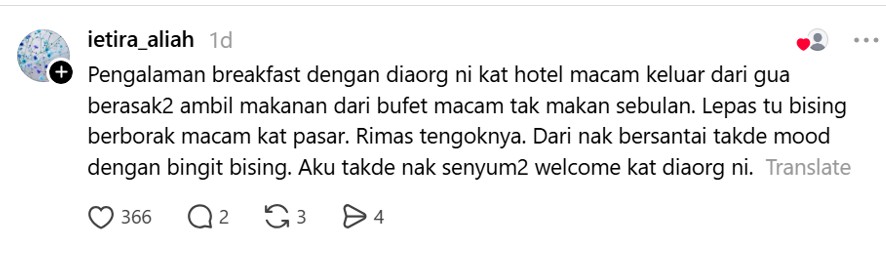
Aside from the gluttony, one traveller also noted the lack of civility among these Mainlanders. “Talking loudly like in the wet market” was the mood-spoiler for this non-plussed commenter who contended there’d be no welcoming smile from her.
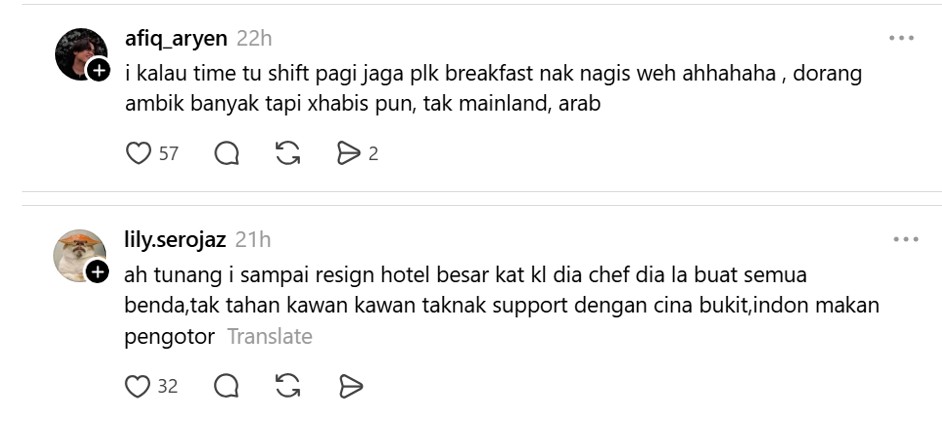
However, a few others working in the hospitality industry highlighted that such anti-social behaviour was NOT limited to China Mainlanders. One noted that Arab visitors, too, hoarded food at buffets while the Indonesians were not known for their hygiene.
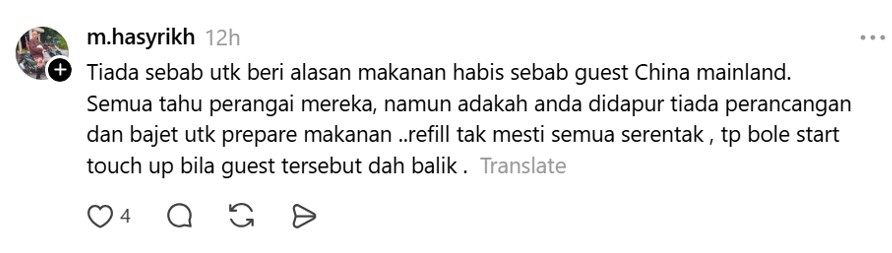
However, amid all the negative feedback, one commenter did pose a pertinent question – why wasn’t there proper planning to deal with this scenario?
After all, the large numbers of tourists from China were expected (in conjunction with VMY 2026) and their attitudes and behaviour well-known. Couldn’t the hotel staff exercise proper budgeting and refill the food trays when these Chinese tourists have left their tables?
Yes, there will be challenges to tourists flooding the country. Yes, some of the aforementioned behaviour is rude and anti-social in the extreme. It is a phenomenon that is being experienced worldwide as Chinese tourists flex their economic wealth but also bring unwelcome habits abroad.

Food for thought (pun fully intended): As unpalatable as the scenario above may be, isn’t it preferable to the food going to waste with there being NOT enough tourists?
It is problem that must be managed but these empty buffet stations are at least one sign that VMY 2026 is showing signs of success. – Aug 5, 2026
Main image credit: People’s Daily, China (@PDChina)/X