

HONG Leong Investment Bank (HLIB) recently conducted site visits to 12 Penang-based companies across multiple segments of the semiconductor supply chain. Overall sentiment across the meetings were positive, with management teams broadly expecting 2026 to be a better year relative to 2025.
Notably, US semiconductor tariffs did not feature prominently in discussions, suggesting that tariff-related concerns have eased. This is likely influenced by the recent developments on China-related semiconductor tariffs (Section 301), which have now been deferred to June 2027.
HLIB have previously highlighted the China+1 diversification theme extensively in our 2026 outlook, with benefits accruing across various segments of the Malaysian technology sector, including OSATs, the global semiconductor capital equipment supply chain, and selective EMS sub-segments such as optical transceivers.
“Feedback from our company discussions suggests that on-the-ground activity is more extensive, with capacity build-outs in other geographies also generating positive spillover effects for Malaysian players,” said HLIB.
Importantly, China+1 is evolving beyond geographic relocation alone to encompass broader supply-chain de-risking, including the substitution of China-sourced equipment, materials, and components.
A case in point: Apple is accelerating the diversification of its iPhone manufacturing footprint, targeting ~40% of production in India, up from ~20% currently.
Foxconn’s India operations are not simply replicating the China supplier base but are actively onboarding new non-China vendors.
This has already translated into tangible opportunities for Malaysian suppliers, with ViTrox deriving 5-7% of its sales from India, and THMY currently in the qualification phase for new test interface solutions.
“Over the medium to longer term, as India’s EMS and OSAT ecosystems continue to scale, we see incremental addressable opportunities emerging, particularly for Malaysian equipment and solutions providers,” said HLIB.
The global tech earnings season is already in full swing, with most companies reporting over the next two weeks. HLIB expects continued upbeat commentary on AI spending to underpin a robust outlook and guidance for 2026.
TSMC’s recent guidance of raising capital expenditure to USD52–56 bil for 2026 (+32% year-on-year) is already a strong signal.
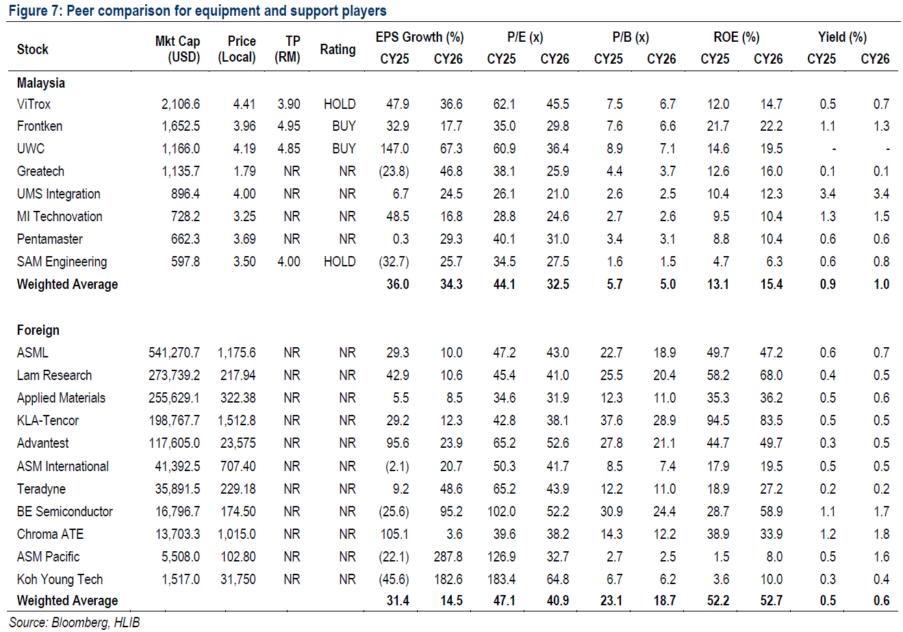
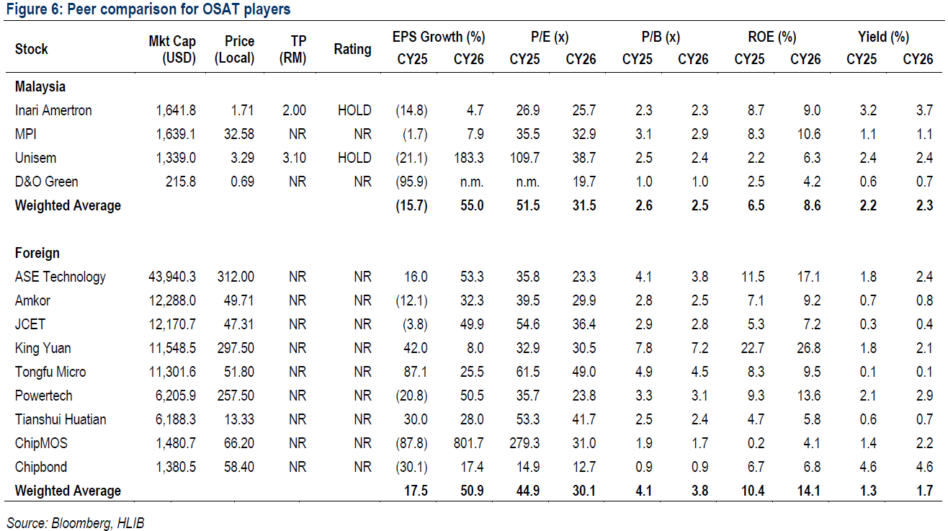
For Malaysia, the bar looks reasonable heading into the quarter four 2025 (4Q25) results season, as expectations have reset considerably following a weak 3Q25.
“That said, we still see scope for a few earnings misses as margin pressures persist, exacerbated by the strong ringgit. We expect investor focus will likely centre around management’s outlook for 2026 and margins guidance,” said HLIB.
Given a relatively modest earnings growth outlook for large-cap Malaysian technology companies, coupled with valuations that are not particularly compelling, HLIB maintains our NEUTRAL stance on the sector.
HLIB prefers an active and selective approach, with their top picks for the sector being ITMAX (consistent earnings delivery), UWC (strong pick-up in FE and BE segment), and Frontken (high foundry activity driving robust demand for precision cleaning services). —Jan 27, 2025
Main image: Mf3d