
WHEN someone stepped on the Holy Quran, the response from the authorities was swift – the suspect was promptly arrested and charged in court.
But when someone desecrated a sacred religious symbol – the trident – at a Hindu temple, the incident did not receive immediate attention.
Multiple reports were lodged against the suspect for allegedly damaging the Hindu trident but, worryingly, hardly any action was taken against him until much later when police decided to charge the suspect under Section 295 of the Penal Code with the intention of insulting a religion.
In Hinduism, the trident represents divine power in the persons of such deities as Lord Shiva and Goddess Durga.
Inevitably, in the public mind there arises the suspicion that those in power are practising double standards. It is as if it is all right to commit a sacrilegious act against the religion of a minority ethnic group but not against the faith of the dominant community.
Perhaps, there is a reason as to why the authorities are seemingly reluctant to crack down hard on such dangerous acts. This could be traced to the announcement that allegedly illegally built Hindu temples must be demolished.
PAS entered the fray
The greenlight given to the local governments to carry out this federal directive must have been taken out of context to mean that anyone can now act on their own and tear down such houses of worship.
Who then can stop religious zealots from going out of their way to target Hindu temples allegedly built on state or private land for demolition?
After all, the federal government has clearly stated that these temples must go and, hence, when some zealots take the law into their hands, their reckless act can be seen as acceptable because they are merely obeying a federal order albeit the wrong way.
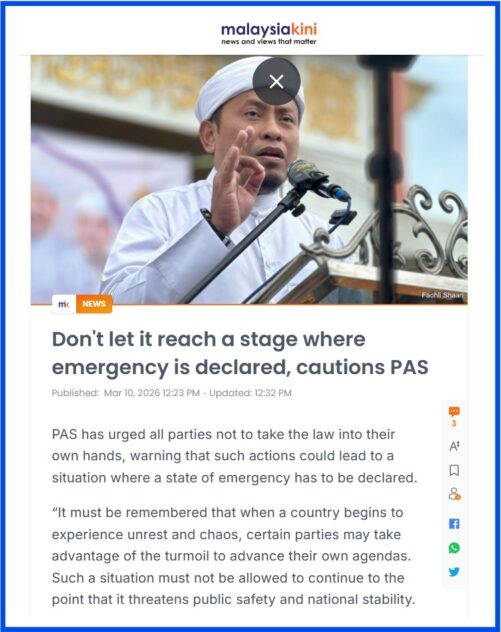
The tense situation has come to a stage where even PAS – usually seen as a rabid advocate of the politics of race and religion – has seen fit to urge all parties not to be a law unto themselves.
PAS information chief Fadhli Shaari has warned that such irresponsible behaviour could result in a state of emergency being declared which will be detrimental to “public safety and national stability”.
However, his concern must be taken with a pinch of salt. His warning is a reaction against the attack on the home of a self-proclaimed crusader called Cikgu Chandra who has been campaigning against unauthorised Hindu temples.
The Pasir Mas MP urged the police to take swift action against the culprits responsible for the alleged assault. But the PAS leader was strangely silent when an act of desecration was allegedly perpetrated at a Hindu temple.
The only conclusion that can be drawn from his seemingly noble gesture is this: he is warning the other minority ethnic group that there will be chaos if the situation gets out of control, presumably meaning that the followers of the dominant faith will not keep quiet if their religion is smeared.
Time for security force to step in
Nevertheless, there is some kernel of truth in Fadhli’s reasoning: all will suffer if emergency rule is proclaimed to check an outbreak of civil unrest stemming from religious strife.
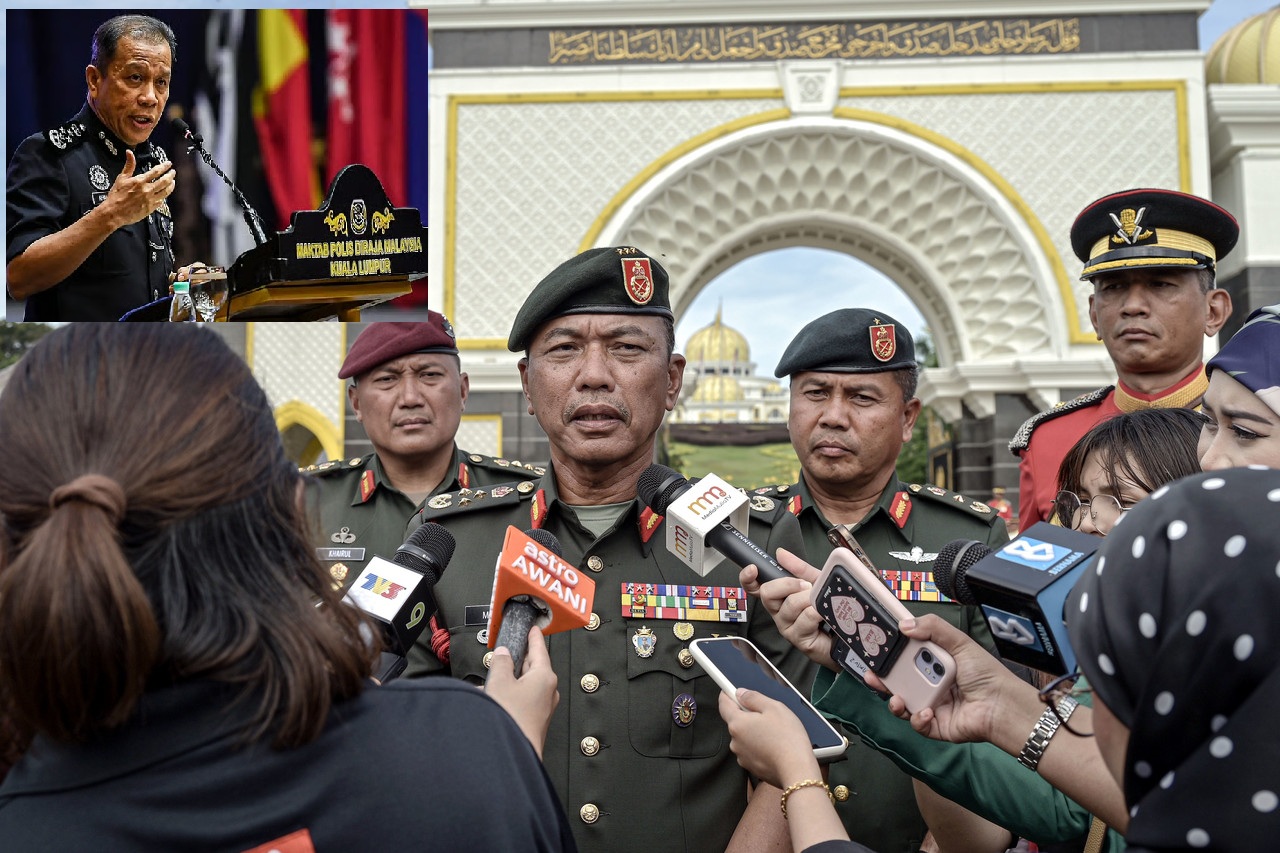
To forestall such a crisis, it is high time the police and the army held a joint press conference to allay the fears of the public about the security situation.
Inspector-General of Police (IGP) Tan Sri Khalid Ismail and the chief of the Armed Forces General Datuk Malek Razak Sulaiman should pointedly warn all parties, including politicians on both sides of the aisle, to stop harping on and exploiting religious issues.
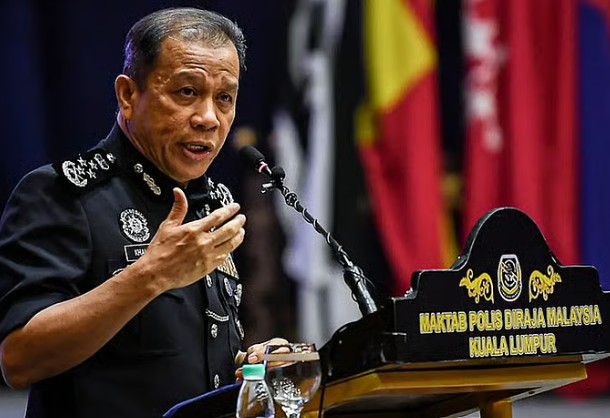
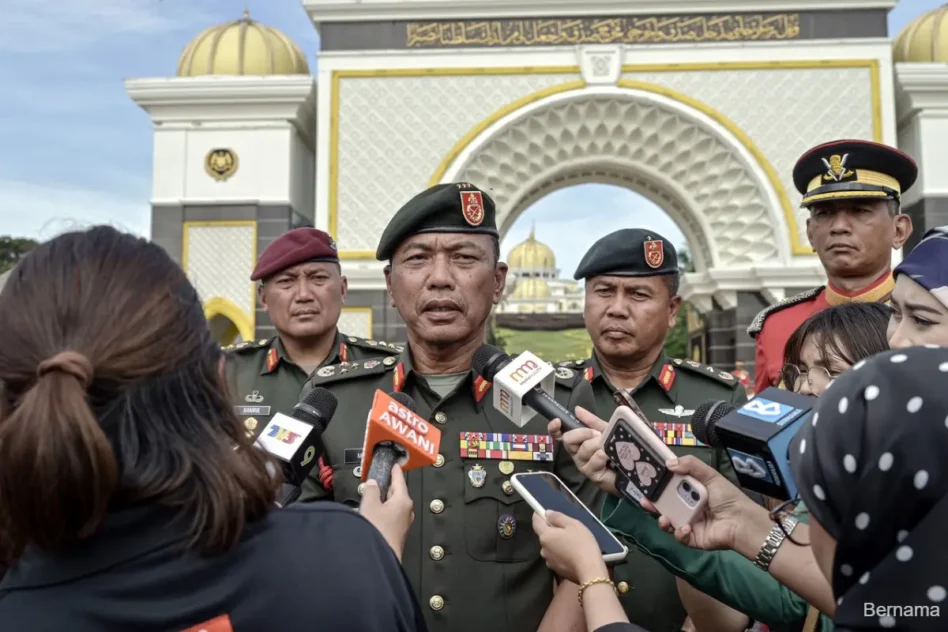
They should unreservedly emphasise that speedy, fair and transparent action would be taken against all those who threaten the security and peace of the country regardless of their racial identity and religious affiliation.
More importantly, the two shields of the nation must bring the home the message clearly and loudly that nobody would be allowed to undermine parliamentary democracy.
Such a strong stand would surely go a long way to keep Malaysia on an even keel and ensure that the fires of religious bigotry will never get a chance to destroy our cherished way of life.
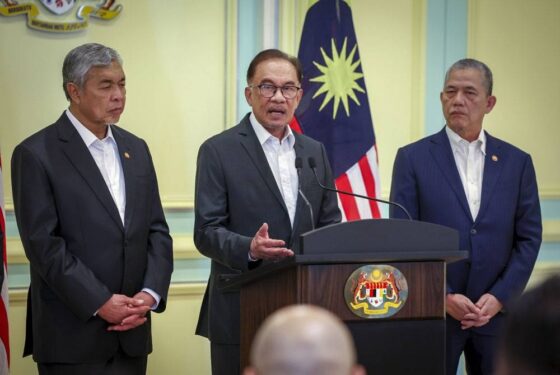
To lend more urgency, Prime Minister Datuk Seri Anwar Ibrahim could also call for an urgent media conference whereby – flanked by Khalid and Malek – issue a strong warning to all those bent on stoking tensions to back down or face the full force of state power.
Cabinet ministers, too, could chip in by going on nation-wide tours to cool tempers and to preserve peace and harmony.
Likewise, all state representatives could visit their respective constituencies to highlight the dangers of playing with sensitive issues that could roil the country.
Islamic and non-Islamic NGOs could contribute their share by organising interfaith dialogues to promote religious tolerance and understanding aimed at removing negative perceptions of each other’s religion.
All these multi-pronged efforts can produce positive results if all citizens of various creeds put their minds to it in one massive, concerted drive to pull the country back onto the path of enduring peace and unity.
But if all these combined campaigns failed to stop the rise of religious fanaticism, then Fadhli’s scenario of the country slipping into chaos will become a hellish reality.
The whole nation will “suffer significant losses in terms of stability, the economy, and social life”.
As the turmoil spirals out control, national life will effectively grind to a halt as all the engines of growth will be thrown out of kilter. And Malaysia will hog all the headlines around the world all for the wrong reasons.
It will take years, perhaps even decades, to re-build mutual trust, confidence and rapport – if at all the prostrate nation can recover its former self. – March 17, 2026
Phlip Rodrigues is a retired journalist.
The views expressed are solely of the author and do not necessarily reflect those of Focus Malaysia.
Main image credit: Bernama