
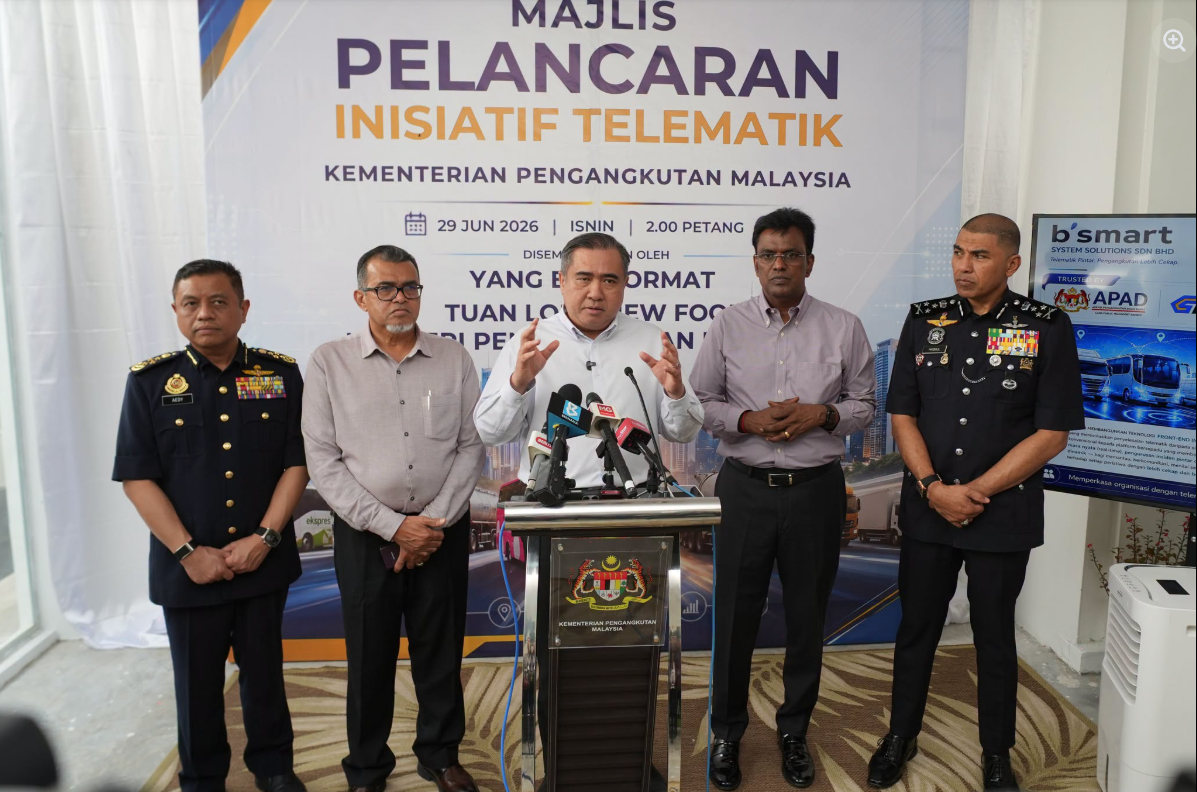
THE government’s decision to introduce telematics for commercial vehicles in phases between 2026 and 2028 is a positive step, but authorities must avoid repeating the mistakes that derailed a similar initiative a decade ago, says a road safety and sustainable transport advocate.
According to Shahrim Tamrin, the phased rollout, announced by the Transport Ministry, follows last year’s fatal crashes in Gerik and Teluk Intan, the latter involving a gravel lorry that investigators found was overloaded by about 70% and operating without a GPS tracking device despite regulatory requirements.
Shahrim, a former board member of the Malaysian Institute of Road Safety Research (MIROS), said Malaysia had previously attempted to introduce compulsory telematics for high-risk commercial vehicles in 2016 through the then Land Public Transport Commission (SPAD) and the Malaysian Motor Insurance Pool (MMIP).
However, he noted that the initiative failed after industry players opposed the RM3,400 upfront installation cost, prompting regulators to make the scheme voluntary.
“A decade of valuable safety data was lost while fatal crashes continued,” he lamented.
Shahrim pointed out that the new subscription-based model, costing between RM60 and RM300 a month, removes one of the main financial barriers cited previously.
“With the upfront hardware cost no longer an issue, the question is what the two-year voluntary period is intended to achieve,” he said.
He cited a 2014 study by the US Federal Motor Carrier Safety Administration (FMCSA) and Oak Ridge National Laboratory, which found unsafe driving incidents fell by nearly 50% when telematics was combined with structured driver coaching and feedback.
He also referred to a 2024 SambaSafety industry report, which found that 72% of fleet operators recorded fewer crashes and insurance claims when telematics was integrated with driver training rather than used solely as a monitoring device.
“The evidence consistently shows that telematics alone is not enough. It becomes an effective safety tool only when supported by coaching, enforcement and meaningful regulatory action,” he said.
Shahrim urged the Transport Ministry to use the transition period to establish a comprehensive implementation framework instead of allowing another prolonged voluntary phase.
Among his recommendations are meaningful insurance premium discounts for operators with strong safety records, targeted tax incentives or grants for small and medium-sized transport operators adopting certified telematics systems, and better integration of telematics data with enforcement agencies, including the Road Transport Department (JPJ), the Royal Malaysia Police (PDRM) and MIROS.
He also called for greater transparency through public recognition of operators with exemplary safety records and greater scrutiny of companies with consistently poor safety performance.
In addition, Shahrim said the five accredited telematics providers should achieve full interoperability through the central Driver Database System before mandatory implementation begins.
He added that an integrated telematics system could also strengthen the Kejara demerit programme by enabling employers, insurers and regulators to track drivers’ safety records more effectively.
“Malaysia has never lacked the technology to improve commercial vehicle safety. What has been lacking is the political will to see implementation through when industry resistance emerges,” he stated.
He stressed that the success of the telematics initiative should ultimately be measured not by the number of devices installed, but by the reduction in road crashes and lives saved. ‒ July 8, 2026
Main image: Facebook/Ministry of Transport Malaysia