THE rhetoric is compelling. Every week, another multinational announces a net-zero pledge, unveils biodegradable packaging or promises to decarbonise its supply chain. Investors applaud rising ESG scores, and companies present themselves as champions of sustainability.
Yet beneath the glossy announcements lies a more complicated reality. For many businesses, becoming genuinely planet-friendly is not simply a matter of good intentions.
It often means confronting higher costs, inadequate infrastructure and business models built around short-term returns.
The numbers alone explain much of the challenge.
Many sustainable materials still cost significantly more than conventional alternatives. Retooling factories for circular manufacturing, where waste is minimised and materials are reused, requires substantial investment.
Large corporations may be able to absorb these costs, but for many small and medium-sized enterprises, the price premium can be prohibitive in highly competitive markets.
Consumers also send mixed signals. Surveys consistently show growing concern about climate change, yet purchasing decisions are often driven by affordability, particularly during periods of economic uncertainty. When household budgets are squeezed, price usually outweighs sustainability.
Even businesses that genuinely want to reduce their environmental impact often encounter another obstacle: infrastructure.
A company may develop compostable packaging, but without industrial composting facilities, that packaging may still end up in landfill or be incinerated.
Electric delivery fleets depend on reliable charging networks and electricity grids capable of supporting them. Recycling systems, renewable energy storage and efficient public transport remain unevenly developed in many countries.
Businesses cannot solve these problems on their own.
Nor are sustainability decisions as straightforward as they sometimes appear.
Organic cotton generally requires fewer pesticides but can demand more water. Bioplastics reduce dependence on petroleum but present their own environmental challenges if poorly managed.
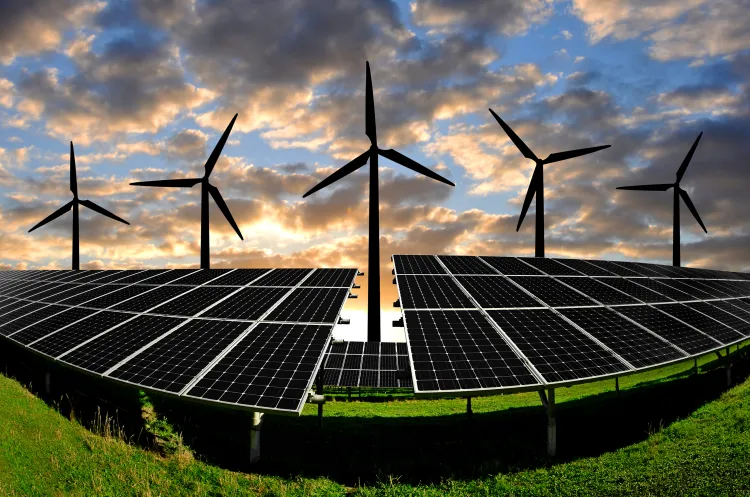
Solar panels and batteries rely on minerals whose extraction raises concerns about environmental degradation and labour conditions. Wind turbine blades remain difficult to recycle.
None of this suggests sustainability is futile. Rather, it illustrates that many environmental choices involve trade-offs rather than perfect solutions.
Businesses often find themselves choosing between options that are simply less harmful than the alternatives.
Financial incentives present another challenge.
Publicly listed companies operate under intense pressure to deliver consistent financial performance.
Many environmental investments generate benefits over years or decades, while shareholders and financial markets frequently focus on quarterly earnings.
As long as short-term financial performance remains the dominant measure of corporate success, sustainability initiatives will often struggle to compete with immediate commercial priorities.
Consumers also share part of the responsibility.
Many of us support sustainable business in principle but continue to favour convenience and lower prices in practice. We welcome environmentally responsible products until they cost more or take longer to arrive. Businesses respond to these market signals every day.
The solution is therefore larger than individual companies.
Meaningful progress requires governments to create the right policy environment through effective regulation, better infrastructure and pricing systems that reflect the true environmental cost of pollution.
Investors also have a role by recognising that long-term resilience may sometimes require accepting lower short-term returns.
The transition to a greener economy is not being held back by a lack of ambition alone. It is constrained by economic incentives, public infrastructure and financial systems that were designed for a different era.
Businesses know where they need to go. The challenge is that many are still operating on roads built for yesterday’s economy. ‒ July 14, 2026
The author is affiliated with the Tan Sri Omar Centre for STI Policy Studies at UCSI University and is an Adjunct Professor at the Ungku Aziz Centre for Development Studies, Universiti Malaya.
The views expressed are solely of the author and do not necessarily reflect those of Focus Malaysia.