
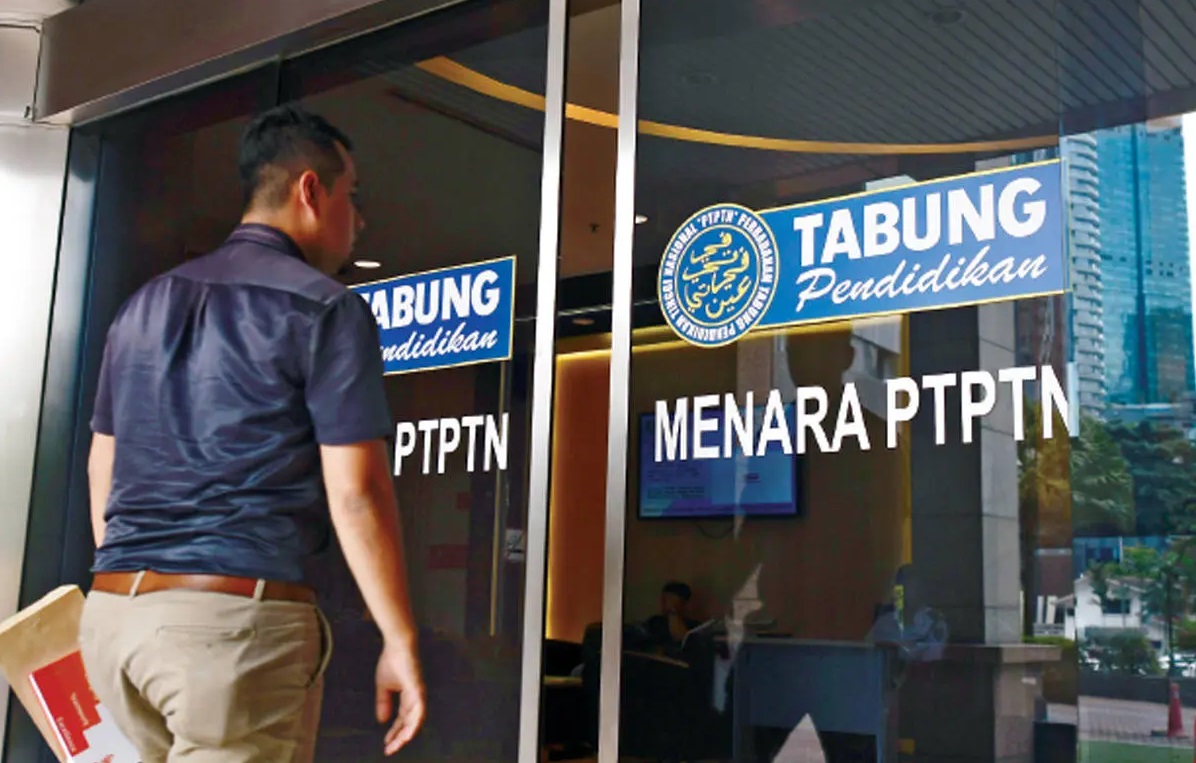
PEMUDA Sosialis has welcomed Prime Minister Datuk Seri Anwar Ibrahim’s announcement that the government will discuss the possibility of abolishing the National Higher Education Fund Corporation (PTPTN), but says scrapping student loans alone will not resolve deeper structural problems in Malaysia’s higher education system.
Its chairperson, Amanda Louis, said abolishing PTPTN would ease the financial burden on students and graduates. However, she warned that the move should be accompanied by reforms to prevent public funds from disproportionately benefiting private higher education institutions.
“For generations, Malaysian youth have entered working life already burdened by debt. Education should be a right, not a financial transaction that leaves graduates paying for years after completing their studies,” she said in a statement.
Louis said the abolition of PTPTN should mark the beginning of broader reforms rather than an end in itself.
“The abolition of PTPTN, if it comes, cancels a debt. However, it does not yet abolish the system that produced the debt,” she said.
She cautioned that increasing public funding without stronger regulation could encourage private institutions to raise tuition fees, effectively transferring more public money into private hands.
“If public funds are permitted to flow into private institutions without adequate safeguards, those institutions may simply raise their fees, while the public ultimately bears the cost,” she remarked.
Louis argued that higher education should be regarded as a public good supported through public investment rather than treated primarily as a commercial enterprise.
“Higher education is built through public teaching, research and investment, and its value should be returned to the public that sustains it rather than extracted as private profit,” she added.
To ensure PTPTN’s abolition delivers lasting benefits, Pemuda Sosialis called on the government to implement wider reforms, including providing sufficient direct funding for public universities to reduce reliance on commercial programmes and costly alternative pathways and imposing statutory limits on fees charged by private higher education institutions.
The party also proposed beginning a programme to bring strategic private universities and colleges into public ownership to improve accountability and ensure they serve the public interest.
According to Louis, Malaysia’s higher education system had increasingly shifted towards a market-oriented model, where students were viewed as consumers purchasing credentials rather than citizens acquiring knowledge.
“The abolition of PTPTN should be the first step in a broader effort to reclaim higher education as a publicly funded, publicly accountable and universally accessible system,” she said. ‒ July 17, 2026
Main image: The Edge Malaysia