
THE latest oil shock has highlighted a less obvious weakness in Malaysia’s energy position. Although the country remains a net energy exporter, its fiscal finances are increasingly sensitive to refined fuel prices because of subsidies, while its trade exposure remains skewed towards imported crude and LNG.
The crisis in West Asia strengthens the argument for reducing reliance on subsidised fossil fuel consumption while maintaining sufficient fiscal room to invest in energy infrastructure needed to meet growing electricity demand.
The way oil prices affect Malaysia’s economy has also shifted somewhat. Traditionally, rising crude prices were viewed positively because they increased export earnings and boosted PETRONAS’ contributions, strengthening the country’s external position. That benefit remains intact.
However, higher oil prices now come with a more significant fiscal offset. When market fuel prices rise but subsidised pump prices remain unchanged, the government’s subsidy burden increases automatically.
According to the Ministry of Finance (MoF), fuel subsidies amounted to RM0.8 billion a month in January and February, before rising sharply to RM5.0 billion in March and April.
The figure eased to RM4.0 billion per month in May and June as prices moderated. MoF estimates that maintaining the subsidy regime would cost around RM3.5 billion monthly if Brent crude remains close to USD90 per barrel.
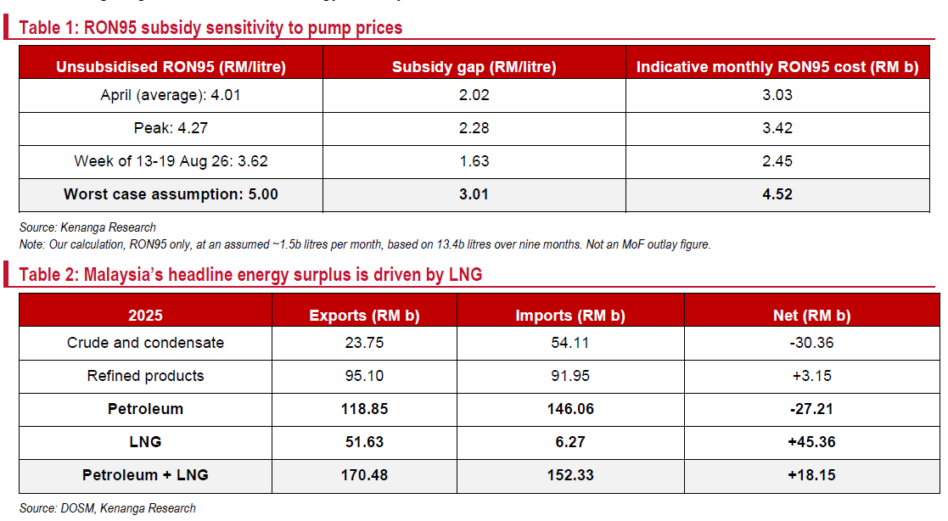
Based on our estimated price pass-through and first-half figures, the 2026 subsidy bill could reach approximately RM38 billion to RM43 billion, assuming Brent averages between USD80 and USD90 per barrel.
Diesel was the main contributor to the March-April increase, rather than petrol. In April, unsubsidised diesel averaged RM5.80 per litre, compared with RM4.01 for RON95.
This translated into subsidy gaps of RM3.65 and RM2.02 per litre respectively. Focusing solely on RON95 therefore risks understating Malaysia’s overall fiscal exposure when energy prices rise sharply.
At the same time, another energy-related pressure is emerging. Rapid growth in AI workloads is increasing data centre electricity consumption, pushing up peak demand and creating a need for additional generation and grid investment.
Unlike fuel subsidies, such spending represents productive capital formation and generates regulated returns.
Taken together, these developments point to a broader balance-sheet issue.
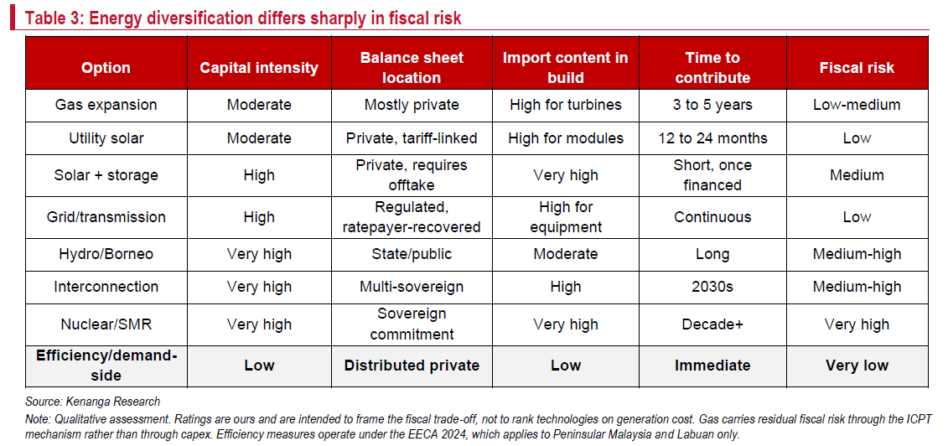
Fuel subsidies turn externally determined energy prices into recurring fiscal costs, while rising electricity demand creates opportunities for investment in productive assets.
Redirecting energy-related spending from consumption towards infrastructure could therefore improve the quality of Malaysia’s energy expenditure.
Much of this investment will be carried out by TNB rather than directly by the government.
With government-linked investment companies collectively owning more than 60% of TNB, a significant portion of the resulting earnings would ultimately accrue to government-linked investors.—Aug 19, 2026
Main image: The Star