

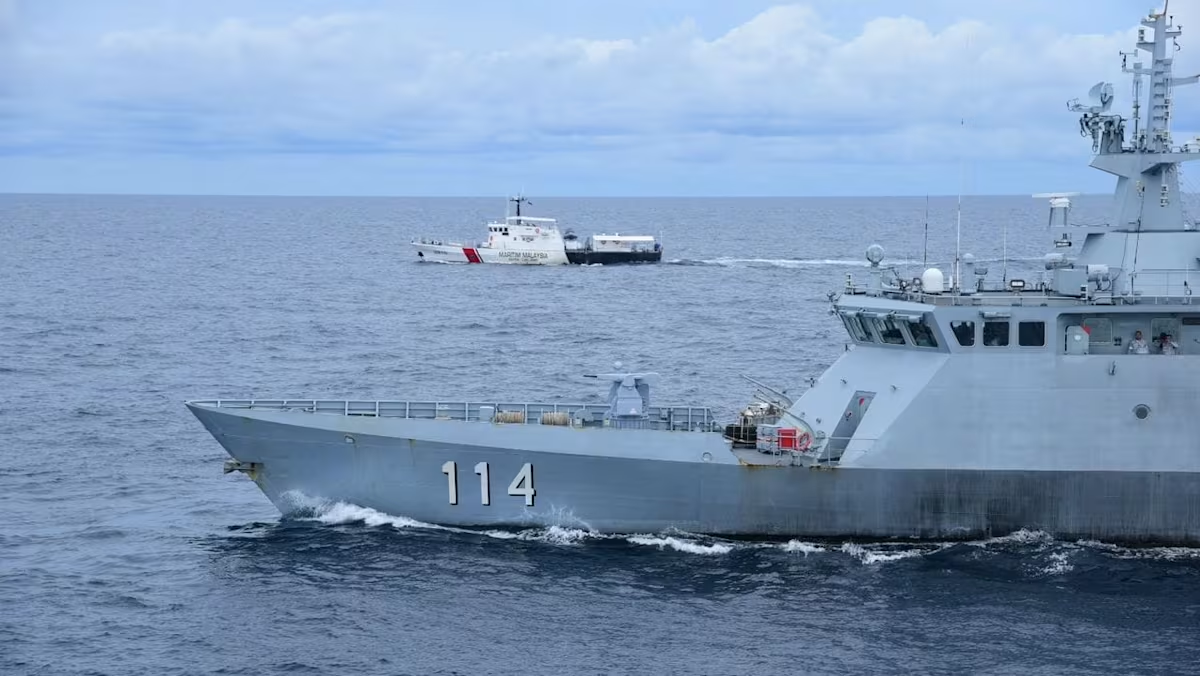
MALAYSIA’S 10th-place position in the Lowy Institute’s 2025 Asia Power Index should be read not as a measure of national prestige, but as a strategic warning.
Malaysia is classified as a middle power, with significant diplomatic, economic and cultural influence. Yet its military capability ranks only 17th among 27 countries and territories. Its overall power score of 20.6 reflects a country whose influence exceeds its hard-power capacity.
This raises an important question: does Malaysia’s defence strategy adequately match the strategic environment it faces?
The answer is increasingly uncertain.
The disparity has allowed Malaysia to pursue strategic autonomy and maintain constructive relations with competing major powers. But diplomacy can reduce tensions; it cannot indefinitely substitute for credible deterrence.
Malaysia’s Defence White Paper already recognises this reality. Its strategy rests on three pillars: Concentric Deterrence, Comprehensive Defence and Credible Partnerships, with the aim of developing an integrated, agile and focused armed force.
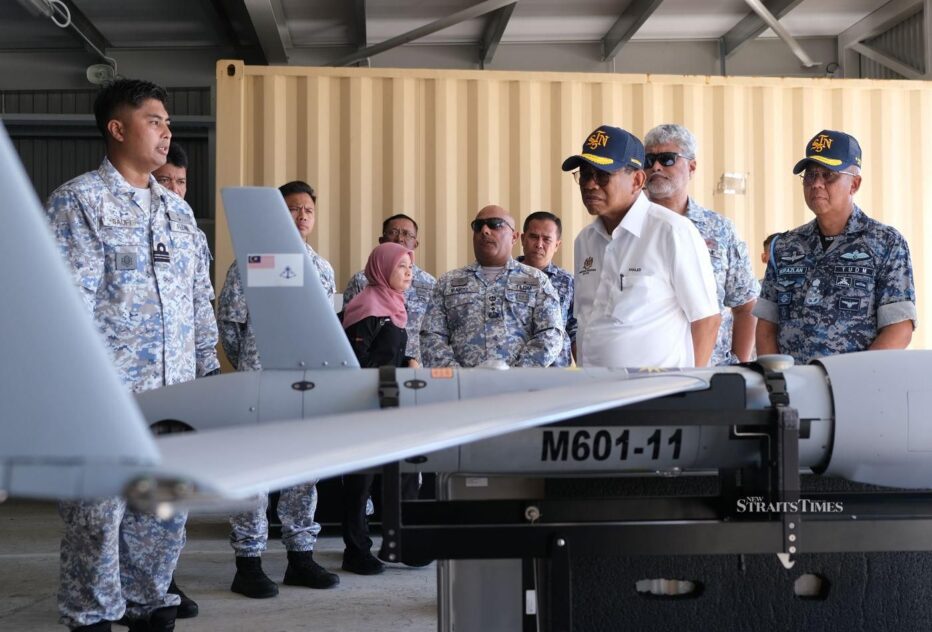
It also recognises Malaysia’s unusual geography. Peninsular Malaysia is separated from Sabah and Sarawak by the South China Sea, requiring the armed forces to maintain the ability to operate across two theatres.
The problem, therefore, is not the absence of a defence strategy. It is whether Malaysia is developing the capabilities needed to execute it.
The South China Sea is the clearest test.
Malaysia does not need an offensive military posture or an arms race with China. But it does need sufficient surveillance, maritime presence and rapid-response capability to protect its territorial waters, exclusive economic zone, offshore resources and strategic sea lanes.
The Mid-Term Review of the Defence White Paper, approved by the Cabinet in 2025, recognised that the strategic environment had changed substantially and sought to assess emerging challenges and improve implementation of the policy.
Malaysia should therefore move beyond a platform-centric approach towards a more networked defence strategy.
That means prioritising maritime domain awareness, secure communications, intelligence fusion, integrated command-and-control, cyber defence, electronic warfare and unmanned systems.
Expensive conventional platforms remain necessary, but a middle power cannot afford to compete symmetrically with much larger military powers.
Malaysia must maximise the effectiveness of every ringgit spent on defence.
The Royal Malaysian Navy and Royal Malaysian Air Force deserve particular attention. Malaysia’s geography makes maritime and air surveillance fundamental to national sovereignty, while the country’s two-theatre reality should be a central determinant of force structure, basing, mobility and procurement.
Readiness in Sabah and Sarawak cannot be treated simply as a logistical problem. The ability to reinforce and sustain forces there during a crisis should be a core defence requirement.
At the same time, Malaysia should strengthen credible partnerships without abandoning strategic autonomy.
That means deepening defence cooperation with ASEAN partners, Australia, Japan, the United States, the United Kingdom, India and other compatible partners. The Defence White Paper itself identifies credible partnerships as one of the three pillars of national defence strategy.
The objective should not be to align with one great power against another. It should be to ensure Malaysia has enough relationships, interoperability and strategic options to avoid being coerced by any one power.
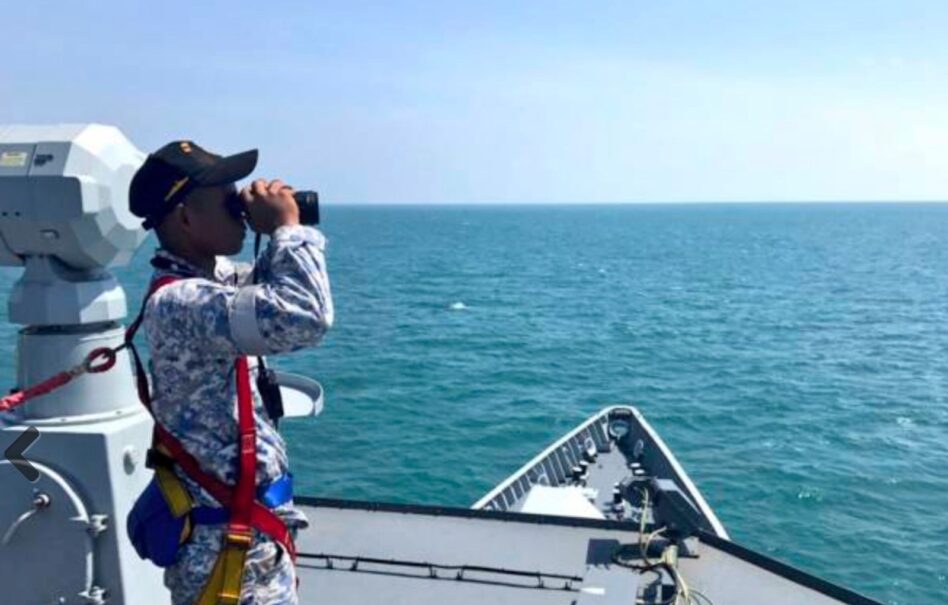
The Lowy Index ultimately exposes Malaysia’s central strategic dilemma: its diplomatic power is stronger than its military power.
That is an advantage during periods of stability. But in an increasingly contested Indo-Pacific, Malaysia needs the hard-power foundation to make its diplomacy credible.
The objective should not be to become a military great power. It should be to become a credible smart middle power: economically resilient, diplomatically influential, technologically capable and militarily difficult to coerce.
Malaysia’s defence strategy should therefore be measured not by the number of platforms purchased, but by whether the country can detect threats early, respond rapidly, protect its maritime interests and sustain operations across two theatres.
The strategic warning is clear. Malaysia needs to close the gap between its defence ambitions and the capabilities required to deliver them, while ensuring that every investment strengthens readiness, technological capacity and strategic autonomy.
Waiting for a crisis to reveal those gaps would be far more expensive. ‒ Aug 19, 2026
R. Paneir Selvam is Principal Consultant at Arunachala Research & Consultancy Sdn Bhd (ARRESCON), a think tank specialising in strategic national and geopolitical analysis.
The views expressed are solely of the author and do not necessarily reflect those of Focus Malaysia.
Main image: Facebook/Markas Pemerintahan Armada Timur