
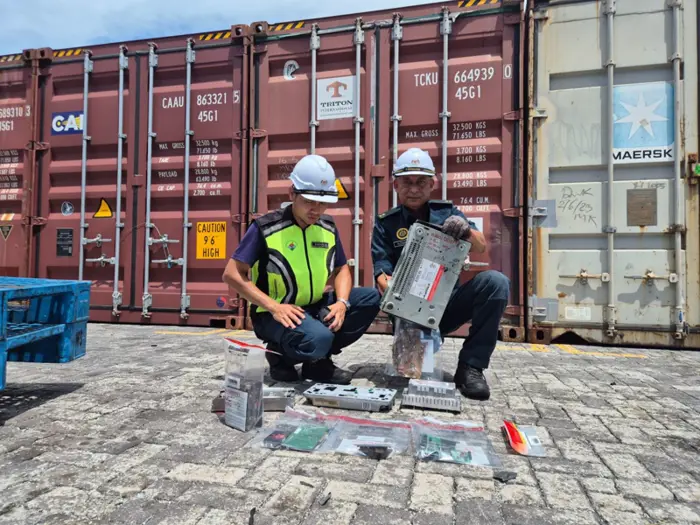
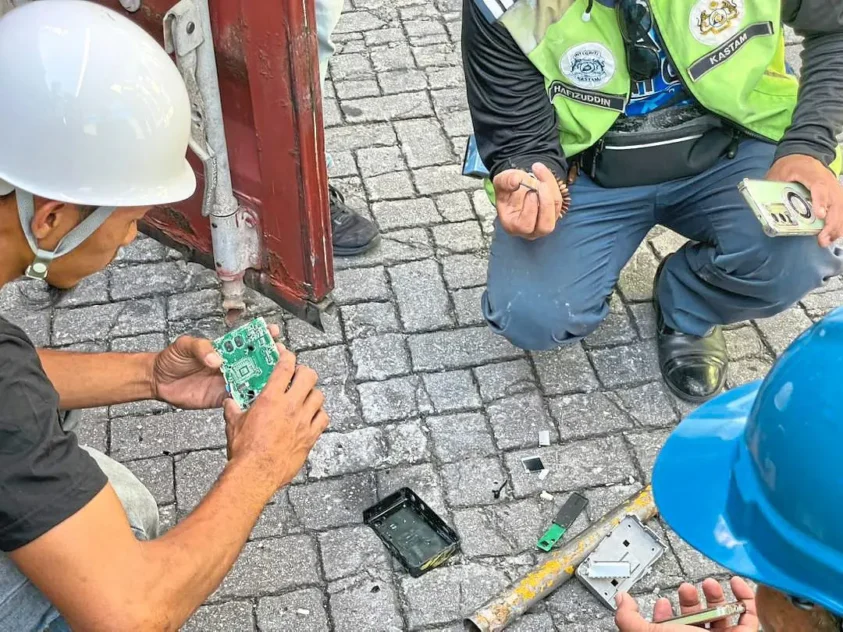
TWO containers roll off a ship at West Port. The manifest says “recyclable metal”. Open the doors and the truth spills out: gutted CPUs, credit card machines, printers and keyboards. A total of 37,028kg of toxic e-waste, falsely declared to evade detection.
The February 2026 seizure was not an isolated case. It was another reminder that Malaysia remains a target for illegal waste shipments disguised as legitimate trade.
This crisis now has two faces.
Singapore has agreed to halt exports of construction and demolition waste to Malaysia after Johor authorities linked illegal dumping in Pontian to waste reportedly arriving from across the Causeway.
Residents said trailers had been unloading debris at night for almost two years, while several illegal dumping sites were shut down as investigations expanded.
At the same time, Malaysia’s battle against illegal e-waste imports shows both genuine progress and the scale of what remains.
A country turned into a dumping ground
Malaysia did not arrive here by accident. After China closed its doors to many global waste imports in 2018, Southeast Asia absorbed much of the overflow.
An OECD report identified Malaysia as a major destination for imported e-waste and plastic waste, with shipments originating largely from the United States as well as Japan, Germany, the United Kingdom and Australia.
The irony is that Malaysia already generates around 365,000 tonnes of e-waste annually. Imported waste disguised through false customs declarations only adds to the burden on ports, landfills and surrounding communities.
Malaysia has not stood still. In April 2026, the government imposed a complete ban on e-waste imports, closing a loophole long exploited by smugglers who declared hazardous electronic scrap as industrial raw material.
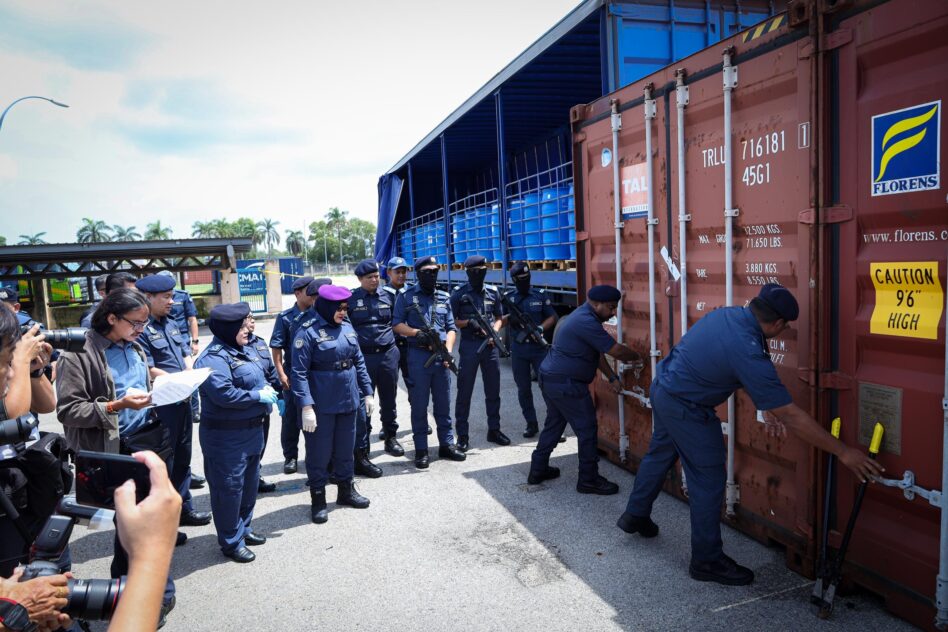
The results are encouraging. Between January and July 2026, Op Green Shield inspected 685 containers and repatriated more than 3,000 tonnes of illegal e-waste to its countries of origin.
Yet enforcement faces an enormous challenge. Port Klang alone handled roughly 3.2 million containers in the first five months of 2026. Even determined enforcement teams are searching for illegal shipments in an immense volume of legitimate trade.
The same pattern, different waste
The Pontian case reveals a familiar logic.
Construction waste, cheaper to export than process domestically, allegedly ended up on Malaysian soil while nearby residents bore the consequences through dust, damaged roads and potential environmental risks.
Whether the cargo contains circuit boards or concrete rubble, the underlying incentive remains the same: exporting waste can become cheaper than managing it responsibly.
The costs, however, do not disappear. They simply shift to communities living near illegal dumping sites, contaminated land and hazardous recycling operations.
Malaysia’s e-waste ban is an important step, but bans alone cannot solve the problem.
Sustained inspection capacity, better container-level intelligence and stronger cooperation with exporting countries remain essential. Regional coordination also matters.
If one country tightens enforcement while its neighbours do not, illegal shipments may simply be diverted elsewhere.
The United States, one of the world’s largest sources of e-waste exports, has signed but not ratified the Basel Convention, highlighting the uneven international landscape governing cross-border waste movements.
Malaysia should continue working with ASEAN partners to strengthen regional enforcement while pressing exporting countries to take greater responsibility for the waste they generate.
Ultimately, this is not only about customs enforcement.
It is about refusing a model in which environmental costs are quietly transferred from richer economies to communities expected to absorb them.
Malaysia cannot recycle, bury or quietly absorb its way out of a waste crisis created beyond its shores.
The most durable solution is ensuring that the country never becomes the destination in the first place. ‒ Aug 25, 2026
Ahmad Nizam Che Kasim is from AGILE Research Group, Faculty of Business & Communication, Universiti Malaysia Perlis.
The views expressed are solely of the author and do not necessarily reflect those of Focus Malaysia.
Main image: The Star