
“IF war came to your country, would you fight?”
It is a question that grabs attention. Pollsters have asked it for decades, and the results are often reduced to a simple patriotism score.
But the research tells a far more interesting story, especially for Malaysia.
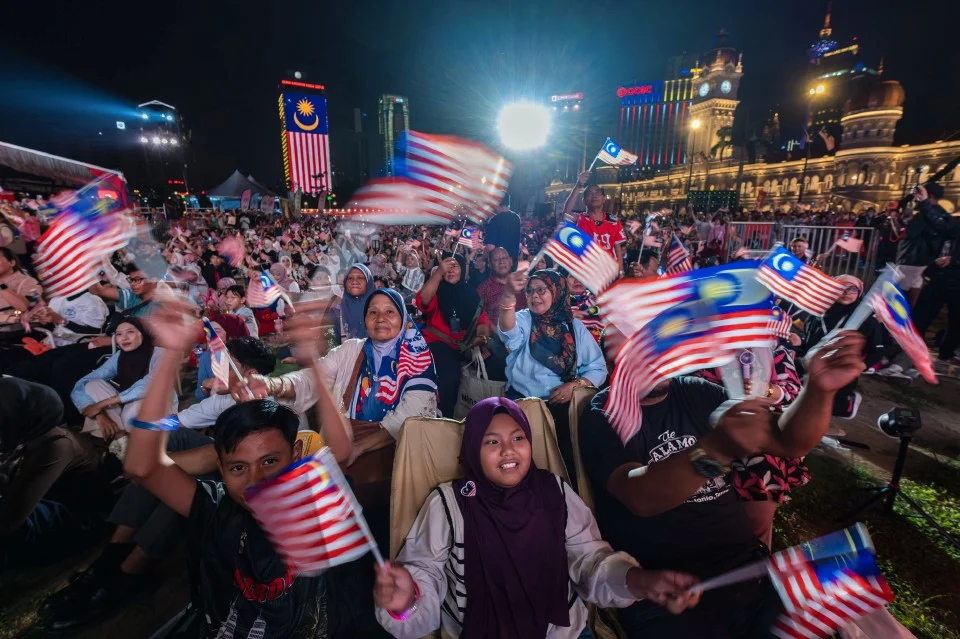
A 2023/24 WIN/Gallup International survey across 45 countries found that 68% of Malaysians said they would fight for their country, while 19% said they would not and 13% were undecided.
That places Malaysia well above the global average of 52%, ahead of Indonesia (60%) and Thailand (50%), and far above countries such as the United States (41%), Britain (33%), Germany (23%) and Japan (9%).
At first glance, that looks like a strong display of national pride.
The reality is more nuanced.
What “willing to fight” actually measures
A 2026 study by Alexander Sorg, Wolfgang Wagner and Michal Onderco, published in the European Journal of International Security, warns against taking these figures too literally.
Saying you would fight in a survey is very different from signing up for military service or facing combat.
The question has been asked consistently for about four decades through the World Values Survey and European Values Study, covering hundreds of thousands of respondents across more than 100 countries.
That long-running data allows researchers to identify patterns rather than treat the results as a one-off snapshot.
Why people answer differently
The research shows that willingness to fight is shaped by several factors.
People who feel a stronger emotional attachment to their country are generally more willing to defend it. Age, gender and personal circumstances also influence responses, while prosperity can reduce willingness as people perceive they have more to lose.
Perhaps the most striking finding is that proximity to conflict matters. Countries located near wars or territorial disputes tend to produce citizens who view national defence as an immediate necessity rather than an abstract possibility.
The research also highlights an important distinction. Some people who say they would not fight in combat still express a willingness to contribute through medical services, intelligence, logistics or other support roles.
In other words, “not willing to fight” should not automatically be interpreted as “not willing to defend.”
What Malaysia’s 68% really tells us
Malaysia’s 68% is encouraging, but it should not become a competition over which country is “more patriotic.”
The figure measures an attitude under hypothetical circumstances, not a prediction of how many people would actually mobilise during a conflict.
The more meaningful question is this: what exactly are Malaysians willing to defend?
A person can be willing to resist external aggression while still criticising corruption, poor governance or racial discrimination. Patriotism and political approval are not the same thing.
In fact, the strongest form of Malaysian patriotism is not loyalty to a particular government, race or religion. It is loyalty to Malaysia as a shared home where every citizen has dignity, security, justice and an equal stake in the nation’s future.
The real lesson
A country’s defence strength is not measured only by military spending, weapons or recruitment numbers.
It also depends on social cohesion, trust between communities, a shared national identity, perceived fairness and citizens’ belief that their country is worth defending.
The 68% figure offers reassurance, but policymakers should ask a more important question than how many Malaysians say they would fight.
What kind of Malaysia would inspire more citizens to protect it, not only in wartime with their lives, but every day through integrity, service and solidarity?
That is the kind of patriotism that makes a nation truly resilient. ‒ Sept 3, 2026
KT Maran is a Focus Malaysia viewer.
The views expressed are solely of the author and do not necessarily reflect those of Focus Malaysia.
Main image: Berita Harian