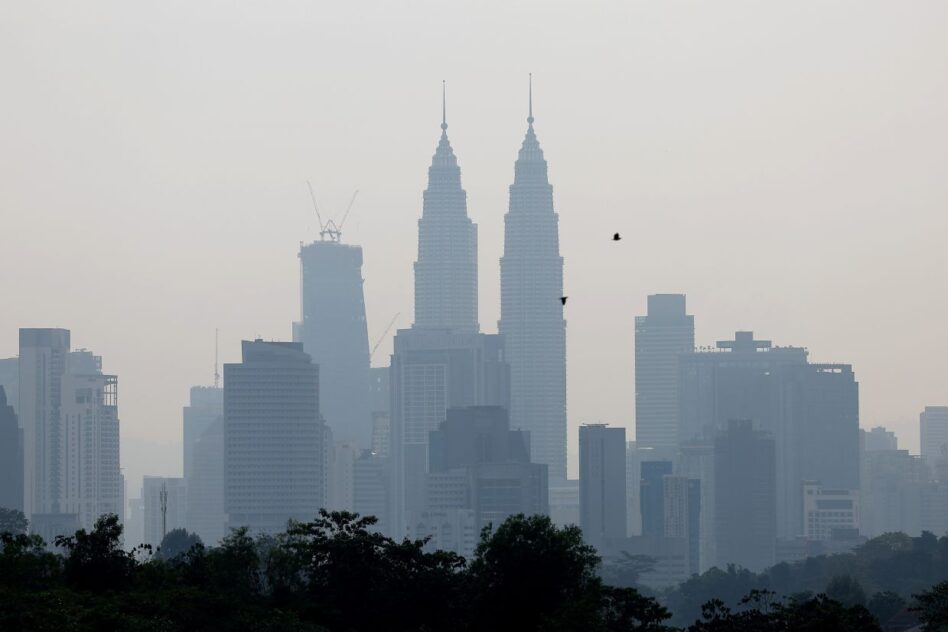


MALAYSIA Day is almost here. Beyond the familiar celebrations, Sept 16 should also be a time to reflect on the country we have become and where we are heading.
That question feels especially pressing this year.
Political developments are moving at dizzying speed. UMNO and PAS, once bitter rivals, appear to be drawing closer again.
In Selangor, the possibility of cooperation between Pakatan Harapan and Bersatu has been floated. Now, Deputy Prime Minister Datuk Seri Dr Ahmad Zahid Hamidi is calling for an early general election.
For ordinary Malaysians, keeping track of who is aligned with whom has become exhausting. Parties that fought each other yesterday may work together tomorrow, while partners in government may contest against one another at the next election.
The constant reshuffling has taught me one important lesson: we can no longer assume that voting for a party will necessarily produce the government or alliance promised during an election.
Perhaps it is time to place greater trust in people than in party logos.
That does not mean parties and policies no longer matter. They do. But as GE16 approaches, Malaysians should look more closely at the individuals seeking their votes.
What have they actually done? What do they stand for? Have they demonstrated judgement, integrity and the ability to work beyond partisan slogans?
There are already people across the political divide who offer glimpses of a different kind of leadership.
Shahril Hamdan, for example, has remained a thoughtful public voice despite being partyless.
One may not agree with all his views, but he consistently engages with difficult issues in a way that invites discussion rather than simply scoring political points.
Datuk Seri Tengku Zafrul Aziz represents a different strength. Coming from the corporate world rather than the traditional political ladder, he helped advance the New Industrial Master Plan 2030 and Malaysia’s push to attract higher-value investments in semiconductors, digital technology and advanced manufacturing.
His experience in finance and investment highlights the value of leaders who can bridge public policy and economic reality.
Steven Sim has shown another model of purposeful leadership. As Human Resources Minister, he steered the Gig Workers Act through Parliament, extending long-overdue recognition and protections to workers who had long fallen outside conventional labour laws.
His public engagement has also reflected a consistent focus on people facing genuine hardship.
Nik Nazmi Nik Ahmad brought seriousness to issues such as climate change and the energy transition, subjects that will shape Malaysia long after today’s political quarrels fade.
His measured and conciliatory style also offers a welcome contrast to the increasingly combative tone of our politics.
From East Malaysia, Ewon Benedick demonstrated another quality that has become increasingly rare. He resigned from the Cabinet over the federal government’s position on Sabah’s constitutional entitlement to 40% of revenue collected from the state.
Whatever one thinks of that decision, sacrificing a ministerial position over a matter of principle deserves careful consideration.
Even lesser-known figures can offer something different. MCA Youth information chief Neow Choo Seong, a multilingual former diplomat, has shown that younger leaders can bring fresh perspectives and communicate across different communities.
None of these individuals is presented as a saint or a saviour. They have different political backgrounds, different ideologies and different strengths.
The point is that they remind us leadership should be judged by competence, integrity, courage and results, not simply by which logo appears beside a candidate’s name.
This Malaysia Day, perhaps our hope should be that GE16 allows more leaders of that calibre to rise, while those weighed down by scandal, empty slogans and tired political games are finally shown the door.
Malaysia’s democracy has entered an era in which alliances are increasingly fluid. Coalition politics is likely to remain part of our future, and parties will continue negotiating, realigning and redefining their relationships.
That makes voters’ judgment more important than ever.
We cannot always predict which parties will eventually govern together. We can, however, scrutinise the character, competence and track record of the people asking for our trust.
Parties may continue changing partners. The country, however, cannot afford to keep going in circles. ‒ Sept 15, 2026
Jessica Quek Siew Chin is a Focus Malaysia reader.
The views expressed are solely of the author and do not necessarily reflect those of Focus Malaysia.
Main image: Unsplash/Ervince Kang