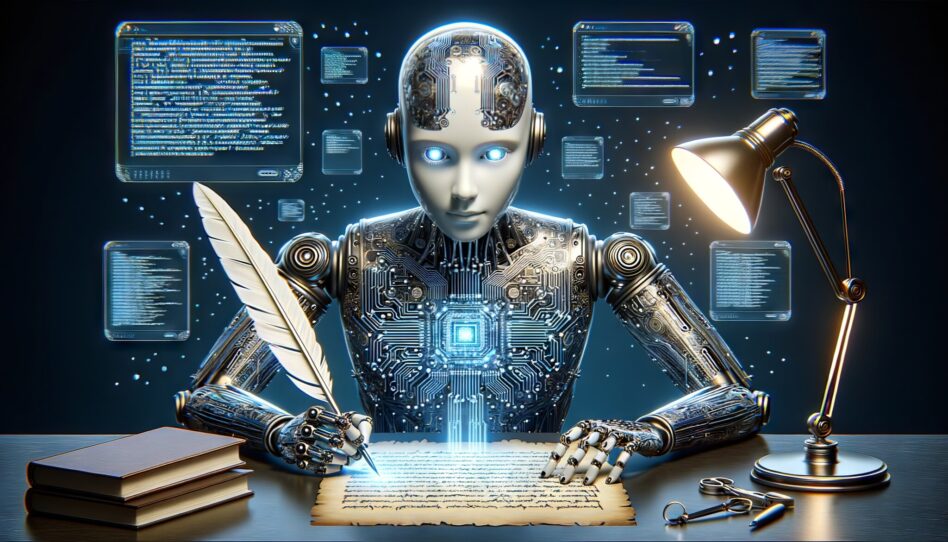


ARTIFICIAL intelligence (AI) is becoming a bigger part of our everyday lives. It is changing how we find information, communicate, work and learn. But as we rely more on AI, there is growing concern that we might gradually lose our ability to think for ourselves.
Every time we ask AI to write an essay, solve a problem or generate an idea without engaging our own minds, we risk giving up something essential to being human.
That concern has some merit. Students who simply copy AI-generated answers may complete their homework without understanding the subject. Workers who rely entirely on AI recommendations may lose confidence in making their own decisions. Technology should never replace curiosity, reasoning and critical thinking.
But rejecting or restricting AI because of these fears would be a mistake. We need to distinguish between using AI to do our thinking and using it to expand our thinking.
The latter offers enormous opportunities, particularly in education.
Consider a recent example. I used AI to investigate how much Malaysia spends importing firecrackers and fireworks.
What began as a simple question about imports developed into a much broader discussion about environmental damage, air and water pollution, animal welfare, public safety and the money spent on fireworks during celebrations.
Malaysia imported approximately US$40.4 mil (about RM174 mil) worth of fireworks in 2025, according to World Bank trade data. But knowing the import value should not be the end of the inquiry.
What could that money do if it were directed towards other social needs? How much could support schools, hospitals, community centres, animal shelters or conservation programmes?
These are not merely questions about firecrackers. They invite us to examine national priorities, opportunity costs, public awareness and what it means to be responsible citizens.
One question has led to several more, each offering an opportunity to investigate, discuss and think independently. That is how AI should be used.
Generative AI produces responses based on patterns learned from information used during training. Some AI tools can also retrieve information from online sources. However, their outputs are not automatically accurate or complete. They must be checked against reliable sources.
More importantly, finding existing knowledge should be the beginning of thinking, not the end of it.
Our goal should be to move from information to understanding, from understanding to insight, and from insight to fresh ideas and meaningful action.
This is where teachers and educators have an important responsibility.
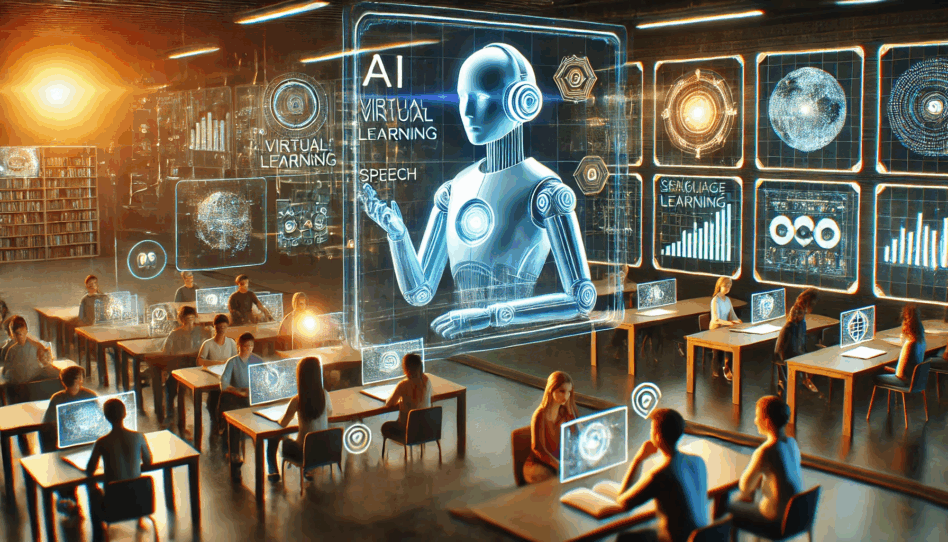
Instead of asking students to use AI to write assignments, teachers could introduce a topic and encourage them to use AI as a research aid.
Students should then examine what the information means, question its assumptions, verify its accuracy and develop their own conclusions.
For example, after investigating the economic and environmental effects of fireworks imports, students could work in groups. One could examine environmental impact, another the economic implications, while others explore animal welfare and alternative ways to celebrate festivals without unnecessary harm.
Each group could present its findings and propose practical alternatives. Students should be encouraged to challenge arguments, consider different perspectives and defend their conclusions.
The teacher’s role would be to guide the process rather than simply provide answers.
This approach can develop independent reasoning, research skills, creativity, empathy and teamwork. It also helps students connect classroom learning with real-life issues.
The same method can be applied to food security, poverty, public transport, climate change, healthcare, corruption, waste management and national development. A single question can open several avenues of inquiry and eventually spark ideas that might otherwise have remained unexplored.
Of course, students must learn to examine AI-generated information critically. They need to distinguish facts from assumptions, recognise misinformation, understand the technology’s limitations and cite their sources.

Original thinking also requires more than combining existing information. It involves imagination, experimentation, human values and the courage to explore possibilities that have yet to be realised.
AI cannot independently provide the judgement, purpose and ethical responsibility needed to turn information into meaningful innovation. Those remain human responsibilities.
Malaysia’s education system must therefore go beyond teaching students how to find answers. It must teach them how to ask better questions.
A successful education system should not be judged solely by how many answers students can repeat, but by their ability to investigate problems, develop insights and propose solutions.
AI is neither an enemy of human intelligence nor a guaranteed tool for progress. Its impact depends on how individuals, institutions and educators choose to use it.
Let’s not allow our children to become passive consumers of AI-generated answers. Let’s help them become explorers of knowledge, challengers of assumptions and creators of fresh ideas.
The future will not belong simply to those who know how to ask AI for answers. It will belong to those who know which questions to ask, how to interpret the answers and how to turn their insights into something better for humanity.
AI should not do the thinking for our next generation. It should inspire them to think beyond what previous generations imagined. ‒ Nov 18, 2026
KT Maran is a Focus Malaysia reader.
The views expressed are solely of the author and do not necessarily reflect those of Focus Malaysia.
Main image: Adobe Stock Image