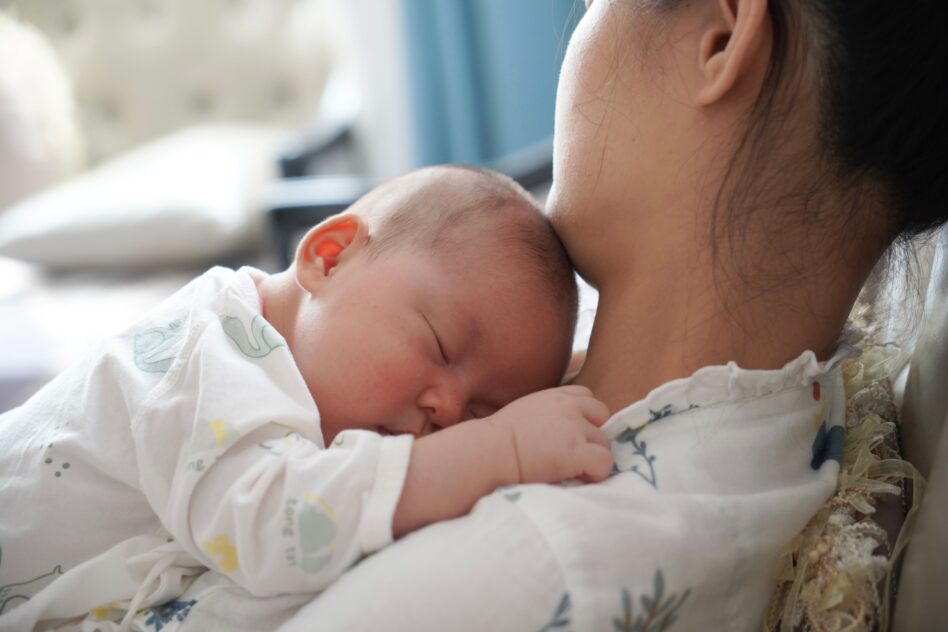

HAVE you ever walked into a room and forgotten why you went there? Or searched frantically for your phone, only to discover it was already in your hand?
For many mothers, such moments are all too familiar. Society has even given them a name: “mum brain”.
The expression is often used jokingly to describe forgetfulness, mental fog and difficulty concentrating during pregnancy and after childbirth.
But what if motherhood is not simply making women more forgetful? What if the maternal brain is also undergoing an extraordinary process of adaptation?
Scientists are increasingly exploring this possibility, offering a different perspective on what happens to a woman’s brain when she becomes a mother.
Motherhood is a major brain transition
Researchers use the term “matrescence” to describe the psychological, physical and neurological transition into motherhood.
Much like adolescence, matrescence involves significant developmental changes as women adapt to the demands of caring for a child.
A review published in Trends in Cognitive Sciences in 2023 by Edwina Orchard and colleagues describes motherhood as a major period of brain change, involving structural and functional neuroplasticity as well as increased cognitive demands.

Consider the daily responsibilities of caring for a newborn. A mother must recognise different cries, remember feeding schedules, monitor her baby’s health, respond to emotional signals and make countless decisions, often while coping with interrupted sleep.
Rather than viewing every moment of forgetfulness as evidence of declining mental ability, it is worth considering the cognitive load involved in this transition.
Is ‘mum brain’ really a decline in intelligence?
Research suggests pregnancy can be associated with modest changes in certain cognitive abilities, particularly memory and attention. A 2018 meta-analysis found poorer performance in some cognitive measures among pregnant women, especially during the third trimester.
However, these findings do not mean women become less intelligent, nor do they establish that every mother experiences measurable cognitive decline.
A 2026 study published in Cortex, involving 400 parents and non-parents, found no significant differences in objective cognitive performance between mothers, fathers and non-parents up to two years after childbirth.
This does not make mothers’ experiences of forgetfulness imaginary. Sleep deprivation, emotional stress, hormonal changes and the continuous responsibility of caring for a child can affect concentration and everyday memory.
A mother who forgets where she placed her keys may simply be tired and managing competing demands.
Could motherhood benefit the ageing brain?
One intriguing area of research concerns the possible long-term effects of motherhood on brain health.
Scientists are investigating whether the complex mental and emotional demands of parenting may contribute to what is known as cognitive reserve: the brain’s ability to maintain functioning despite ageing or neurological changes.
Imagine a city with several alternative roads. When one route becomes blocked, traffic can continue through another. Similarly, greater cognitive reserve may help the brain cope with certain age-related changes.
Orchard and her colleagues proposed that the sustained cognitive demands of motherhood could contribute to greater cognitive reserve later in life. However, this remains a research hypothesis, not proof that motherhood prevents dementia or protects women against cognitive decline.
Having more children does not necessarily mean better cognitive health.
What Malaysian traditions can teach us
In Malaysia, the importance of supporting mothers after childbirth has long been recognised through traditional confinement practices, commonly known as pantang.
Across different communities, these practices may emphasise rest, recovery, nutritious meals and assistance from family members. Their details vary, and not every traditional treatment is supported by scientific evidence.
A 2023 Malaysian study examining confinement practices among Malay mothers noted that some practices have unclear benefits and may potentially cause harm. Its findings should not be generalised to every ethnic community in Malaysia.
Modern science has not established that confinement improves maternal brain development. Nevertheless, the emphasis on practical support and recovery offers a valuable lesson: mothers should not be expected to manage every responsibility alone.
Supporting mothers means supporting their brains

Too often, society celebrates mothers for their ability to multitask while overlooking the physical and emotional exhaustion behind that achievement.
If motherhood involves brain adaptation, it does not mean mothers should be burdened with even more responsibilities. Partners should share childcare and household duties.
Employers should provide family-friendly working arrangements, while healthcare professionals should take concerns about memory, sleep and emotional wellbeing seriously.
Above all, mothers need understanding rather than criticism.
The next time a mother forgets something, perhaps we should reconsider the familiar joke about “mum brain”. She may be exhausted, overwhelmed or adjusting to one of life’s most demanding transitions.
For generations, scientists have studied how mothers shape their children’s developing brains. Perhaps it is time we paid equal attention to how motherhood shapes the brains of mothers themselves. ‒ Nov 18, 2026
The author is a Senior Lecturer and Cognitive Psychology Researcher at the Tun Abdullah Ahmad Badawi Cancer Centre (PKTAAB).
The views expressed are solely of the author and do not necessarily reflect those of Focus Malaysia.
Main image: Pexels/Kenan Zhang