
WE often hear an oversimplified narrative about British Malaya:
The Chinese came to do business. The Indians came to work on rubber estates. The Malays remained in their kampung.
But this familiar story leaves out an enormous part of our economic and social history.
The reality was far more complex.
💰 Who financed Chinese tin mining empires?
When Chinese entrepreneurs needed capital to open tin mines, purchase equipment, hire workers and expand their businesses, where did the money come from?
Not all of it came from British banks or Chinese merchants.
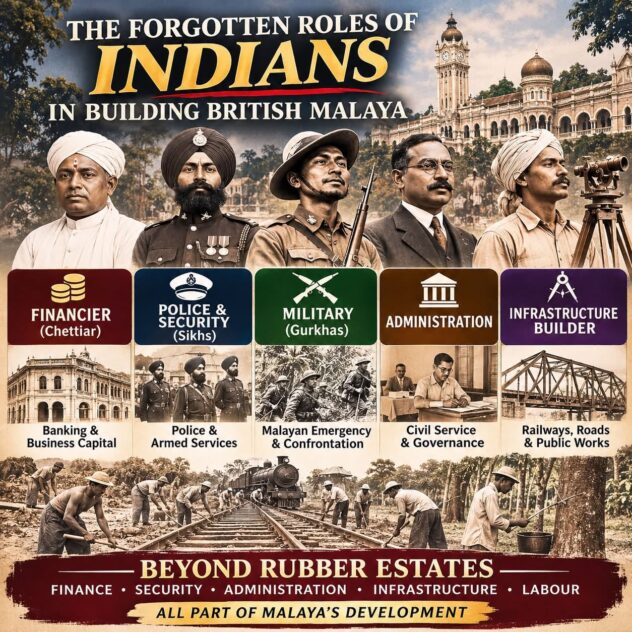
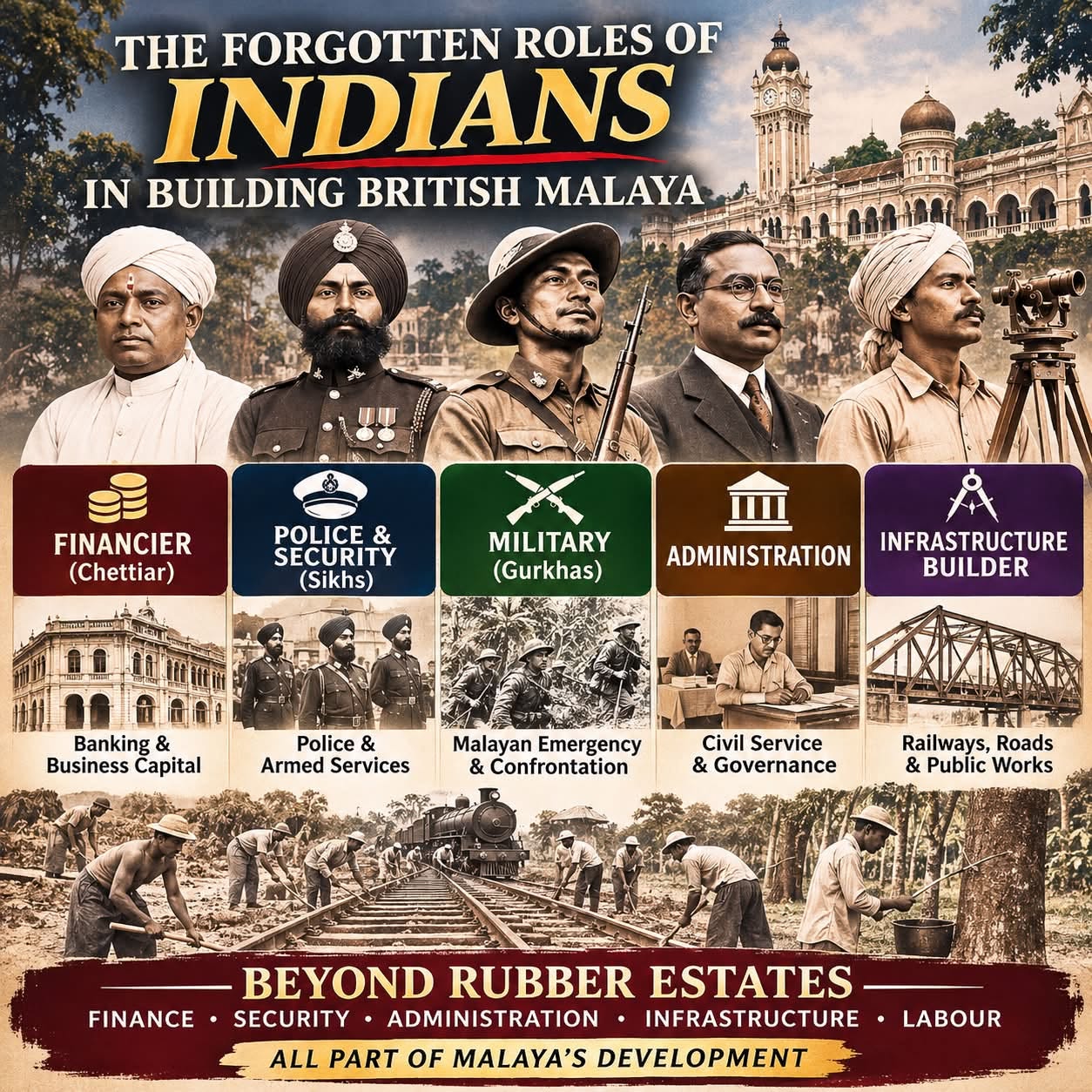
South Indian Nattukottai Chettiar banking networks were among the important sources of commercial credit in British Malaya.
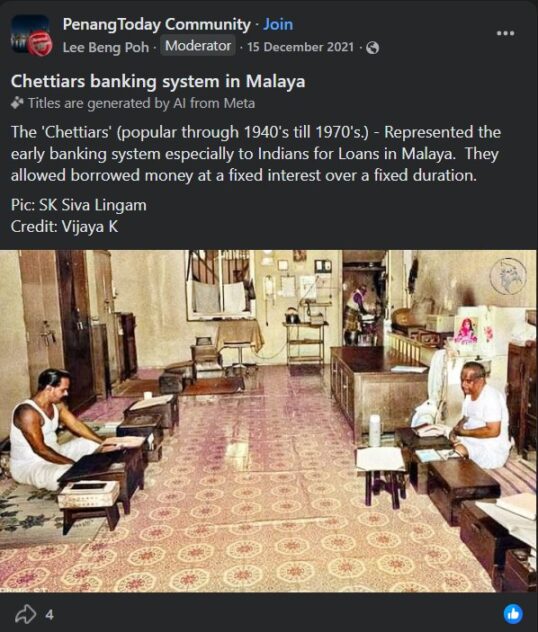
Their financial networks provided loans to Chinese tin miners, rubber plantation owners, merchants, property investors and Malay landowners even the Ruler or Sultan.
These networks connected capital across India, Malaya, Singapore and other parts of Southeast Asia.
Indian financiers were therefore not simply participants in the colonial economy. They helped finance its expansion.
👮 Establishing Malaya’s early police and security forces?
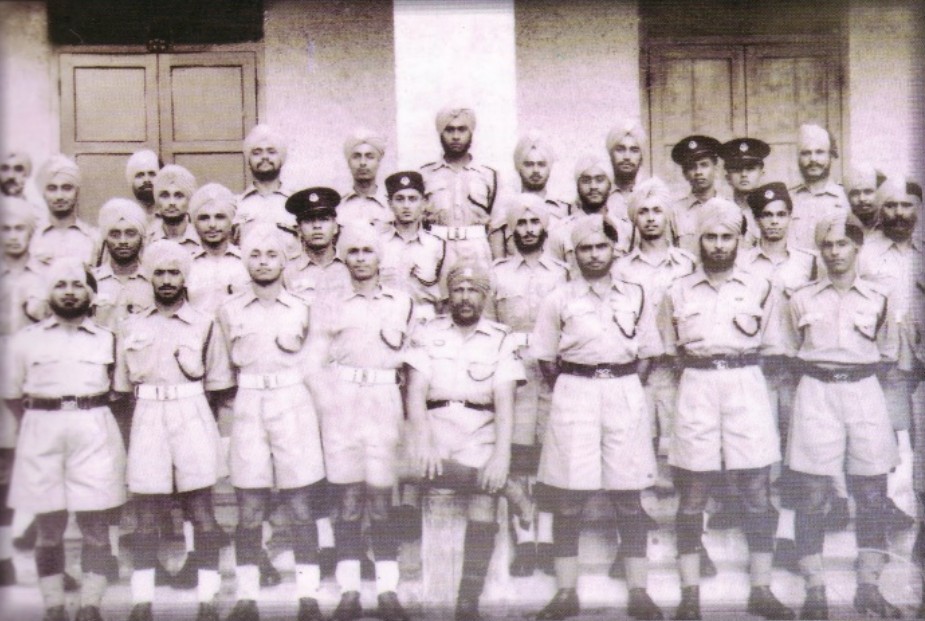
From the 1870s, Punjabi Sikhs from British India were recruited into the police and armed services.
They served in colonial police forces, security units, prisons and other institutions responsible for maintaining order.
Their presence became an important part of the security infrastructure of British Malaya.
But their role also reflected the colonial administration’s reliance on recruited forces to maintain British authority.
⚔️ Who fought during the Malayan Emergency?
Another often-overlooked military contribution came from Gurkha soldiers who were recruited primarily from Nepal.
Although Gurkhas were not an Indian ethnic community, many served historically through the British Indian Army and later British military formations.
They played significant roles during the Malayan Emergency (1948-1960) and the Indonesia-Malaysia Confrontation (1963-1966).
Their history demonstrates that Malaya’s military development was connected to manpower networks extending far beyond the peninsula.
🏛️ Who helped run the colonial administration?
British Malaya was not administered by British officers alone.
Indians also served as clerks, interpreters, teachers, legal professionals, technical assistants, revenue officers and other government employees.
They helped maintain records, support communications, operate public services and implement administrative procedures.
English-educated Indians alongside members of other communities became part of the professional and clerical workforce supporting colonial government institutions.
Their contributions were essential to the everyday functioning of public administration, even though senior political authority remained largely concentrated in British hands and local ruling institutions.
🚂 Who helped build Malaya’s infrastructure?
The railways, roads, bridges, ports, drainage systems and public buildings of British Malaya did not construct themselves.
Indian engineers, surveyors, technical workers, overseers and large numbers of labourers contributed to the development of colonial infrastructure.
Indian workers were especially important in railway construction, maintenance and public works.
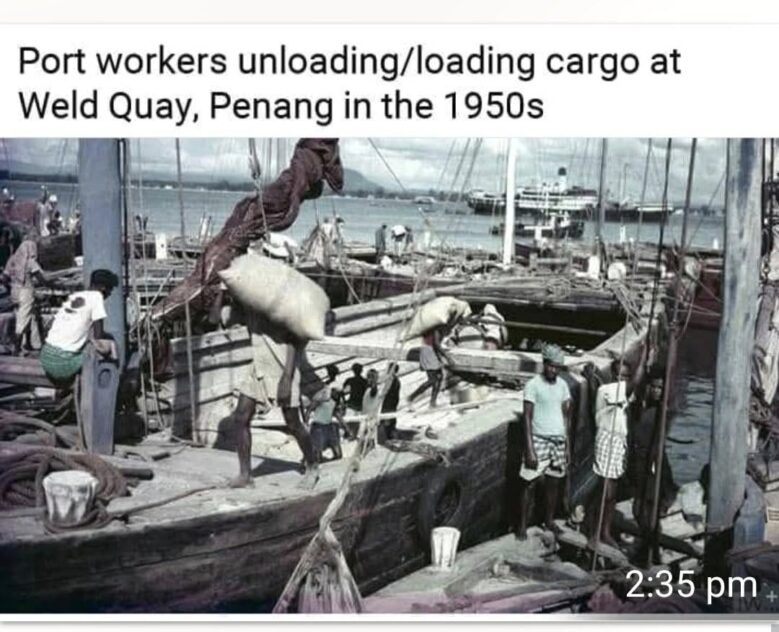
They worked alongside Chinese, Malay and other labourers who helped build the physical foundations of the modern economy.
This infrastructure connected tin mines to ports, plantations to export markets and inland settlements to growing commercial towns.
Much of it was developed to serve British colonial economic interests, particularly the extraction and export of tin and rubber.
Nevertheless, these transport networks and public facilities became part of the infrastructure inherited by independent Malaya.
🌳 And yes, Indians also worked in rubber estates
Indian plantation labour was a major component of Malaya’s colonial economy. But even this history deserves a fuller explanation.
Indian plantation workers helped establish and maintain the rubber industry that generated substantial export earnings.
Their work was physically demanding and many experienced low wages, difficult living conditions and restrictive labour arrangements.
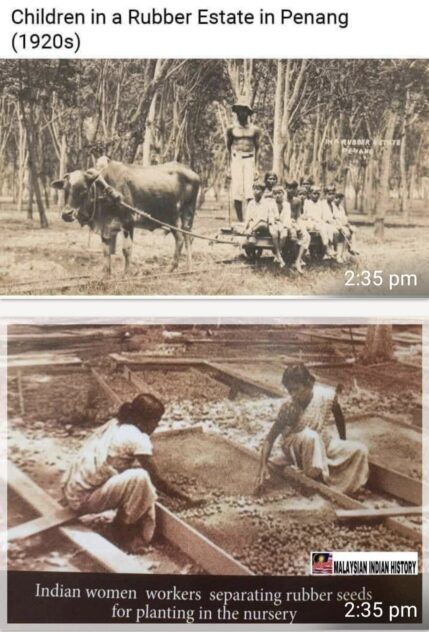
Their contributions should not be treated as less important than those of financiers, engineers or businessmen. Capital financed the plantations but labour made production possible.
🇲🇾 The real economic history of British Malaya
The history of British Malaya was never simply three ethnic communities working in three separate economic sectors. It was an inter-connected colonial economy built upon:
- Capital: British banks, Chinese merchants, Indian Chettiar financiers and other investors.
- Land and political authority: Malay rulers, local landholders and British colonial administrations.
- Enterprise: Chinese, Indian, Malay, European and other entrepreneurs.
- Labour: Plantation workers, miners, railway builders, construction workers and agricultural communities.
- Administration and security: British officials, local administrators, Indian civil servants, Sikh policemen and military personnel.
The British colonial system encouraged ethnic and occupational divisions but those divisions were never absolute.
Not every Chinese immigrant became a businessman. Not every Indian immigrant worked on a rubber estate. Not every Malay remained in a kampung or outside commercial activity. And not every major enterprise was financed by British capital.
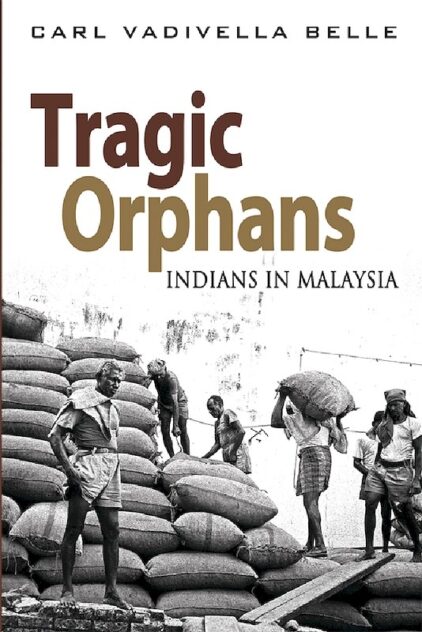
The development of modern Malaysia depended on economic relationships that crossed ethnic, occupational and geographical boundaries.
Recognising these contributions does not mean ignoring colonial exploitation, unequal access to wealth, or the difficult conditions experienced by workers.
It means understanding the complete history rather than accepting an oversimplified racial narrative.
🏛️ The forgotten lesson
When we celebrate the Chinese entrepreneurs who developed Malaya’s tin mines, we should also remember the Indian financiers who supplied credit.
When we admire colonial railway stations and historic public buildings, we should remember the engineers, surveyors and labourers who helped construct them.
When we recognise Malaya’s economic and social development, we should also remember the generations of Malays who contributed through agriculture, trade, craftsmanship, public service and the building of local communities.
No one single community built Malaya alone. Our nation was built through the contributions and interdependence of its people.
View this post on Instagram
And when we discuss the prosperity created by rubber and tin, we should remember the thousands of ordinary workers whose labour generated that wealth.
Malaysia was not built by three communities working separately. It emerged from an interconnected economy shaped by many communities under both local and colonial power.
Perhaps it is time we stopped asking which race built Malaya and started asking: How did different communities depend on one another to build the country we inherited today? That is the history worth teaching. – Nov 26, 2026
Marcus Leng is a Malaysian who previously worked in Vietnam as an angel investor, venture builder and startup advisor. He is an independent researcher with a keen interest in Malaysia’s economic, corporate and capital market history.
Through Malaysian Forgotten History, he explores the untold stories of people, capital and enterprises that have shaped Malaysia’s economic development and nation-building.
The views expressed are solely of the author and do not necessarily reflect those of Focus Malaysia.
Main image: Marcus Leng via Once Upon A Time in Ipoh & Malaysia – Tales from the Past & Present/Facebook