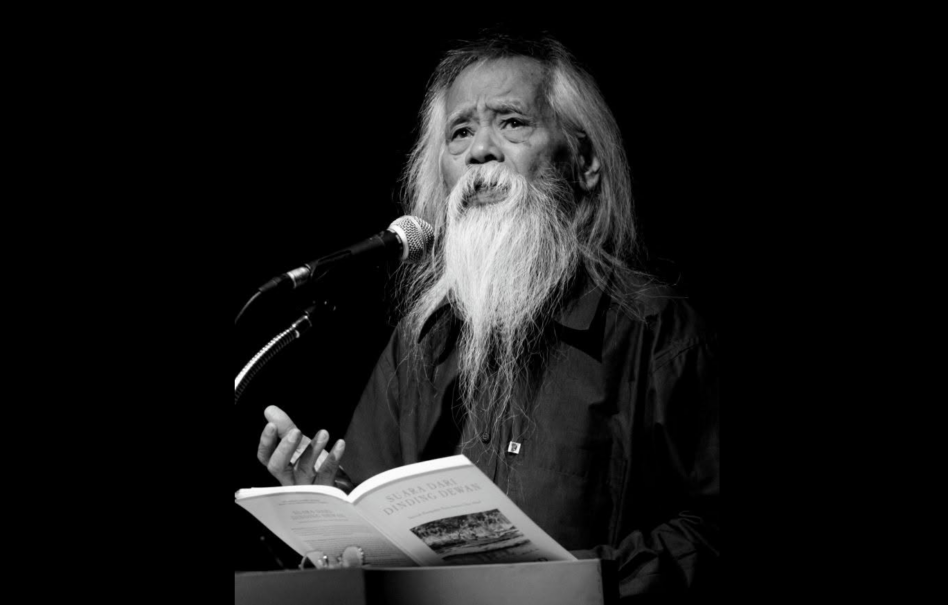

A. SAMAD Said once told me that when RTM was planning to make a documentary on him, they wanted him to cut his hair, which they found to be too long for their broadcasting policy.
He asked them one question: “You want my hair or you want my mind?”
RTM let him keep his hair.
That was Samad, a man who just wanted to be himself.
Even in the way he dressed – in loose-fitting shirts or tunics (somewhat like kurtas), loose-fitting trousers and sandals – he was himself. He moved around KL and practically everywhere else attired like that.
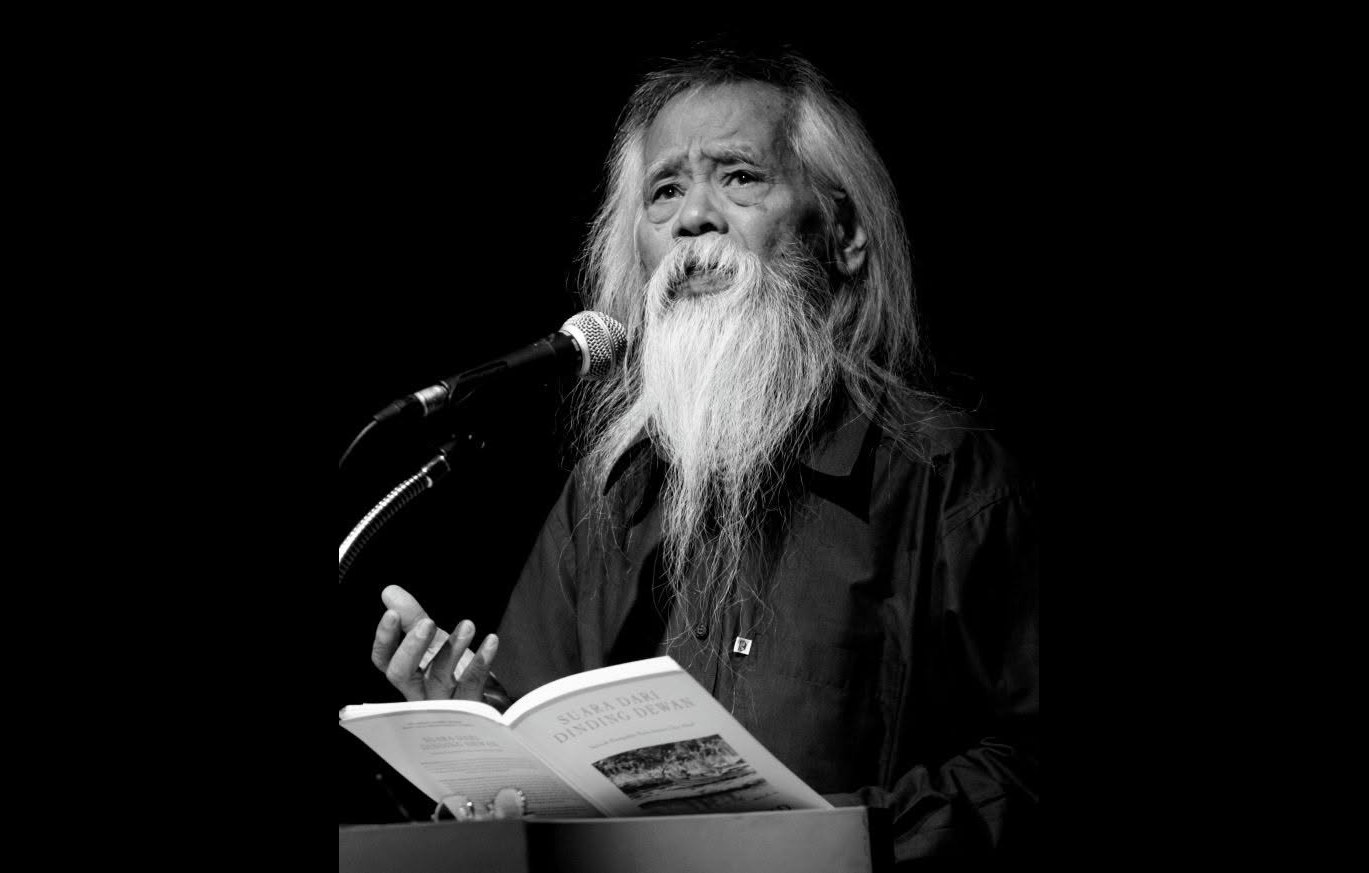
With his long hair and long beard, he cut quite an iconic figure, looking more like a maharishi of the streets than a literary legend. He did not at all match the image conventional people would have of a Sasterawan Negara (National Laureate).
Despite having been bestowed the nation’s highest literary honour, Samad eschewed status and prestige. He lived modestly and carried himself with humility. To me, he was a consummate model of back-to-basics simplicity and down-to-earth values that our society needs.
In regard to his writing, he staunchly maintained his independence. Criticised by another literary legend, Shahnon Ahmad, for not projecting an Islamic world-view and conveying what it means to be a good Muslim in his novels, Samad retorted: “I have the right to write novels as I please.” Indeed he did.
In any case, Samad was not one who wore religion – or race – on his sleeve. He was more concerned with telling stories centred on the human condition, culled from his own experiences. He told me that they were documents of his “sufferings”.
He suffered trauma as a child during the Japanese occupation. He developed a stammer. His family home was demolished by bombs. He witnessed his relatives being blown to bits. He had to steal food from storehouses at the risk of being killed by Japanese soldiers. These experiences became rich material for some of his novels.
Outside of writing, he mixed easily with other races, advocated an inclusive Malaysia, rejected racial division, and publicly denounced politicians who exploited racial and religious issues.
He was proudly Malay and Muslim for sure, and he defended the Malay language as the nation’s primary and unifying language, but he was, above all, a humanist.
He was co-chairperson of Bersih 2.0, alongside Ambiga Sreenevasan, which called not only for free and fair elections but also condemned corruption. At the end of the 2011 rally, he proudly declared, “I have never seen all the races in Malaysia so united behind one cause before.”
In 2015, he raised dissenters’ hackles when he joined the Democratic Action Party (DAP).
Two weeks ago, in the wake of Datuk Seri Najib Razak’s conditional pardon and house arrest, he was among seven Sasterawan Negara who issued a joint statement condemning double standards in the justice system and calling for the equal enforcement of the rule of law.
These seven prominent figures lit the way for others to speak up against the granting of amnesty to a criminal from a privileged background.
Significantly, it also showed that Samad, at the end of his life, remained true to his beliefs and stood up to defend one of them.
Last Tuesday, when Samad breathed his last at the age of 91, we lost not only a thinker, role model, legend and social activist but also a voice of conscience for the nation.
I shall cherish the many times I met the man, especially in the 1980s when I got to know him better and followed his mogok seni (art strike) – his protest against delayed royalty payments and institutional neglect of creative writers.
He had left his full-time job at Berita Harian in 1986 with the resolve to prove that a modern Malay writer could survive on his writing alone, but after a few years, he met with an obstacle when his publisher, Dewan Bahasa dan Pustaka, dragged its feet when it came to paying him his royalties.
He decided to go on strike, vowing not to engage in writing or making public literary appearances for five years. I admired his commitment to taking on the literary establishment all by himself, and wrote an article or two in the media to support it.
When Dewan Bahasa dan Pustaka began to show sympathy for his predicament, he stopped his strike after a year.
I asked him what he did all that time. He said, “Nothing, just being lazy. It’s enjoyable.”
He had an abundant sense of humour. In later years, when we met up again after a long hiatus, it was this that easily reconnected us. His lightheartedness was reassuring; it reflected an understanding of how large the world is and how small we are as particles in it.
I cherished that and his world-view. He was always the same old Samad. Unassuming, understated, soft-spoken and unimposing. A man who lived on his own terms.
I shall remember him that way. ‒ Nov 27, 2026