
A RECENT paper, The Impact of AI on Job Opportunities and Challenges in the Supply Chain Sector, offers a welcome dose of realism in a debate often dominated by extremes.
It neither predicts a robot takeover nor promises a future of effortless efficiency. Instead, it highlights a more nuanced reality: artificial intelligence is transforming supply chains, and the greatest challenge may not be the technology itself but how organisations and workers adapt to it.
AI is unlikely to eliminate supply chain jobs overnight. However, it is increasingly replacing routine and repetitive tasks such as inventory tracking, basic procurement functions, manual data entry and demand forecasting. As these activities become automated, the role of human workers is evolving.
For decades, supply chain management was often viewed as a back-office function, characterised by labour-intensive processes and operational inefficiencies.
Today, AI is helping organisations automate routine work, allowing employees to focus on higher-value activities such as problem-solving, supplier management, strategic planning and handling unexpected disruptions.
The paper highlights an important shift in the labour market. Traditional roles centred on repetitive administrative work are gradually declining, while demand is growing for positions that combine operational knowledge with digital skills.
Roles involving AI oversight, supply chain analytics, exception management and logistics optimisation are becoming increasingly important.
One of the study’s most encouraging findings is that organisations adopting AI responsibly are not necessarily reducing their workforce. Instead, many are redeploying employees into more productive and higher-skilled roles. Workers who once spent hours performing manual tasks are increasingly being trained to monitor systems, interpret data and manage AI-driven processes.
This represents job evolution rather than simple job displacement.
However, the transition is not without challenges.
The paper warns that the gap between technological capability and workforce readiness is widening. Many employees currently working in supply chains were trained to follow established procedures rather than evaluate algorithmic recommendations or oversee automated systems. Yet these are precisely the skills that will become increasingly important in AI-enabled workplaces.
Without significant investment in reskilling and digital literacy, organisations risk creating a divide between a small group of highly skilled specialists and a larger workforce struggling to adapt to technological change. Such a scenario would undermine both productivity and workplace cohesion.
The study also raises important questions about accountability and transparency. As AI systems become more involved in operational decisions, organisations must ensure there is still clear human oversight.
When an AI system recommends rerouting a shipment, adjusting inventory levels or delaying supplier payments, who is responsible for explaining or reviewing those decisions? These questions become increasingly important as businesses place greater reliance on automated systems.
For business leaders, the message is clear. AI should not be viewed simply as a tool for reducing labour costs. The organisations most likely to succeed will be those that invest in both technology and people.
Technology can improve efficiency, but long-term success depends on having employees who understand how to work alongside AI, question its outputs when necessary and make informed decisions when circumstances change.
Industry bodies and workforce organisations also have an important role to play. Training and upskilling can no longer be treated as optional initiatives.
Continuous learning must become a core component of workforce development, particularly in sectors facing rapid technological change.
For young people considering careers in supply chain management, the outlook remains promising. AI is changing the nature of work, but it is also creating new opportunities.
As automation takes over repetitive tasks, human workers will increasingly focus on analysis, decision-making, relationship management and strategic planning.
The future supply chain workforce will require a blend of technical competence, digital literacy and human judgement. These are capabilities that machines cannot easily replicate.
The real challenge, therefore, is not whether AI will transform supply chains. That transformation is already underway. The challenge is ensuring that workers, businesses and institutions are prepared for it.
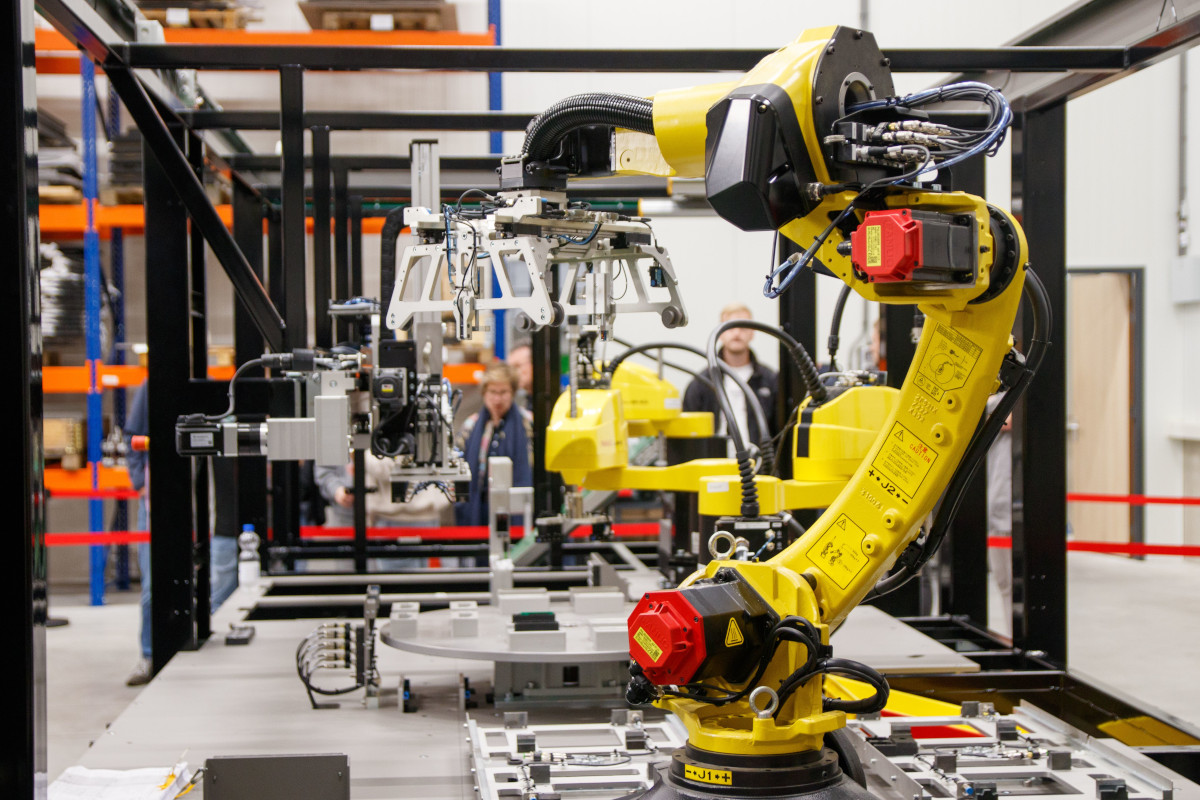
The robot in the warehouse is not the enemy. Complacency is. ‒ June 9, 2026
The author is affiliated with the Tan Sri Omar Centre for STI Policy Studies at UCSI University and is an Adjunct Professor at the Ungku Aziz Centre for Development Studies, Universiti Malaya.
The views expressed are solely of the author and do not necessarily reflect those of Focus Malaysia.
Main image: Pexels/Freek Wolsink