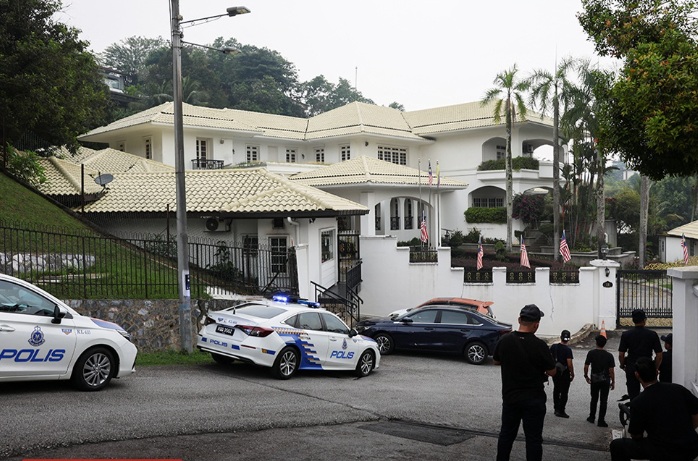

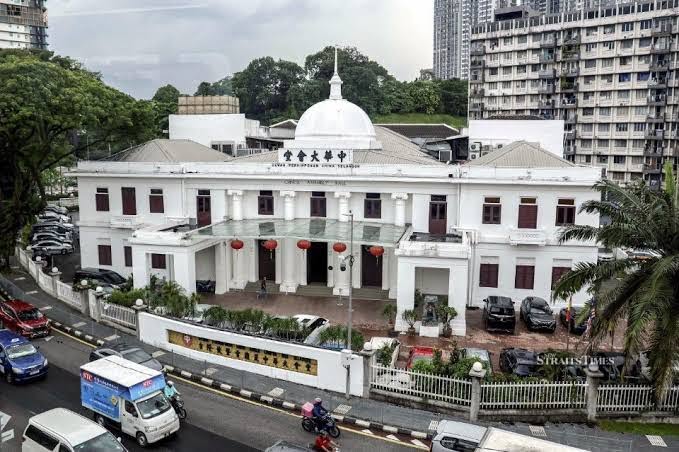
The controversy over the RM1,000 land premium granted for the 99-year lease renewal of the Kuala Lumpur and Selangor Chinese Assembly Hall (KLSCAH) has unfortunately become another occasion for racial politicking. Some have portrayed the decision as an unjustified privilege for a Chinese organisation, while others have rushed to defend it as a concession to the Chinese community. Both sides are missing the bigger issue.
What is really at stake is whether Malaysia has any genuine respect for its historical and cultural heritage, or whether everything that stands in the way of commercial development and political expediency must eventually give way.
The KLSCAH is not simply a Chinese communal building. Established in 1923, it has been an important institution in the political, social and cultural history of Kuala Lumpur. Its significance should be assessed in the context of our national history, not reduced to the racial identity of the people who use it.
In fact, through the years, it has been used by Malaysians of all ethnic groups and parties. Indeed, the RM1,000 premium controversy provides an opportunity to ask a much more fundamental question: Why is the preservation of historical buildings and cultural institutions in Malaysia so often treated as an inconvenience rather than a public responsibility?
The monorail and our disregard for historical landmarks
Consider the fate of our historic temples in Kuala Lumpur. Wei Zhen Gong Guan Yin Si (威镇宫观音寺), established in the 1890s or possibly earlier, is one of the city’s historic places of worship. It stands beside the Maharajalela Monorail Station, with its historic setting and architectural character overshadowed by the concrete monstrosities. The temple has survived fires, the transformation of Kuala Lumpur and the passing of generations. Yet how much consideration was given to its historical setting when the monorail infrastructure was introduced?
A modern transport system is undoubtedly necessary. But must modernisation mean that historical buildings are reduced to insignificant structures dwarfed by concrete and steel? This is not an argument against public transport. It is an argument for intelligent urban planning, where modern infrastructure and historical landmarks can coexist with dignity. For example, the Sydney Monorail was taken down in 2014 for a light rail transit.
There is another development threatening the historical setting of Wei Zhen Gong. We should be asking whether the authorities have properly assessed the impact of new development on this historic precinct, rather than waiting until the damage is irreversible. And why has the wider Chinese community not been more vocal in demanding that these historical landmarks be protected?
Kuala Lumpur: A city that destroys its own history
The fate of other historical buildings in Kuala Lumpur should make us reflect on our priorities. Take Pudu Jail. Built in 1895, it was one of the most recognisable historical structures in the city. Its imposing walls and famous mural were part of Kuala Lumpur’s physical and social history.
Yet the prison complex was demolished in stages, with the buildings gone by 2012. Only sections of its exterior wall and entrance were retained. Whatever one’s views about the colonial prison system, Pudu Jail was part of our history. Its preservation could have provided an important historical and educational site. Instead, most of it disappeared.
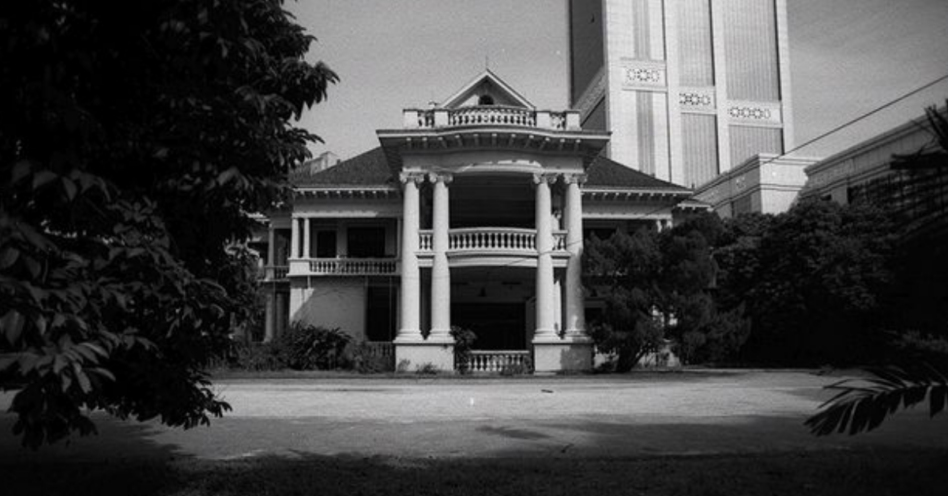
Then there was Bok House, the beautiful neo-classical mansion built in 1929 by businessman Chua Cheng Bok along Jalan Ampang. It was also home to the celebrated restaurant Le Coq d’Or. Despite appeals by heritage advocates, the mansion was demolished in 2006.
The argument that it had insufficient historical value was a shocking illustration of how little we understood the importance of architectural heritage. The Cathay Cinema, another familiar Kuala Lumpur landmark, also disappeared in the name of urban redevelopment.
How many such buildings must we lose before we realise that a city is not defined merely by its shopping malls, luxury condominiums and skyscrapers? The Sultan Abdul Samad Building, the Central Market and the historic buildings around Dataran Merdeka are fortunately still with us. But their survival should not be an excuse for complacency. They require continuing conservation, proper maintenance and protection from insensitive development.
It is Malaysia’s collective memory under attack
Let us be clear. This is not simply a Chinese community issue. Malaysia’s heritage includes Malay villages, traditional wooden houses, mosques, Indian temples, colonial buildings, indigenous settlements, archaeological sites, historic cemeteries and natural landscapes. The demolition of the Sri Uchimalai Muniswarar Temple in Rawang in February 2026 was another painful reminder of the vulnerability of places of worship with long-standing community connections. The temple was demolished after the landowner sought possession of the site.
The controversy surrounding the 130-year-old Dewi Sri Pathrakaliamman Temple at Jalan Masjid India in Kuala Lumpur likewise raised fundamental questions about how development should accommodate historic places of worship. Although the authorities subsequently identified a replacement site, the episode illustrated how vulnerable such institutions can be when land ownership and development interests take precedence over historical continuity.
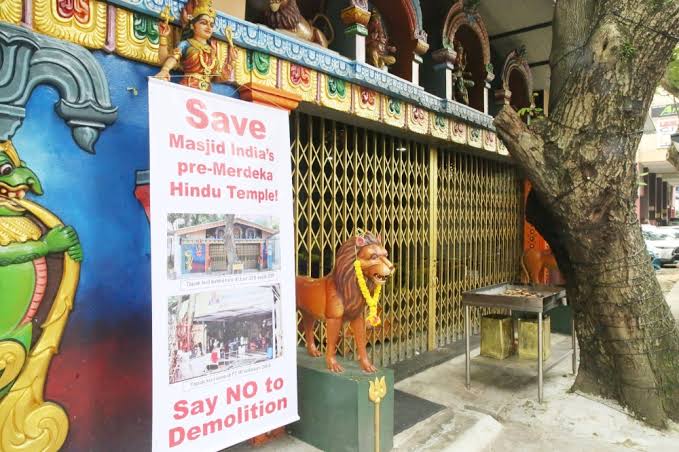
We should also remember the traditional Malay kampungs that have disappeared under urban redevelopment, the indigenous communities displaced by development projects, and the historic landscapes that have been sacrificed to commercial interests. The heritage of the Orang Asli and the indigenous peoples of Sabah and Sarawak deserves the same protection as the heritage of Kuala Lumpur’s old temples and shophouses.
A nation that remembers only the history of its politically powerful communities is a nation with a distorted understanding of itself. Developers should be required to assess the historical, cultural and social significance of buildings and places of worship before obtaining development approvals. Where possible, they should be required to preserve them in situ, rather than treating relocation as the automatic solution.
In the latest KLSCAH controversy, if critics genuinely believe that public institutions should not receive special consideration for heritage preservation, let them explain why the same principle should not apply to every other historic building, temple, mosque, church, traditional settlement and cultural institution in Malaysia.
Are they suggesting that a historic Malay institution should pay commercial land premiums even when its land is specifically protected for institutional use? Should a historic Indian temple be denied consideration because its preservation benefits a particular religious community?
We must reject this absurd racial arithmetic. The question should not be whether the KLSCAH is Chinese, Malay or Indian. The question should be whether it has historical, cultural and public significance deserving of protection.
Dr Kua Kia Soong is the co-founder of human rights group SUARAM and an ex-MP of Petaling Jaya who was detained during Ops Lalang under the now defunct Internal Security Act.
The views expressed are solely of the author and do not necessarily reflect those of Focus Malaysia
Main image credit: Dr Kua Kia Soong/Facebook