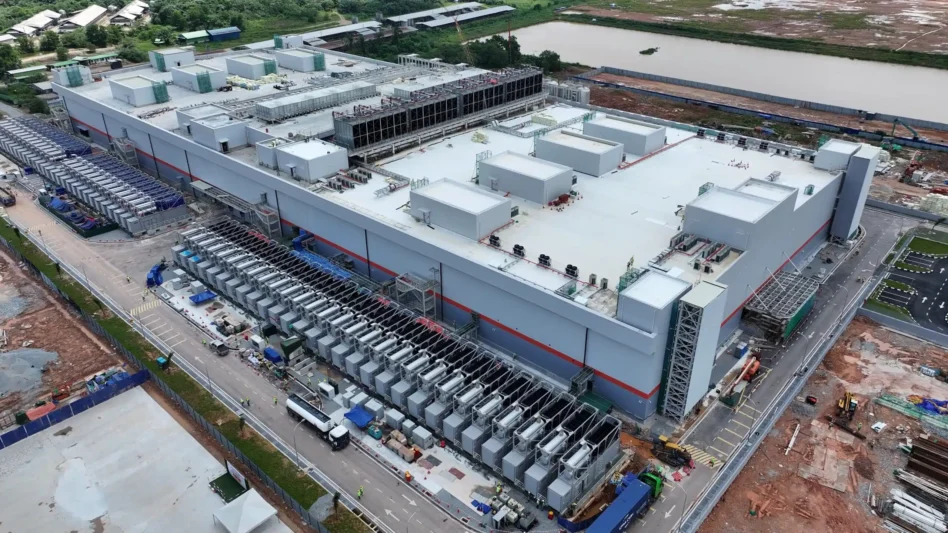

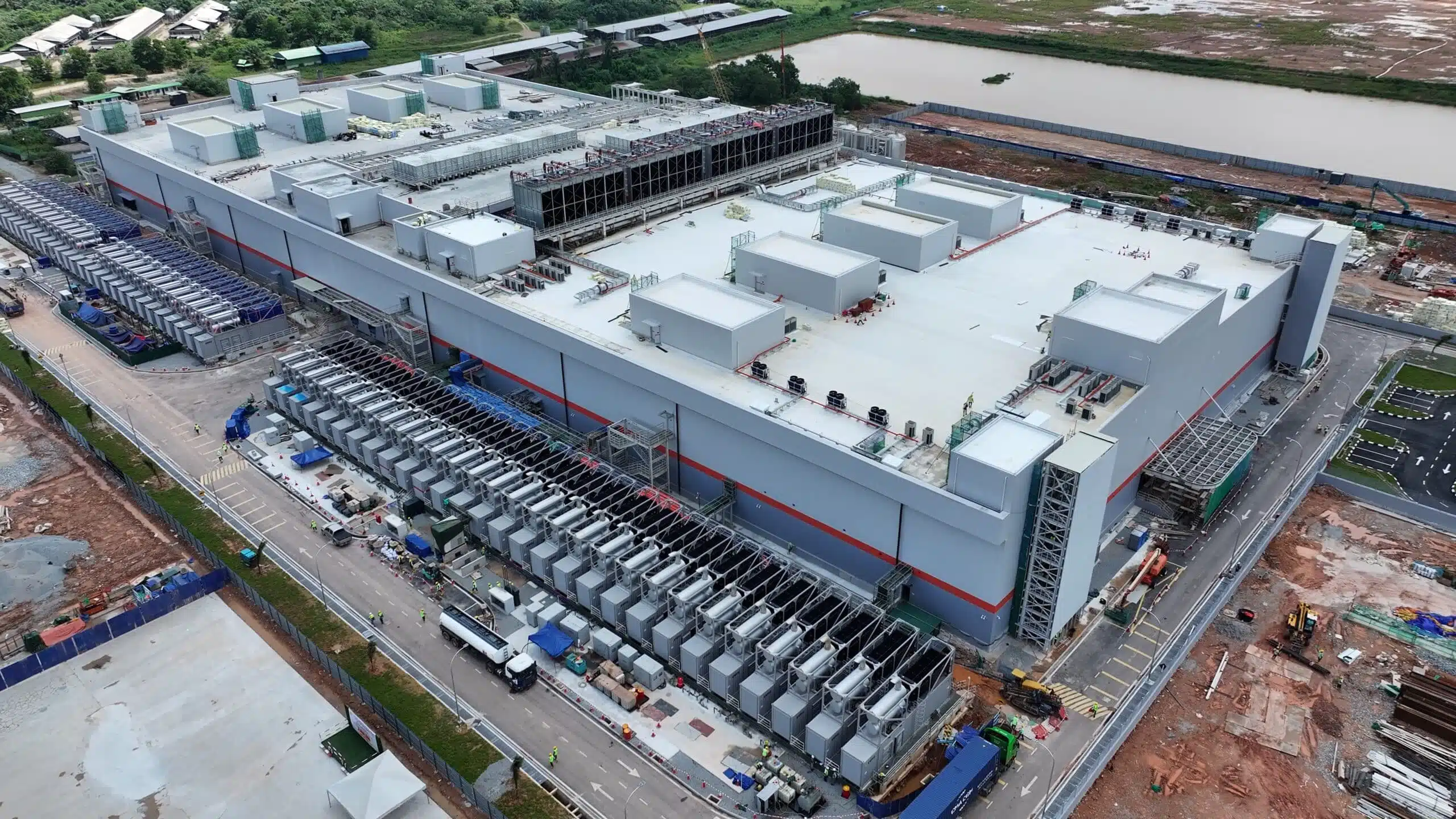
JOHOR should strengthen its water reserves and impose stronger environmental requirements on data centre developments to ensure rapid industrial expansion does not compromise long-term water security and sustainability, said a Johor DAP leader.
Taman Ungku Tun Aminah (Skudai) branch publicity secretary Dr Boo Cheng Hau proposed upgrading Machap Dam’s storage capacity from about 30.6 million cubic metres (MCM) to 70 MCM, similar to the proposed expansion of Bekok Dam from its existing capacity of approximately 32 MCM to 70 MCM.
The proposals come amid growing data centre investments and industrial expansion in Johor, which have raised questions about the state’s long-term water and energy requirements.
According to figures presented at the Johor state assembly on Nov 20, 19 operating data centres have received approved water allocations totalling 21.277 million litres per day (MLD), equivalent to 1.05% of the state’s average treated water production of 2,034 MLD.
While the proportion remains relatively small, Boo said the state should anticipate growing demand from new industries, population growth and expanding townships, particularly in Iskandar Puteri and Kulai, including Sedenak Tech Park.
He said the proposed dam upgrades should be subjected to comprehensive engineering, hydrological and environmental assessments, including flood-control requirements, downstream water needs and ecological considerations.
“Strengthening our raw-water reserves is essential to ensure that future industrial expansion does not undermine domestic water security,” he stressed.
Boo also called for improvements to Johor’s wider water supply infrastructure, arguing that expanding treatment capacity alone would not be sufficient to meet future demand without adequate raw-water reserves, storage facilities, distribution pipelines and inter-district connectivity.
He cited the Sungai Johor water supply system’s approximately 26 MCM storage capacity and Semanggar Water Treatment Plant’s treatment capacity of about 50 MLD, alongside the proposed Semanggar 3 project, which is expected to add another 200 MLD.
“Increasing treatment capacity alone is insufficient without adequate raw-water reserves, storage facilities, distribution pipelines and inter-district connectivity to meet future demand,” he noted.
Boo further urged data centre operators to adopt water-efficient cooling systems, rainwater harvesting and recycled wastewater wherever technically feasible, while regularly disclosing their water consumption, energy efficiency and carbon emissions.
He proposed that new data centre developments preserve or provide at least 30% green space within their compounds, including native trees, green buffers and rain gardens.
Such measures could help absorb carbon dioxide, improve air quality, reduce surrounding temperatures, mitigate flash floods and protect biodiversity, while providing natural cooling that could reduce energy requirements, he said.
Boo also highlighted the growing electricity demand and carbon footprint associated with data centres, citing International Energy Agency figures showing that global data centres consumed approximately 415 terawatt-hours (TWh) of electricity in 2024, equivalent to about 1.5% of global electricity consumption.
Their electricity consumption was associated with approximately 180 million tonnes of indirect carbon dioxide emissions, or about 0.5% of global CO₂ emissions from fuel combustion, he remarked.
He urged Johor to encourage greater renewable energy adoption and energy efficiency, including through tax incentives for data centres and other major industrial developments to install rooftop solar panels.
Solar farms should also, wherever possible, be developed on previously cleared or underutilised plantation land rather than through the clearing of existing forests or valuable vegetation, he added.
“Ultimately, Johor must pursue industrial development that is economically productive, environmentally responsible and socially sustainable,” he stated.
“Our success should not be measured simply by how many data centres we attract, but by whether we can create prosperity without sacrificing our water resources, environment and the well-being of future generations.”
Boo said Johor should aspire to become not only a regional data centre hub, but also a model for sustainable industrial development in Southeast Asia, balancing economic prosperity, water security and environmental protection. ‒ Nov 23, 2026
Main image: Harian Teknologi