

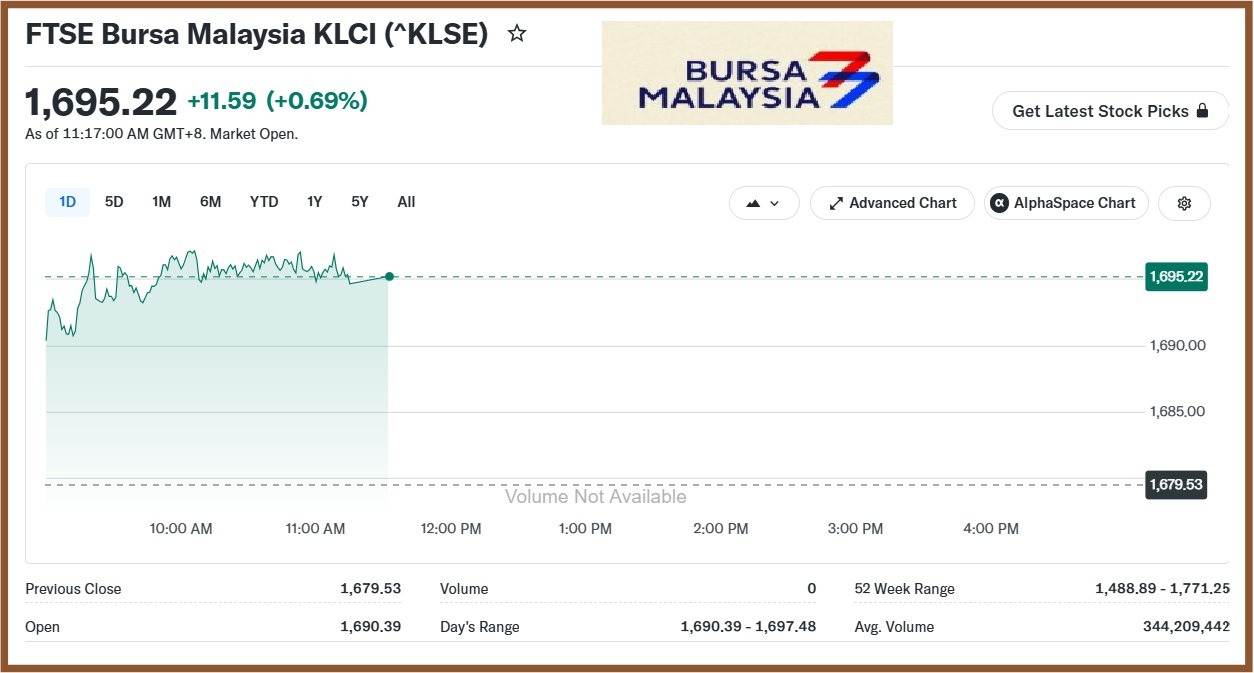
MALAYSIA’S equity market remains resilient but mounting global macro-economic risks are beginning to re-shape the investment landscape in ways investors can no longer afford to ignore.
In its 3Q 2026 market outlook, Rakuten Trade Research slashes its end-2026 FBM KLCI target to 1,770 points from 1,800 premised on 17x CY2026 PER (price-to-earnings) ratio to reflect growing concerns over global macro-economic risks despite Malaysia’s relatively resilient fundamentals.
Its research head Kenny Yee described the current environment as a “deadly love triangle” of soaring national debt, potential lower interest rates and weakening currencies – each amplifying the other and each being ignored by Wall Street that has so far defied every headwind thrown at it.
“When these three (elements) move together, they form a deadly love triangle,” envisages Yee. “The Iran war was supposed to be a sprint but it’s now a marathon. And inflation is about to rear its ugly head again.”

The global backdrop
Despite a Middle East conflict having now exceeded 100 days, all three major US indices remain well-supported – a divergence Rakuten Trade believes is increasingly disconnected from underlying macro-economic realities.
Meanwhile, US federal debt continues to climb, raising concerns over long-term fiscal sustainability while the US Federal Reserve’s ability to cut rates may remain constrained should inflationary pressures re-emerge.
At the same time, potential Bank of Japan (BOJ) rate hikes risk triggering a yen carry trade unwind that could send shockwaves through global liquidity and emerging markets.
Elsewhere, the Hang Seng Index trades at a steep discount to US multiples with Chinese corporate earnings projected to grow approximately 10% in 2026.

For investors reassessing geographic exposure, Rakuten Trade sees Hong Kong and Asia as offering a more compelling risk-reward than an overstretched Wall Street.
“The rotation towards Asia was the call at the start of the year. The noise has gotten louder. The case has not changed,” stressed Yee.
Malaysia: Fundamentals intact
Over on Bursa Malaysia, corporate earnings growth is projected at 5.4% for 2026 and 6.2% for 2027, excluding one-off impairments from PETRONAS Chemicals Group Bhd and PPB Group Bhd.
Plantation emerges as Rakuten Trade’s top sector conviction for 2026 on the back of sustained CPO (crude palm oil) prices averaging RM4,500/metric tonne over the past three months and the possibility for an El Niño-related supply disruption.
This prompted the research house to believe that tighter global edible oil supplies coupled with resilient demand could continue to support earnings momentum across the sector.
The ringgit is expected to hold in the RM3.80-RM3.90/US$1 range in the event the US Federal Reserve adjusts its rates this year.
However, May’s sharp foreign fund outflow which largely erased year-to-date net inflows of RM905 mil following domestic political developments remains an unsettled sentiment.
But foreign shareholding held at 19.2% is a a signal Yee reads as the more important number.
“More long-term foreign investors are returning while majority of the sellers were day-trippers,” he observed. “We hope to see foreign shareholding improve towards the 25%-30% range going forward.”
Elsewhere, investors should also note upcoming state elections in Johor and Negeri Sembilan over the next one to two months as near-term events that could amplify market sensitivity.
Sector positioning
Sector-wise, Rakuten Trade rates banking, construction, consumer, plantation, technology and power/utilities as “overweight” for 3Q 2026
The oil & gas (O&G) sector is downgraded to “neutral” amid an “on/off” resolution to the middle east conflict with Brent crude having fallen to around the US$90/barrel level. Also on the “neutral” category are the auto, glove, healthcare, property, REIT and telco sectors.
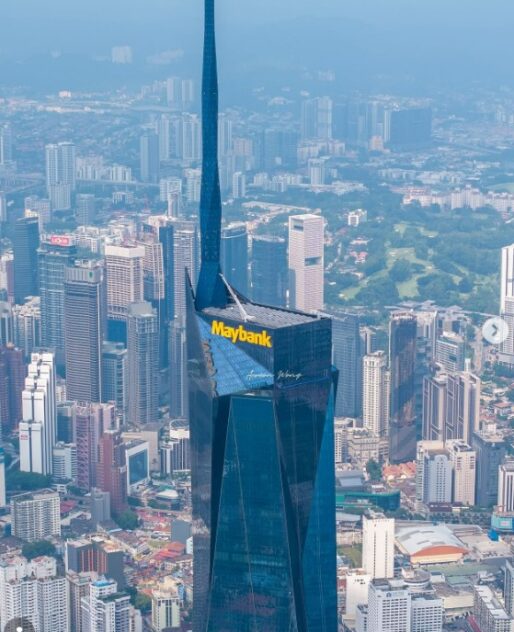
Rakuten Trade’s three top blue-chip picks are:
- Malayan Banking Bhd (Maybank) in view of its strong earnings resilience supported by its regional banking presence;
- Tenaga Nasional Bhd for benefiting from increasing power demand from data centres; and
- CIMB Group Holdings Bhd given its attractive dividend yield and improving earnings outlook.
The research house’s selected small-cap picks include Crest Builder Holdings Bhd, EG Industries Bhd, Kee Ming Group Bhd, Northeast Group Bhd and VSTECS Bhd. – June 15, 2026