

PRIME Minister Datuk Seri Anwar Ibrahim has rightly warned that declining reading habits and shallow thinking threaten civilisation. His remarks should be more than a clever observation. They should prompt Malaysia to act.
As Anwar noted in an Oct 28 reflection on James Marriott’s The New Dark Ages: The End of Reading and the Dawn of a Post-Literate Society, information is everywhere, but the patience to read, reflect and think deeply is fading.
Access to information does not automatically translate into understanding, wisdom or sound judgement.
People can scroll through hundreds of headlines, videos and social media posts daily and still struggle to distinguish facts from opinions, evidence from speculation, or reasoned arguments from emotional noise.
If Malaysia wants stronger education, social cohesion and democratic accountability, reading must become a national priority.
First, we must change how we educate our children. A system that rewards memorisation and reproducing expected answers cannot, on its own, produce independent thinkers.
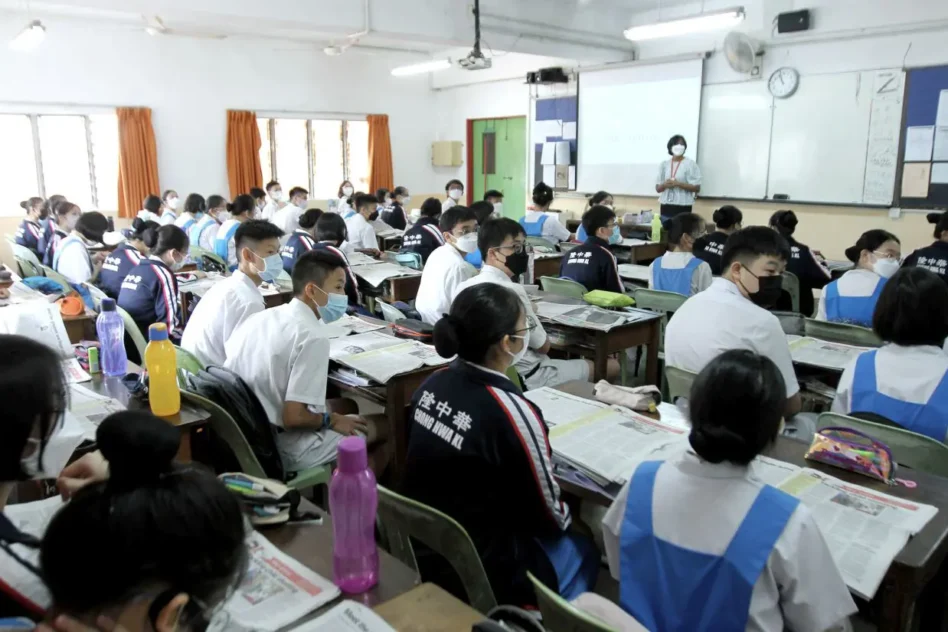
Students need to learn how to question assumptions, weigh evidence, compare arguments and recognise their own biases.
Schools should set aside a daily 20-minute reading period and encourage students to explore literature, history, science, biographies and current affairs beyond examination requirements.
Teachers should ask what an author is arguing, what evidence supports the argument and what might be missing. These exercises should span all subjects, not just languages.
Examinations must also place greater emphasis on comprehension, interpretation, problem-solving and applying knowledge to unfamiliar situations. Teacher training should support this shift from supplying answers to cultivating thought.
Second, reading must become part of family and community life. Parents can read with young children and show that learning extends beyond school.
Public libraries should serve as active learning centres, supported by mobile libraries, reading circles, author talks and intergenerational programmes, particularly in rural and low-income communities.
Reading materials should be available in Bahasa Melayu, English, Mandarin, Tamil and other relevant languages. Malaysia’s linguistic diversity is an intellectual asset, not a barrier to national unity.
The National Library of Malaysia, schools, local authorities, universities and civil society groups should coordinate sustained efforts rather than rely on occasional campaigns.
Third, Malaysians need stronger digital literacy. Social media enables widespread access to information but can also encourage snap judgements.
Misleading headlines travel quickly, while artificial intelligence can generate convincing answers containing factual errors or fabricated references.
Students should learn to verify sources, spot manipulated images, examine statistics and compare reporting from independent outlets. Schools could ask students to compare conflicting reports on the same issue and identify differences in evidence, omissions and framing.
Restrictions on smartphones during lessons may help protect concentration, but young people must also learn to use technology constructively.
Fourth, critical thinking must be encouraged in public life. Debates over race, religion, education, public spending and environmental protection are often reduced to slogans and partisan loyalties.
Citizens should examine evidence, constitutional principles, costs and long-term consequences rather than accept claims simply because they come from a preferred political or social group.
The government must lead by example. Ministers should explain decisions with evidence, acknowledge uncertainty and correct mistakes openly.
Universities should encourage rigorous debate, journalists should distinguish verified facts from opinion, and public institutions should welcome legitimate scrutiny. A government cannot credibly demand critical thinking while treating constructive criticism as disloyalty.
Fifth, the government should establish measurable goals. A five-year National Reading and Critical Thinking Action Plan could bring together the Education Ministry, National Library, universities, publishers, teachers and community organisations.
Schools should establish baseline measures for reading comprehension and reasoning, with annual assessments tracking progress and particular attention to rural and low-income communities.
As a proposed target, Malaysia could aim for at least 60% of students to achieve minimum reading proficiency in an appropriate international assessment by the end of the programme, subject to a clear baseline and alignment with the assessment cycle.
Progress in reading habits, teacher training and access to books should also be independently evaluated.
Ultimately, reading is more than an educational skill. Literature builds empathy, history reveals the consequences of prejudice, science teaches intellectual honesty, and philosophy challenges assumptions.
These qualities matter to Malaysia’s social cohesion. Voters who examine evidence are harder to manipulate, while policymakers who look beyond immediate political gain are better equipped to tackle inequality, environmental degradation and technological disruption.
National progress cannot be measured only by income, infrastructure, qualifications or technological advancement.
It must also be measured by the quality of our thinking, the integrity of our decisions and our willingness to seek truth even when it challenges our convictions.
Malaysia does not just need more readers. It needs readers who become thinkers, thinkers who exercise sound judgement, and citizens who turn knowledge into responsible action.
Civilisation is endangered not simply when books are neglected, but when people lose the patience to understand, the courage to question and the humility to learn. Reversing that decline must become a national priority. ‒ Oct 29, 2026
KT Maran is a Focus Malaysia reader.
The views expressed are solely of the author and do not necessarily reflect those of Focus Malaysia.
Main image: Pixabay