

UNLIKE Malaysia, China has made the integration of scientific research and industrial innovation a central part of its economic strategy. Its policy direction is explicit: enterprises must lead, research must serve practical applications, and the journey from idea to market must operate as an integrated system.
Malaysia wants similar outcomes. The question is whether it is prepared to undertake the less glamorous industrial work needed to achieve them.
Malaysia’s innovation problem is not a shortage of ideas. It is the gap between research and development (R&D) outputs and the ability of local technologies to penetrate real markets.
The country’s gross expenditure on R&D (GERD) stood at 1.01% of GDP in 2022, according to the latest completed National Survey of R&D.
A September 2026 analysis by the ISEAS-Yusof Ishak Institute estimated that spending remained at around 1% of GDP in 2025, still well below Malaysia’s innovation ambitions.
The private sector’s contribution also warrants attention. Industry accounted for 51% of national R&D expenditure in 2022, but privately funded R&D was estimated at just 0.5% of GDP in 2025.
This suggests that businesses still have considerable room to strengthen their role in commercial innovation.
Malaysia ranked 34th in the 2026 Global Innovation Index (GII), a respectable position among 139 economies but the breakdown reveals an interesting contrast.
Malaysia ranked first globally in high-tech exports and imports, eighth in science and engineering graduates, and 32nd in knowledge and technology outputs. It also ranked third in creative goods exports.
These figures point to a country that is highly capable of participating in sophisticated global production networks, but still needs to strengthen its ability to turn domestic research into commercially successful technologies and intellectual property.
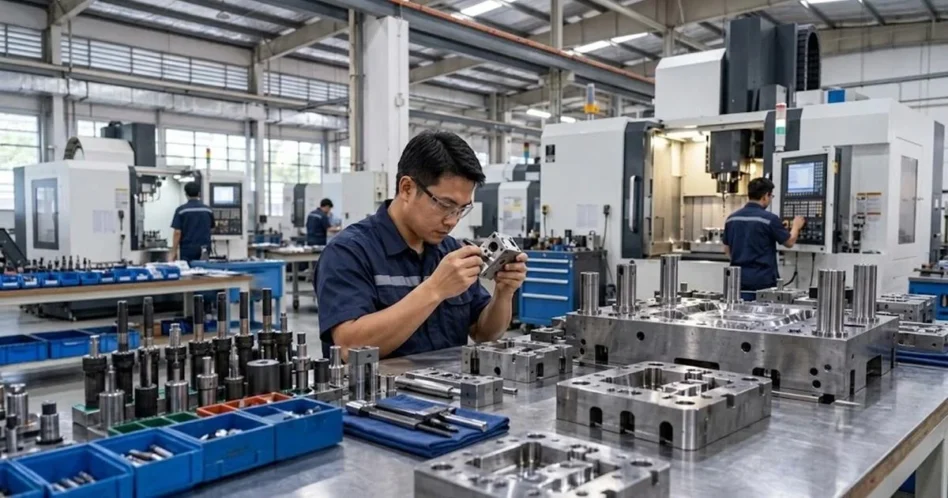
Malaysia is exceptionally good at making things designed elsewhere. It is less successful at developing and commercialising products that the world wants to buy.
We need to treat innovation as an industry, with upstream, midstream and downstream activities, each supported by dedicated capital, specialised labour and measurable performance targets.
Malaysia has many of the necessary components. What it lacks is the connective tissue that turns them into a functioning system.
China’s approach is instructive. Its policies emphasise stronger integration between scientific and industrial innovation, with enterprises taking a leading role in collaborative research.
The focus is on connecting research with industrial needs, improving the commercialisation of scientific achievements and ensuring innovation contributes directly to productive activity.
Malaysia has made gestures in this direction, but intent alone does not create an industry. The difference is that China’s policy places greater emphasis on enterprise leadership and the translation of research into industrial outcomes.
Malaysia’s innovation ecosystem still suffers from what has been described as a “broken bridge” between knowledge producers and users, with universities, research institutions and businesses often operating in silos.
When a start-up fails to commercialise its technology, the university blames the market, the market blames the university, and the agency blames both while ticking its KPI box for workshops conducted.
The government’s rhetoric has shifted from “Made in Malaysia” to “Made by Malaysia”. The challenge, however, is not simply increasing R&D expenditure.
It is ensuring that research generates value within the country through intellectual property ownership and the ability of local companies to compete globally.

The diagnosis is right, but the institutional architecture has yet to catch up. Universities are still largely rewarded for publications and research grants, rather than licensing income, industry partnerships and successful spin-offs.
If Malaysia is serious about treating innovation as an industry, three things need to change.
First, the metrics must change. An industry measures commercial performance, not just activity.
Malaysia should track revenue generated per researcher, licensing income relative to R&D expenditure, and the five-year survival rate of university spin-offs. These figures should be published annually, with agencies held accountable for measurable outcomes.
Second, funding must follow the market. Public R&D grants should place greater emphasis on industry participation and commercial viability.
For larger grants, Malaysia could require a named industry partner to contribute at least 30% of project funding and commit to a first right of refusal on the resulting intellectual property.
This would encourage researchers to engage potential customers before submitting proposals.
Third, Malaysia needs accessible prototyping and pilot-production facilities that operate according to industrial timelines. MRANTI already provides prototyping, testing and innovation facilities.
These capabilities should be strengthened and made more responsive to industry requirements, with turnaround times and service standards that reflect commercial realities.
Malaysia does not necessarily need another innovation policy. It needs to stop treating innovation as a separate sector that can be stimulated through occasional funding injections and then left to develop on its own.
China’s approach demonstrates the importance of treating the journey from idea to market as an integrated industrial system, with enterprises at the centre, research connected to production, and policy designed to remove obstacles to commercialisation.
The question is whether Malaysia is willing to make the changes this requires: less ceremony and more enterprise leadership; fewer grants without commercial commitments and more industry partnerships; less emphasis on publications alone and more focus on products.
Until then, innovation in Malaysia risks remaining an accidental investment: generously funded, but chronically under-industrialised. ‒ Nov 12, 2026
The author is affiliated with the Tan Sri Omar Centre for STI Policy Studies at UCSI University and is an Adjunct Professor at the Ungku Aziz Centre for Development Studies, Universiti Malaya.
The views expressed are solely of the author and do not necessarily reflect those of Focus Malaysia.
Main image: Pexels/thisisengineering