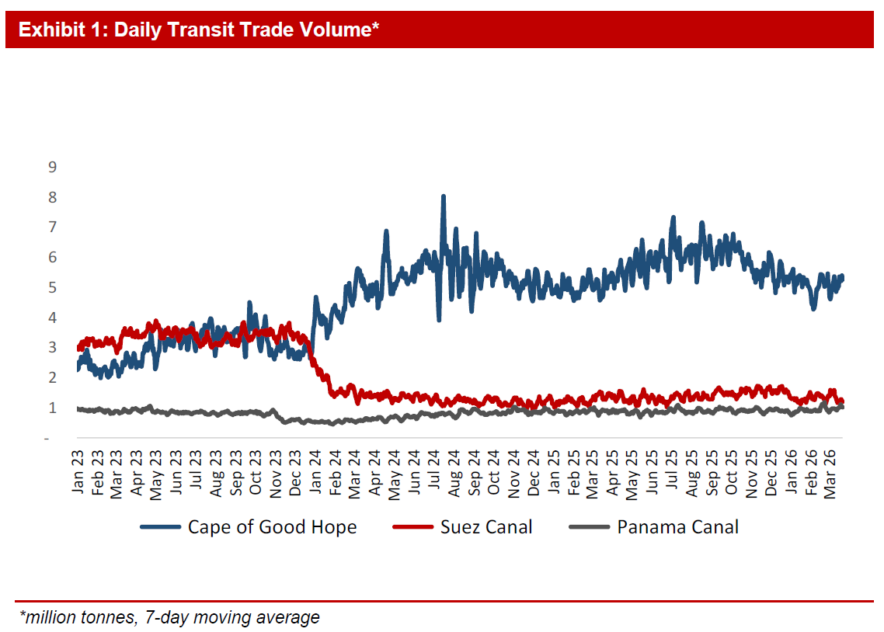
ONGOING rerouting away from the Red Sea continues to disrupt global trade flows, with Asia–Europe lanes bearing the brunt of the impact.
According to WPRTS, around 80% of vessels are still missing their scheduled arrival times.
“With ships bypassing the Suez Canal and instead sailing around the Cape of Good Hope, transit times between Asia and Europe have lengthened significantly,” said Kenanga.
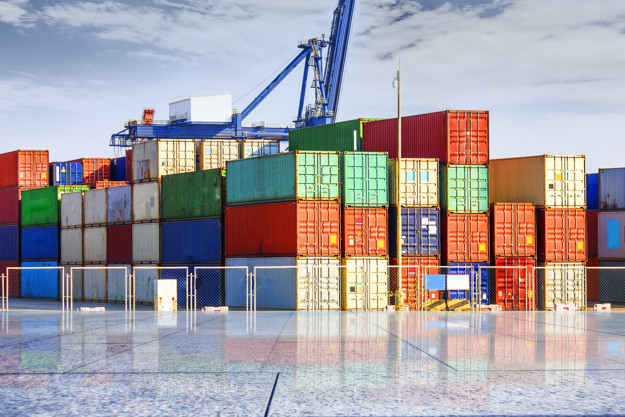
As this corridor accounts for roughly 30% of global container traffic, the extended journeys are limiting how frequently vessels can call at ports—affecting not only WPRTS facilities but ports across the wider region as well.
Locally, the rising fuel prices exacerbated by the reduced traffic in the Straits of Hormuz currently has minimal impact to the sector.
Logistics players are unaffected by the rising diesel price (at time of writing diesel pump price is at RM5.52 per litre) as logistics players are eligible to purchase diesel at a fixed price of RM2.15 per litre under Malaysia’s Targeted Diesel Subsidy (SKDS 2.0) for logistics using subsidy fleet card (limit varies based on the type of logistics vehicle approved by KPDN).
On the contrary, seaport operators can only use unsubsidised diesel (largely for its tugboats), but it is expected to be cushioned by the expected increase in container storage income following the potential port congestion arising from the reduced traffic in the Straits of Hormuz.
Closer to home, the WTO cited an emerging trend of connecting economies or countries that benefited from the trade diversion on US-China trade tensions.
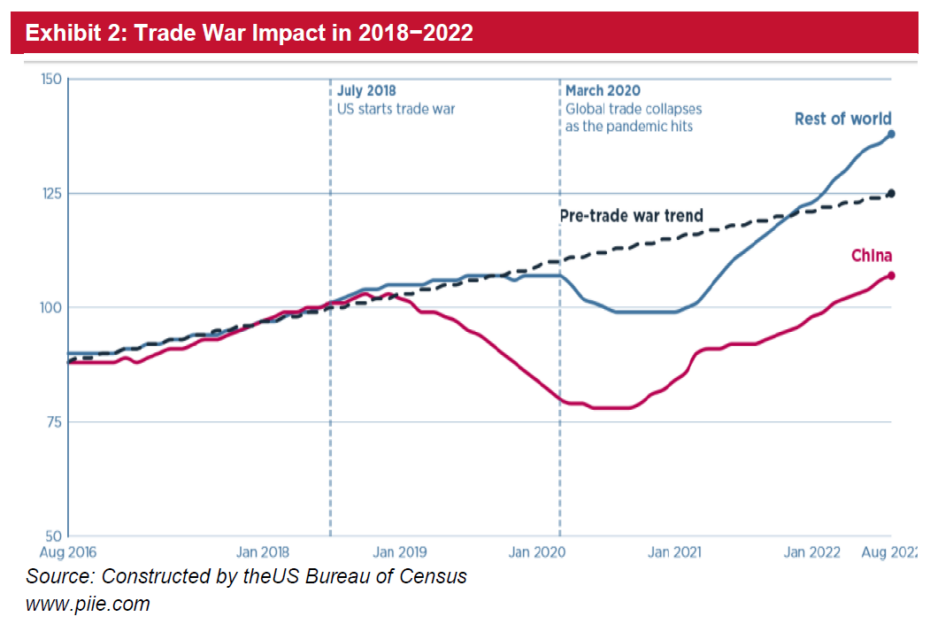
“Malaysia, Singapore, India and Vietnam’s growth are surging due to their emerging role as “connecting” economies, trading across geopolitical blocs, thereby potentially mitigating the risk of trade fragmentation,” said Kenanga.
Based on the latest Malaysia’s external trade in February 2026, exports to the US recorded a strong growth of 42.3% YoY (higher than January’s 33.9%) due to robust demand for E&E products.
The US now is Malaysia’s largest export destination during the month.
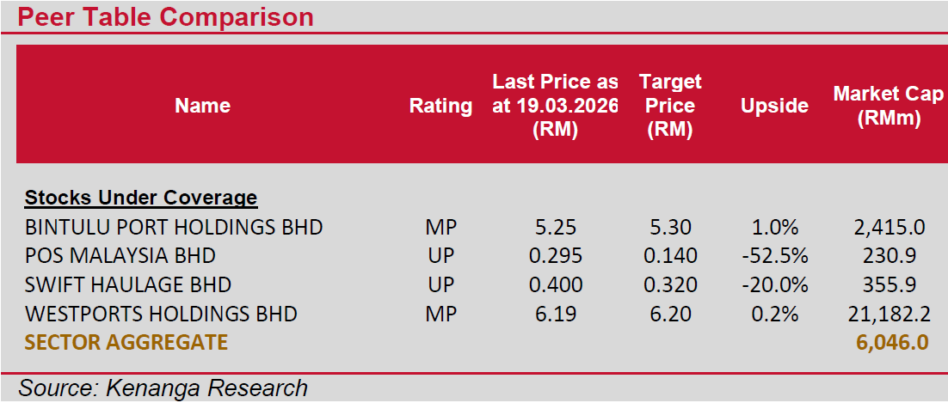
“We expect domestic logistic sector growth to remain steady in 2026, which is a beneficiary of the booming e-commerce, supported by the global tech up-cycle led by AI data centre demand, a resilient US economy, and potential trade diversion amid US-China trade tensions,” said Kenanga.
The research house believes that Malaysia will benefit from the trade diversion as the global trade reposition itself around the higher US tariff barriers.
“We maintain Neutral on the sector with no top pick at the moment,” said Kenanga. —Apr 8, 2026
Main image: Factor 5