

Editor’s note: This article first appeared in Bernama’s Thoughts section.
MALAYSIA has chosen its direction. The Malaysia Digital Action Plan 2030 commits the country to becoming an AI nation by the end of the decade.
Investment incentives have been introduced to attract data centre investors, while states are competing to host the next wave of AI infrastructure.
Pursuing similar goals, the United Kingdom’s AI action plan is designed to scale up its AI sector by securing computing capacity, investing in homegrown AI and unlocking public and private sector data.
Its proposed AI Growth Zones will host AI data centres and their supporting infrastructure, including access to power and water supplies.
Based on observations during an attachment programme in Malaysia and the UK, I have no doubt about either country’s ambition, capability or commitment to achieving these goals.
However, amid the discussions surrounding AI, there are also concerns about the manner and pace of its adoption, as well as its unintended costs.
Growing concerns over AI and data centres

Opposition in the UK is growing on two fronts: local resistance to data centres and broader public unease about AI itself.
Arguments against data centres are familiar. They place additional demands on finite water and electricity supplies, while potentially diverting much-needed public and private investment from other priorities.
Earlier this year, Malaysia saw its first protest against a data centre, with residents raising concerns about pollution and water supply.
There is no denying the importance of AI. Viewed as the next major technological leap, it is understandable that no country wants to be left behind, particularly if doing so could derail its development plans and ambitions to become an advanced economy.
As Singapore’s Foreign Minister recently observed, AI could have a profound impact on shaping the world in the coming decades, including who gets to shape it.
Yet the technology is also unsettling. Consider the scene in Jurassic Park when Dr Ian Malcolm responds to John Hammond’s argument that nothing worked when Disneyland first opened. Malcolm points out that when the Pirates of the Caribbean ride breaks down, “the pirates don’t eat the tourists.”
The distinction matters.
A malfunctioning theme park ride is an inconvenience. A malfunctioning system with potentially far-reaching economic and social consequences is an entirely different proposition.
Balancing innovation with public interest
We need a better understanding of the economic and social implications of data centres and AI.
Data centres will undoubtedly place additional demands on electricity and water supplies, a concern that has not escaped the Government’s attention.
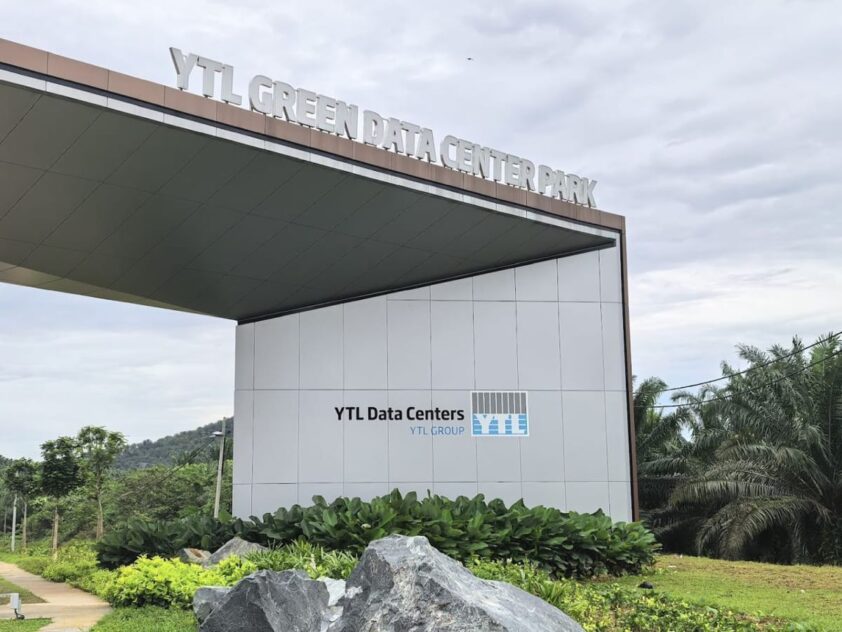
YTL has demonstrated through its green data centre in Johor that these challenges are not insurmountable and that a balance can be achieved. Public concerns about AI, however, are considerably more difficult to address.
Public sentiment is mixed, with some surveys showing strong enthusiasm for AI while others reflect anxiety about its impact on employment. Despite the considerable benefits the technology can offer, a more cautious approach may be necessary.
Caution does not mean rejection. It means three things.
First, consultation must increasingly include those most exposed to the consequences of AI adoption, not just investors and government ministries.
The National AI Office’s public consultation on the AI Governance Bill was a welcome step. Such engagement should become the norm rather than the exception.
Second, education and employment policies must evolve alongside technological adoption, not lag behind it. AI should be deployed where the task warrants it.
Regular, informal training should be provided not only to equip Malaysian workers with the necessary skills, but also to address their concerns about the technology.
Third, we must account for the full cost. Tax incentives, electricity grid expansion and water infrastructure all involve public resources.
They should be assessed as rigorously as any other public expenditure, with their expected economic and social returns to the country clearly stated.
Learning from the lessons of history
The dilemma of adopting new technologies is nothing new. The Industrial Revolution is usually told as a story of progress, and in the long run, it was one. However, it also came with enormous socioeconomic costs.
Measures to address these costs, including factory legislation and compulsory schooling, eventually followed, but often only after a generation had experienced the consequences.
The technology itself was not the mistake. It was the long delay between its adoption and the development of the social policies needed to accompany it.
The steam age lacked one advantage that Malaysia has today: hindsight. We know what happens when transformative technology advances faster than the institutions meant to govern it.
Workers pay the price first, public trust erodes, and remedies arrive late and cost more.
Malaysia can still build an AI economy that is productive, sovereign and fair. It will only succeed if it develops at a pace that its people and resources can sustain. ‒ Nov 13, 2026
Dr Peter Brian M. Wang, PhD, is the deputy head of the Centre of Economics and Public Finance at the National Institute of Public Administration (INTAN).
The views expressed are solely those of the author and do not necessarily reflect those of Focus Malaysia.
Main image: