
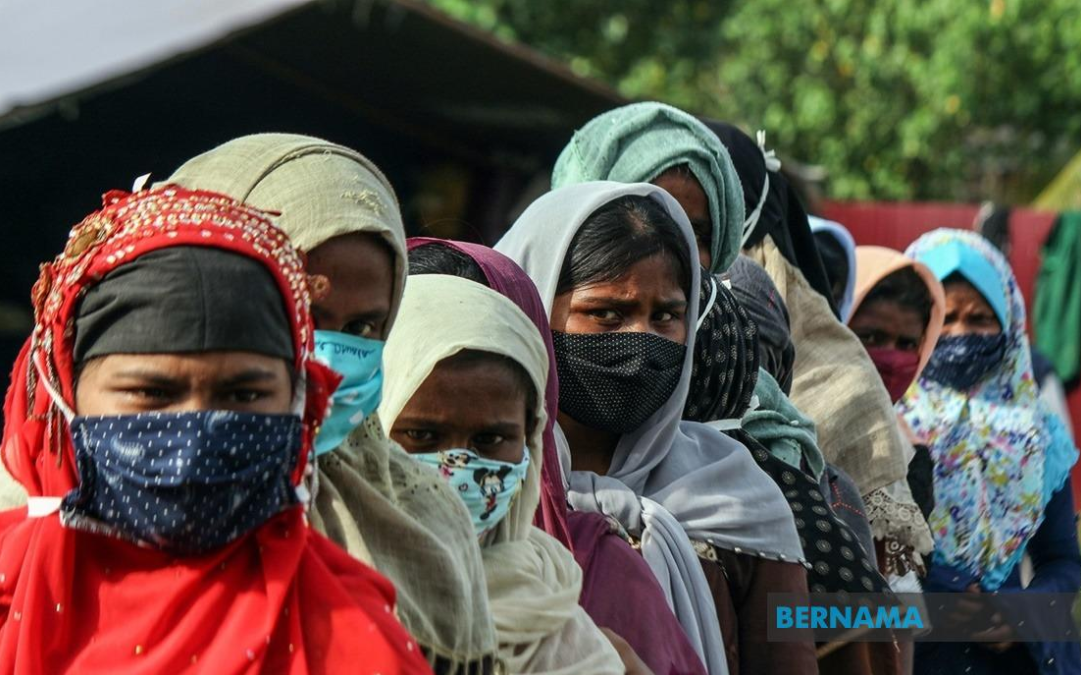
RECENT reports of an illegal settlement in Hulu Langat have once again drawn attention to a longstanding issue that Malaysia has struggled to address effectively: the presence of large undocumented Rohingya communities and the absence of a clear long-term policy framework.
While enforcement action against illegal structures may be necessary, it also raises broader questions. How do such settlements emerge and expand over time? What gaps in enforcement, monitoring and inter-agency coordination allow them to persist?
These are uncomfortable questions, but they deserve honest answers.
For years, Malaysia’s approach to the Rohingya issue has largely oscillated between humanitarian concern and enforcement measures. Yet the underlying challenges remain unresolved.
The result is a prolonged policy vacuum that satisfies neither those advocating stronger enforcement nor those emphasising humanitarian responsibilities.
Malaysia now finds itself at a difficult crossroads.
The country has neither fully integrated nor fully resolved the status of many undocumented Rohingya already residing within its borders.
Consequently, the issue continues to resurface through periodic enforcement operations, public debate and political controversy.
This is no longer merely an immigration matter. It has implications for public services, social cohesion, labour markets, security planning and public confidence in the government’s ability to manage complex challenges.
The most pressing concern is the absence of a comprehensive national strategy.
Different agencies often approach the issue from different perspectives. Immigration authorities focus on enforcement. Humanitarian organisations emphasise protection and welfare. Policymakers face competing legal, economic and diplomatic considerations.
Without a coordinated framework, responses risk remaining fragmented and reactive.
Malaysia should consider establishing a bipartisan national commission comprising policymakers, security experts, economists, legal specialists, local authorities and civil society representatives.
Its purpose should not be to produce another short-term report, but to develop a sustainable framework capable of guiding policy over the coming decades.
Several areas deserve particular attention.
First, Malaysia should strengthen efforts to register undocumented Rohingya through a comprehensive and transparent biometric registration exercise.
Effective policymaking requires accurate information on the size and composition of the population concerned.
Second, border security and anti-trafficking enforcement must remain priorities. Human trafficking syndicates continue to profit from vulnerable populations while undermining national immigration controls.
Third, greater legal clarity is needed regarding the status of those already residing in Malaysia. The current grey areas often create opportunities for exploitation, document fraud and labour abuses, while complicating enforcement efforts.
Fourth, the international community must play a more meaningful role. The Rohingya issue is not solely Malaysia’s responsibility.
Wealthier nations, regional partners and international organisations should contribute more actively towards long-term solutions, including resettlement initiatives and humanitarian support.
Most importantly, policymakers must acknowledge that there is no simple solution.
Neither enforcement alone nor humanitarian considerations alone can resolve a challenge of this complexity. Any sustainable approach must balance national security, public confidence, legal realities and humanitarian obligations.
The real risk is not the existence of difficult policy choices. It is the continued postponement of those choices.
Countries that defer complex decisions for too long often find that their options become increasingly limited over time.
Malaysia should avoid that outcome by developing a coherent and transparent strategy that commands public confidence while remaining consistent with the country’s broader responsibilities.
The Rohingya issue will not disappear on its own. What is needed now is not another cycle of temporary responses, but a serious national conversation about what a long-term solution should look like. ‒ June 16, 2026
KT Maran is a Focus Malaysia viewer.
The views expressed are solely of the author and do not necessarily reflect those of Focus Malaysia.
Main image: SOPA Images/Maskur Has via ZUMA Wire/dpa