

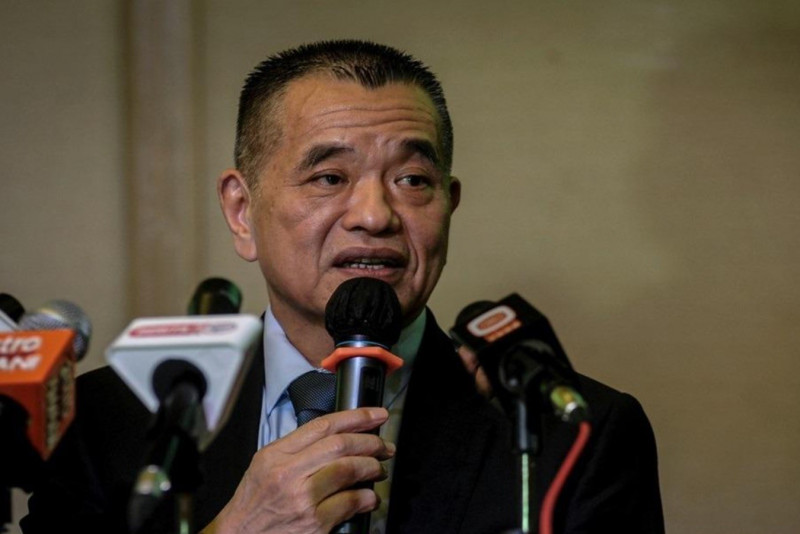
MCA Penang has raised concerns over the fairness and realism of current eviction criteria under the People’s Housing Programme (PPR), warning that outdated benchmarks risk penalising vulnerable households.
The issue follows recent moves by authorities to evict tenants deemed ineligible under PPR guidelines, including those exceeding income thresholds or with prolonged rental arrears, as part of a “cleansing” exercise to free up units for qualified applicants.
While acknowledging the need to ensure PPR units benefit those who genuinely require assistance, state liaison committee chairman Datuk Tan Teik Cheng said the current approach lacks compassion and fails to reflect present economic conditions.
He said the RM1,500 household income threshold used to determine eligibility is outdated and disconnected from urban realities.
“With the national minimum wage already at RM1,700 per individual, it is illogical to classify a household as ineligible based on a benchmark that falls below a single worker’s income,” he noted.
He added that the threshold does not account for rising living costs, inflation and external pressures, including global conflicts that continue to affect fuel and food prices.
“Such a rigid benchmark risks disqualifying B40 families who remain economically vulnerable,” he stressed.
Tan also questioned the reported RM2 million in unpaid rental arrears, saying it pointed to weaknesses in governance and enforcement.
“Why were early interventions not undertaken by the management corporation or local authorities to manage or restructure these arrears?” he asked.
“After 16 years of Pakatan Harapan administration, such accumulation reflects systemic shortcomings that cannot simply be shifted onto tenants.”
Tan further pointed out that the human impact of eviction must be carefully considered, noting that mobility challenges extend beyond the elderly and persons with disabilities to include individuals with serious health conditions.
“These include those suffering from severe diabetes, lupus, cancer or stroke, for whom relocation is not just inconvenient but physically and logistically overwhelming,” he said, adding that a three-month notice period may be insufficient.
Tan also called for greater transparency in both eviction and replacement processes, urging authorities to ensure appeals are handled fairly and compassionately.
“Clear criteria and independent review mechanisms are needed to ensure no deserving household is wrongfully displaced,” he said.
He further questioned how incoming occupants would be screened to ensure eligibility and prevent abuse or favouritism.
“Any implementation must be grounded in updated income thresholds, accountable governance, and a humane, transparent system that reflects current economic realities while protecting the most vulnerable,” he added.
On Monday (April 7), it was reported that notices have already been issued to 18 tenants in the Taman Manggis PPR in a pilot project, who have overstayed beyond the stipulated period or whose household income now exceeds the RM1,500 eligibility threshold.
State Housing and Environment Committee chairman Datuk Seri S. Sundarajoo was quoted as saying that PPR units were never intended as permanent housing, but rather as temporary support—typically limited to three years—to help families stabilise financially before transitioning to home ownership or other housing options.
However, he noted that some tenants had remained in their units for as long as 20 years, effectively blocking access for others in need.
The state government estimates that more than 1,000 applicants are currently on the waiting list, while over 30% of existing tenants may no longer meet eligibility criteria.
Affected tenants will be given three months to vacate, although extensions may be granted on a case-by-case basis, particularly for those facing genuine hardship, such as illness or sudden loss of income. ‒ April 8, 2026
Main image: Bernama