
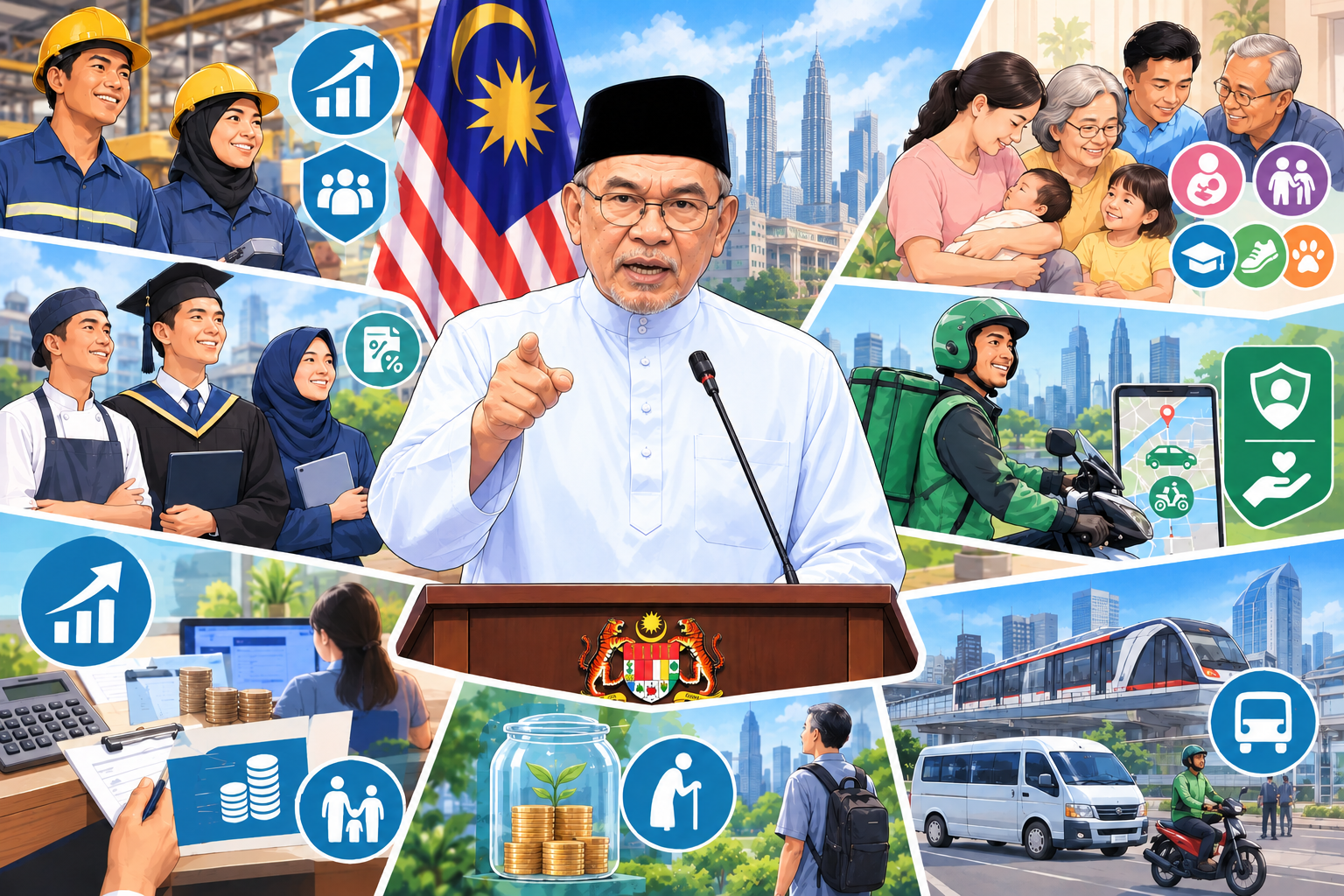
BUDGET 2027 will witness an increase in the national minimum wage from RM1,700 to RM2,000 a month, alongside expanded individual tax relief and new measures to improve the income and social protection of gig workers.
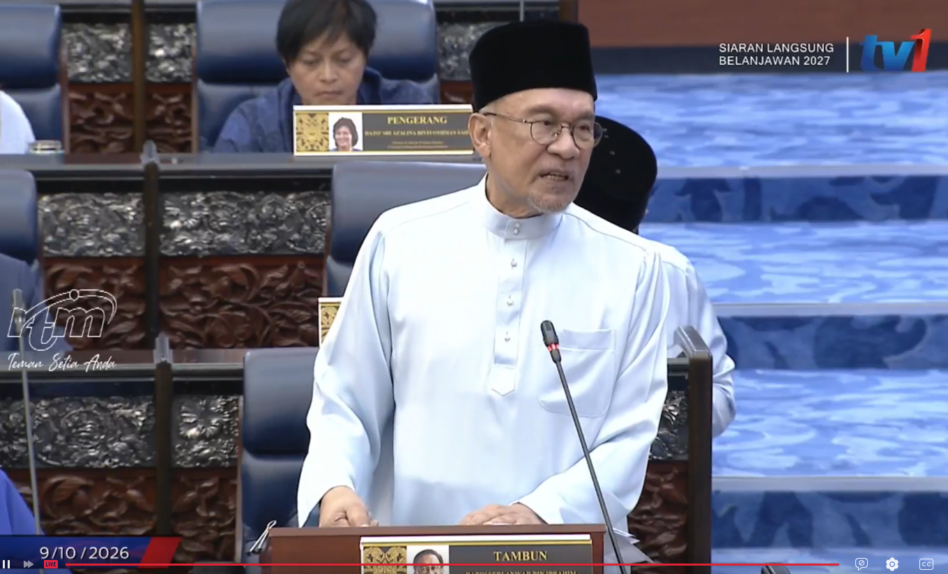
Presenting the budget, Prime Minister Anwar Ibrahim said the government would also introduce a starting minimum wage of RM2,500 a month for semi-skilled workers and graduates as part of reforms to the national income framework.
The government also welcomed commitments from government-linked investment companies and government-linked companies to raise their living wage benchmark to RM3,400 a month from RM3,100, an act that will benefit 230,000 employees.
Anwar urged private-sector employers to follow suit, noting that the government had raised the minimum wage and civil servants’ salaries, while several major employers in the banking and oil and gas sectors had also introduced fairer wages.
On taxation, the government will raise the individual tax relief ceiling, which has remained unchanged since 2010, from RM9,000 to RM12,000.
Resident individual income tax rates will also be reduced by one percent for selected income brackets.
The tax rate for chargeable income between RM70,000 and RM100,000 will fall to 18%, while the rate for income between RM100,000 and RM150,000 will be reduced to 24%.
Individual tax relief shall be expanded to cover postnatal care services, all caregiving expenses for parents and grandparents, sports shoe purchases, tuition fees for children and all fields of study under education and skills-related relief.
Lifestyle relief will also cover artificial intelligence subscriptions, vaccinations and the adoption of pets from registered centres.
However, the income tax rate for high-income earners with annual income exceeding RM1mil will be adjusted to 30%.
Anwar said the higher tax relief and lower rates would provide additional disposable income of up to RM1,600 to approximately five million taxpayers.
Meanwhile, the government will introduce a RM160mil co-funded package with Grab from 2027 to improve the net earnings and welfare of e-hailing and p-hailing workers.
The package will cover higher minimum earnings rates, vehicle maintenance and insurance assistance, as well as contributions to the PERKESO.
Pending the outcome, the government-Grab package is expected to increase the monthly net income of median-level e-hailing drivers by up to RM227, while p-hailing delivery riders could see an increase of up to RM100.
The government will also offer a 35% PERKESO matching contribution incentive for e-hailing and p-hailing workers. This will rise to 50% if platform companies also contribute towards workers’ payments.
Tax relief for PERKESO contributions will be expanded to include mandatory contributions to the Lindung Kendiri scheme, with additional relief of up to RM150 for voluntary contributions to the Lindung 24 Jam and Lindung Kendiri schemes.
To encourage retirement savings among e-hailing and p-hailing workers, the government offers matching contributions to the Employees Provident Fund, of up to RM600 annually or RM6,000 over a lifetime.
Separately, more than 200,000 self-employed individuals across 17 non-mandatory sectors will be eligible for a 70% PERKESO matching contribution incentive.
Note that Bank Simpanan Nasional and Agrobank is providing RM270mil in financing for gig workers seeking to start businesses or purchase their first homes.
To strengthen retirement security, all Malaysian citizens will be automatically registered as EPF members upon reaching the age of 18, allowing them to begin building their retirement savings earlier.
Anwar added that the government would regulate the p-hailing sector comprehensively under the Land Public Transport Agency and LPKP.—Oct 9, 2026