

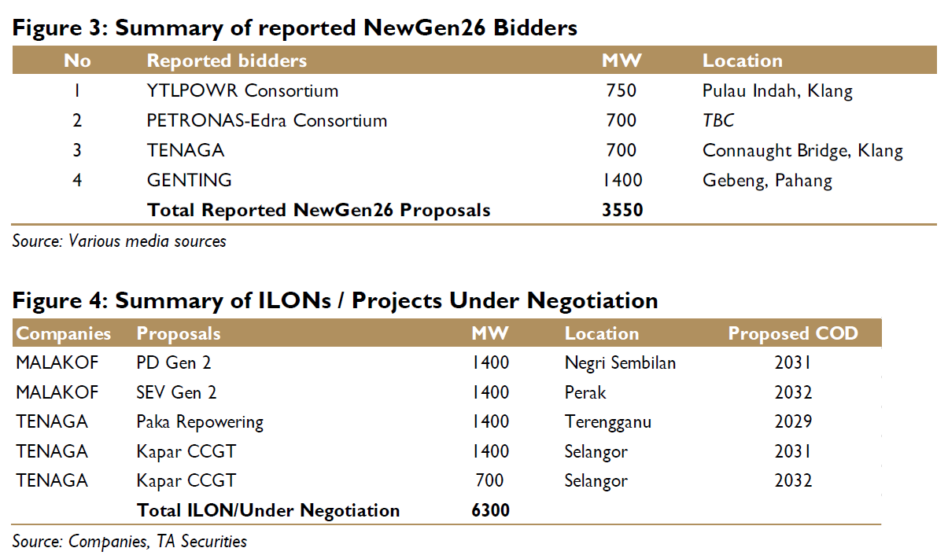
THE NewGen26 tender, launched in February 2026, is paving the way for new gas-fired power generation projects targeted for commissioning between 2029 and 2031.
Among the major players reportedly taking part are TENAGA, a consortium led by YTLPOWR, and a PETRONAS-Edra consortium.
TENAGA has already secured supplies for up to six gas turbines and generators from Mitsubishi Power, while YTLPOWR is also understood to have made arrangements for gas turbines for its potential projects.
The limited availability of gas turbines globally could give equipment suppliers greater bargaining power as companies compete for new generation projects.
With lead times for the equipment reportedly extending to as long as five years, developers may face greater pressure to secure supplies early.
According to TA Securities, the expected expansion in gas-fired power generation could also have implications beyond the electricity sector, particularly for Malaysia’s natural gas infrastructure.
As more gas is required to fuel new power plants, demand for domestic gas supply is expected to rise, potentially creating opportunities for additional investments in regasification facilities and gas pipelines.
PETGAS has previously estimated that Malaysia’s gas demand could grow by between 30% and 70% over the coming decade.
The outlook becomes even more significant when viewed against Malaysia’s longer-term energy transition plans.
Under the National Energy Transition Roadmap (NETR), gas-fired generation capacity is projected to more than double from its 2020 level to 28GW by 2050.
The expansion is expected to be supported by the gradual retirement of coal-fired generation as well as continued growth in overall electricity demand.
While renewable energy will take on a larger role in Malaysia’s future power mix, gas is expected to remain an important part of the transition, providing additional generation capacity as the country moves away from coal and accommodates rising electricity demand.
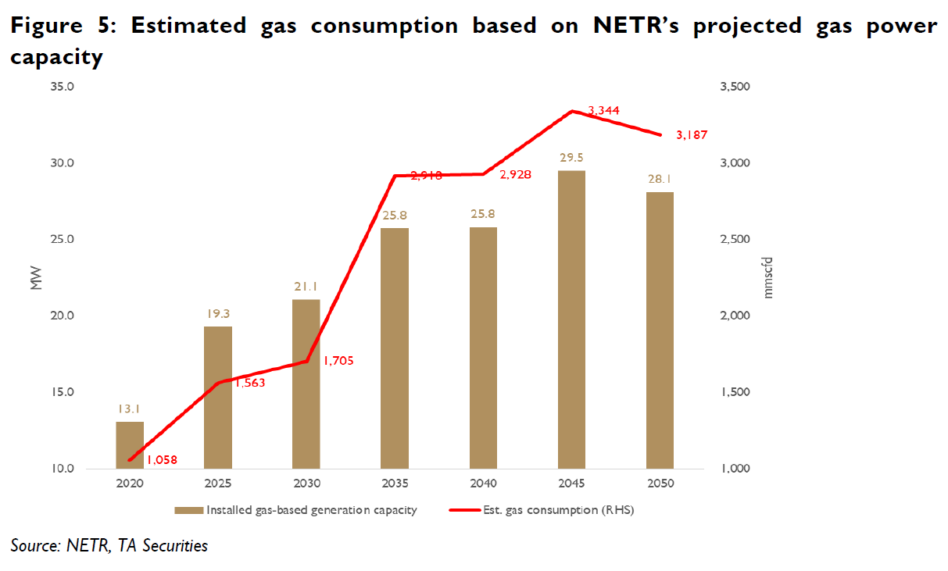
Against this projection and assuming the capacity factor of gas-based power plants increases as they take over as baseload capacity, TA estimates that natural gas consumption could increase to >3000mmscfd by 2050 from an estimated ~1000mmscfd in 2020.
Demand momentum from DCs remains strong with demand load having risen by +108% YoY to 1.26GW based on data from TENAGA as of June 2026.
Some 5.65GW DC capacity has been connected to the grid, while another 2.2GW is under construction and 0.5GW new ESAs signed. This brings total prospective DC capacity to 8.4GW.
At its latest briefing, TENAGA also highlighted that another 5GW DC connection projects are in the pipeline, which could potentially bring total connected DC capacity to 13GW in the medium term.
Johor remains the key driver of Malaysia’s secured DC capacity accounting for 67% of the 8.4GW total.
“In fact, Johor is now the epicentre of Asia Pacific’s DC buildout, ranking tops in term of primary market preference and the largest in terms of pipeline DC investment, according to Cushman & Wakefield,” said TA.
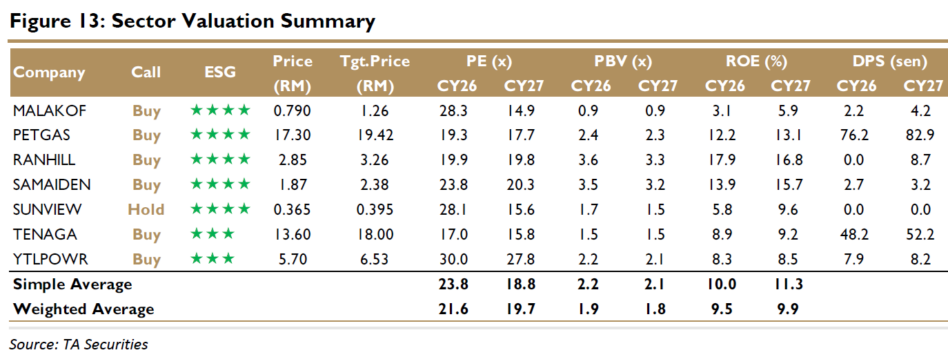
Overall, the latest developments and highlights from ERI2026 underscores our sector thesis on capacity expansion, grid investment and RE growth.
The research house maintains its Overweight stance on the Utilities sector premised on demand-supply tightness in the generation market and build-out of new gas-based power generation capacity.
Also, note the record RE rollout, grid capex expansion to accommodate the energy transition and demand growth, and the expansion of gas supply infrastructure.—Sept 14, 2026
Main image: Shutterstock