
Editor’s Note: “Why should taxpayers’ monies be used to bail out AirAsia? AirAsia is not a GLC (government-linked companies). (Tan Sri) Tony Fernandes (AirAsia’s co-founder) and AirAsia squeeze Malaysians! It never has a heart! Why should Malaysians bail out this heartless bully?”
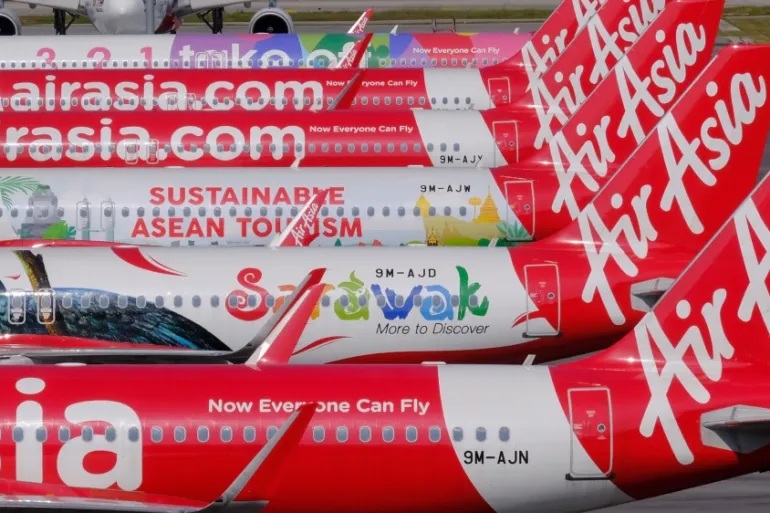
Such was the reaction of Madani critic Yang Gor Condor Returns (@YangGorHero) on X to the recent Reuters revelation that the Finance Ministry (MOF) has hired Alton Aviation Consultancy to assess AirAsia’s funding needs as Southeast Asia’s largest budget carrier seeks fresh capital amid mounting financial pressure.
“Remember the package that AirAsia sold right before the COVID-19 lockdown and later it refused to refund the purchasers! It was a con job to cheat Malaysians!” recounted the self-proclaimed independent analyst.
Why should taxpayers monies be used to assess how to bail out AirAsia?
Why should taxpayers monies be used to bail out AirAsia?AirAsia is not a GLC. Tony Fernandez and AirAsia squeeze Malaysians! It never has a heart! Why should Malaysians bail out this heartless bully? pic.twitter.com/w9iijvNHce
— Yang Gor Condor Returns (@YangGorHero) September 6, 2026

Also lambasting at the purported hiring of the New York-based advisory firm focused exclusively on the aviation and aerospace industries is Endie (@The_Endie) who insinuated that the budget carrier should be allowed a natural demise after all.
Some idiot in the corridors of power thinks airasia is too big to let it die but what government have to do is to cut off its cancerous owners and buy them off at a huge discount perhaps just RM1. But in reality, this government gonna bail the owners billions in taxpayers money. https://t.co/59IYWlTVij
— Endie (@The_Endie) September 6, 2026
“Some idiot in the corridors of power thinks AirAsia is too big to let it die but what the government have to do is to cut off its cancerous owners and buy them off at a huge discount perhaps just RM1,” insisted the self-proclaimed “Liverpool (football) fan with high expectations”.
“But in reality, this government gonna [sic] bail the owners billions in taxpayers’ money.”
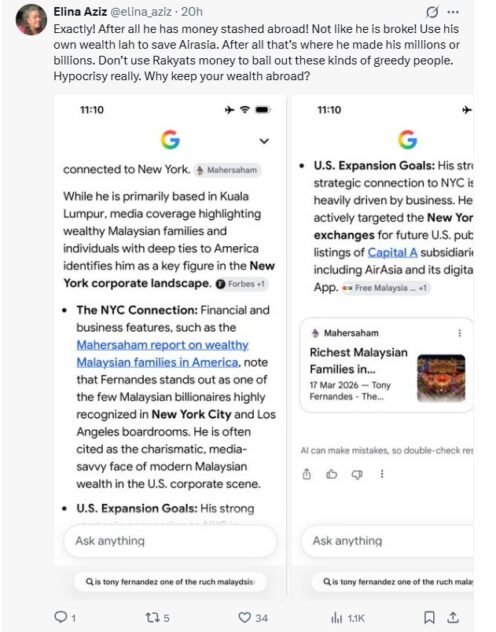
As furore was directed at both the Madani government and not least Fernandes who also helms AirAsia’s parent company Capital A Bhd which share price is currently languishing at the 30 sen range, finfluencer Malaysia Uncapped (@malaysiauncapped) has come forward to address the matter in a more balanced manner.
Here goes:
— 0 —
THE Malaysian government has just hired an aviation consultant to look through AirAsia’s finances after the budget airline reported an RM831 mil loss in 2Q 2026 (after adding a RM331 mil forex loss component) and began seeking up to US$1 bil overseas, plus RM700 mil locally.
So naturally, people are asking: are taxpayers about to bail out AirAsia?
Not yet. But to understand why Putrajaya is looking at this closely, we first need to understand how AirAsia got here.
AirAsia’s airline operations made RM199 mil but the group also booked a RM232 mil forex loss because it earns across Southeast Asia while many leases and debts are tied to US dollars.
When regional currencies weaken against the greenback, those obligations become more expensive locally. AirAsia has also recorded big forex gains before when currencies moved the other way, so this isn’t a new risk.
Then 2Q 2026 made things much worse.
The Middle East war pushed jet fuel higher, taking AirAsia’s average fuel cost to US$183 per barrel and lifting fuel expense 58% year-on-year (yoy) while another RM331 mil forex loss hit at the same time.
That pushed the group to an RM830.5 mil net loss. Even without the forex hit, roughly RM500 mil of losses remained which tells you the problem had moved beyond currencies alone.
‘A busy airline can still lose money’
The strange part is that passengers had not disappeared. AirAsia still generated RM5.1 bil of 2Q 2026 revenue despite cutting capacity by 11% while its Malaysia and Cambodia short-haul operations stayed profitable.
So this wasn’t a demand collapse. People were still buying tickets but more of that revenue was being eaten up by fuel, leases, financing, currency movements and weaker parts of the group.

A busy airline can still lose money. Once losses pile up, cash starts to matter much more. At end-June 2026, AirAsia had RM954 mil in cash against RM18.4 bil of current liabilities.
That doesn’t mean RM18.4 bil is due tomorrow. It refers to obligations expected within roughly a year or the normal operating cycle, including supplier bills, leases, debt payments and tickets already sold for future flights.
The real question is whether cash comes in fast enough to meet them. That is why AirAsia is trying to raise up to US$1 bil internationally and another RM700 mil locally to give it more room to re-finance and restructure its obligations.
Airlines are especially sensitive to rising costs because a flight still needs pilots, crew, maintenance, airport fees and fuel whether every seat is filled or not.
Putrajaya’s worries
Once an empty seat takes off, that revenue is gone, so margins can deteriorate very quickly.
That also explains why Putrajaya is paying attention. AirAsia may be private but its routes bring tourists into Malaysia, connect cities and feed passengers into airports, hotels, restaurants, transport operators and other businesses.
If AirAsia suddenly cut a large part of its network, the impact would spread beyond its shareholders, thus giving the government of the day a reason to care about keeping the network running.
That still doesn’t mean it has to protect the owners. For now, there is still no announced bailout and no government guarantee.
The Finance Ministry hired Alton Aviation Consultancy to first work out what AirAsia actually needs.
AirAsia could still re-finance privately, the government could help facilitate financing without putting taxpayers directly at risk or some form of conditional support could emerge if things worsen.
The key question is who carries the risk if the rescue goes wrong. Malaysia has been here before.
During COVID-19, AirAsia’s then-parent Capital A was approved for an 80% government-guaranteed loan of up to RM500 mil but that never went through. One condition required Fernandes and the airline’s co-founder Datuk Kamarudin Meranun to personally guarantee it.
So if taxpayers are asked to take some of AirAsia’s risk again, how much should its owners and creditors take first?
Protecting Malaysia’s connectivity is not the same as protecting shareholders. – Sept 8, 2026
Main image credit: Bloomberg