


THE medical profession has historically been male-dominated. However, over the last few decades, the number of women entering the various healthcare fields has been on a steady incline.
Data from the World Health Organization (WHO) shows that women now make up nearly 70% of the global healthcare workforce.
Despite this progress, challenges remain when it comes to leadership roles and recognition with an estimated 75% of leadership positions being held by men, according to WHO.
This is a stark disparity considering that women represent majority of the workforce. Even so, a growing number of women are breaking through these barriers.
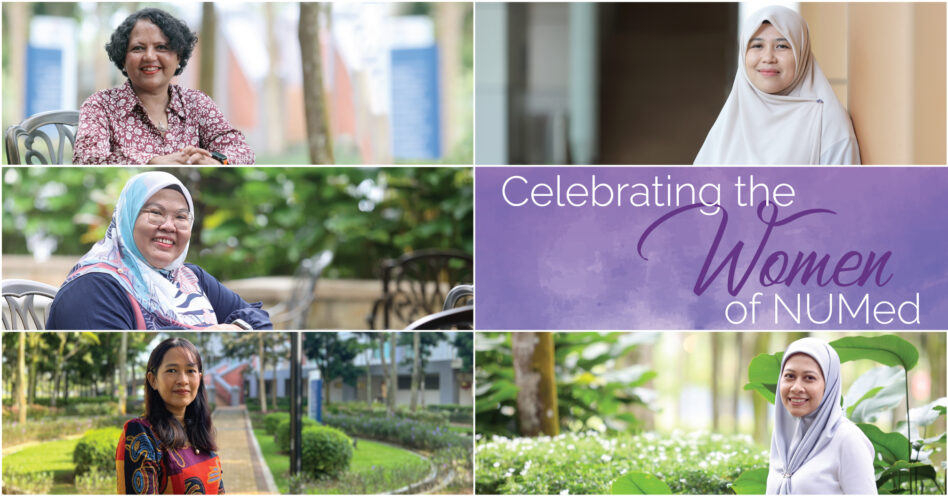
Tertiary institutions like Newcastle University Medicine Malaysia (NUMed) is playing a role in driving this.
For one, NUMed which sits within the Newcastle University, UK’s Faculty of Medical Sciences holds a Silver Award under the Athena Swan Charter, a widely recognised framework that promotes gender equality in academia and research.

Women’s contribution is significant
This commitment is also reflected within its community. In 2025, female students made up the majority of enrolments across its Bachelor of Medicine, Bachelor of Surgery (MBBS) and BSc (Honours) Biomedical Sciences programmes
The trend is similarly evident within its workforce where women form the majority by holding half of the institution’s top leadership positions and a significant proportion of faculty and professional roles.
Women bring unique perspectives and compassion to the medical field, serving as physicians, researchers, nurses, caregivers, policymakers and hospital leaders. Their growing presence underscores the value of their contributions to healthcare systems across the world.
“In the healthcare context, women don’t simply ‘bring something to the table’ but they help build the table itself,” revealed NUMed’s library manager-cum-equality, diversity and inclusion (EDI) lead Norasikin Darsono.

“We can see the significant impact of women’s work across many areas. For example, Marie Curie, a physicist and chemist who was the first woman to win a Nobel Prize in 1903, discovered radioactivity which later became essential in the development of X-rays and radiation therapy for cancer treatment.”
Through the lens of EDI, women assume an influential role in healthcare. They not only recognise and address gender-specific health needs but also advocate for vulnerable and marginalised communities, thus helping to promote culturally sensitive and trauma-informed care.
“Women often bring strong emotional intelligence and relational leadership to patient care. Qualities such as empathy, attentive listening and collaborative decision-making are essential elements of effective treatment,” vouched NUMed’s Foundation programme lecturer and EDI committee member Farah Eliza Mohamed Rasidi.
Women in male-dominant ecosystem
“They foster trust, improve communication and ultimately enhance patient outcomes. In many ways, these human-centred strengths are exactly what healthcare needs most!”
Women in healthcare are also instrumental in addressing gender-specific health issues, including reproductive health, breast cancer, menopause and mental health.
Their perspectives and experiences can add valuable insight to shaping policies, research priorities and treatments that better reflect women’s health needs.
One widely cited example lies in cardiovascular disease. For decades, much of the research on heart attacks was based on male patients, resulting in the “classic” symptoms often taught in medical settings as severe chest pain.
Women, however, may experience different warning signs. This can sometimes lead to delayed recognition or misdiagnosis, thus highlighting the importance of more inclusive research and clinical understanding.
Women’s growing presence in healthcare leadership ultimately benefits the entire system. Greater representation helps ensure that diverse patient perspectives, including women’s health needs, are better understood and prioritised.
Leadership teams that bring together varied experiences and viewpoints are also better equipped to make informed decisions, strengthening healthcare systems while fostering more collaborative and patient-centred care. – March 17, 2026