

RISING CRUDE oil prices could lead to higher construction costs in Malaysia, mainly through increased diesel and building material expenses.
According to Maybank Investment Bank (MIB), the overall impact on the earnings of listed construction-related companies such as GAM, CMS and PLINTAS is expected to remain manageable for now.
Oil is not typically a direct component in most building materials, but higher crude prices can still affect the construction sector through the wider supply chain.
One of the most immediate effects is on diesel, which is widely used to transport building materials and power heavy construction machinery.
As diesel prices tend to move in tandem with oil prices, contractors may face rising operating costs. Malaysian construction firms generally purchase diesel at market rates, meaning fuel price increases could squeeze project margins. Diesel prices have already climbed by about 26% to MYR3.92 per litre.
The effect of higher energy prices varies across different construction materials. Cement production is particularly energy intensive and relies heavily on thermal coal, so rising energy costs could push production expenses higher.
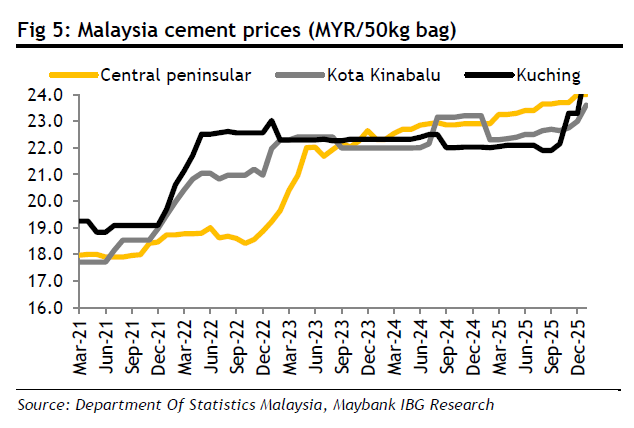
However, MIB noted that current thermal coal prices remain well below the extreme levels seen during the 2022 Russia-Ukraine war, suggesting that upward pressure on cement prices may remain limited.
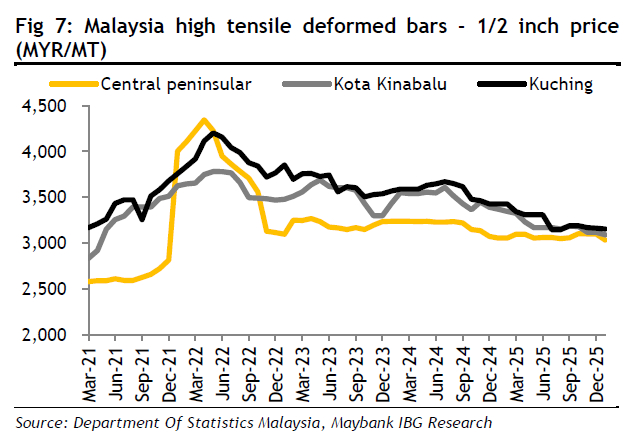
Steel prices, on the other hand, are unlikely to surge significantly. Steelmaking depends on coking coal, but weak global demand for steel is expected to keep prices relatively stable.
Bitumen — a petroleum-based product used in asphalt — is more directly linked to crude oil prices. As a result, road construction projects could face higher costs if oil prices continue to rise.
Even so, MIB believes the present oil price surge is unlikely to trigger a sharp spike in building material costs similar to what was seen in 2022. Instead, any inflation in material prices is expected to be moderate.
From an investment perspective, the research house expects the impact on the earnings outlook of major Malaysian construction companies to remain limited.
GAM is relatively well protected because many of its projects operate under cost-plus arrangements, allowing it to pass higher material costs on to project owners.
CMS could face some exposure through higher thermal coal prices affecting its cement production. However, its strong market position in Sarawak gives it some pricing flexibility if costs rise.
Meanwhile, PLINTAS may see slightly higher costs in highway construction due to potential increases in bitumen prices. Nevertheless, the overall earnings impact is expected to be minor.
Overall, while the sector may face moderate cost pressures from rising energy prices, current conditions suggest limited downside to earnings forecasts. Among the companies covered, MIB considers PLINTAS the most defensive. —Mar 13, 2026