
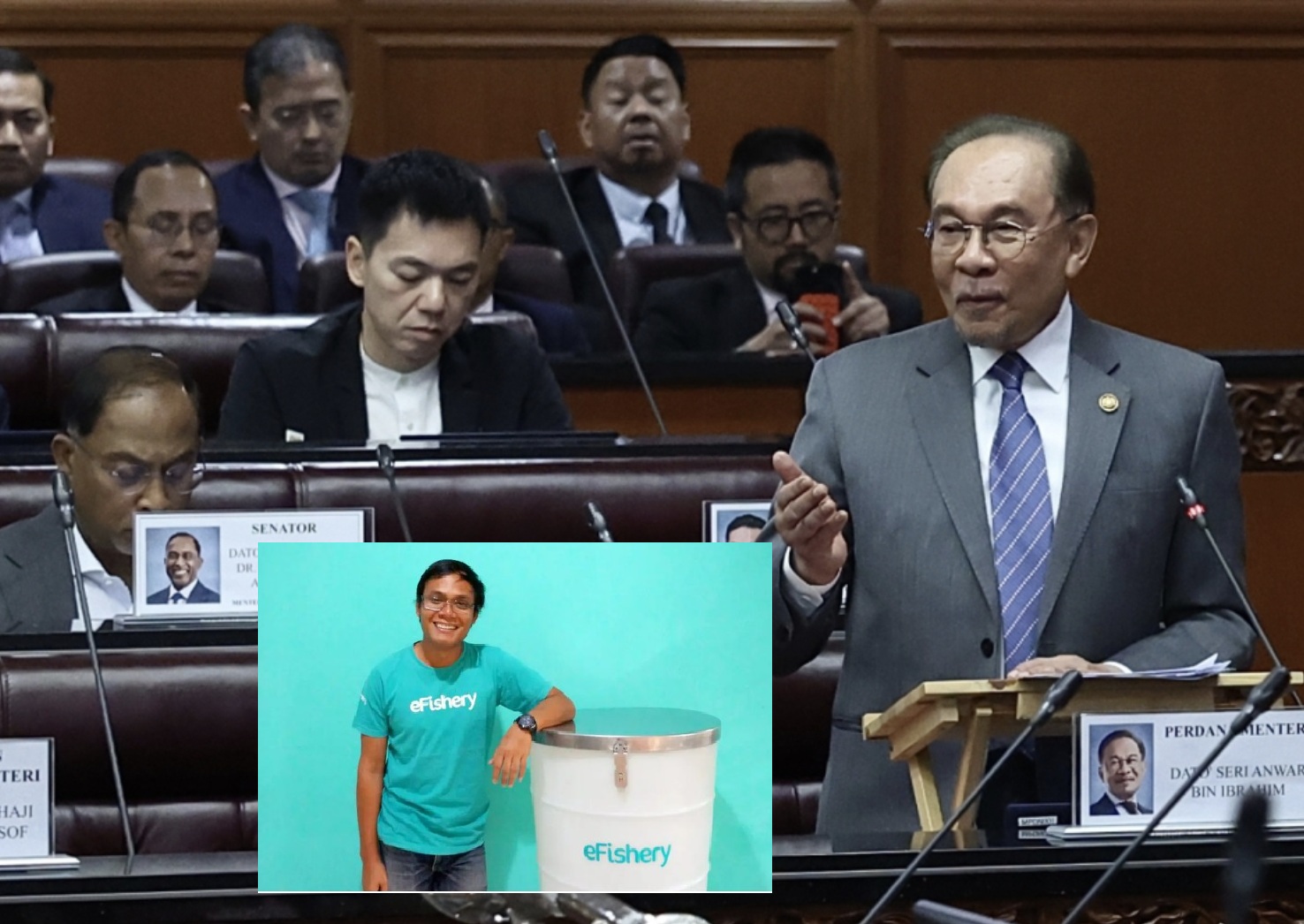
IT IS unimaginable that Retirement Fund Inc (KWAP), the Malaysian pension fund, could have been duped into investing about RM163 mil in Indonesia’s eFishery project about five years ago.
Apart from KWAP, other major investors such as Singapore’s Temasek and Japan’s Softbank were also deceived into investing in the fraudulent and duplicitous venture in Indonesia.
An Indonesian student, Gibran Huzaifah, reportedly sat in front of his laptop to save his fledgling company, eFishery, from being throttled by rising feed costs and the role of middlemen.
He allegedly came up with two sets of financial figures: one reflecting the company’s actual financial position and another containing inflated numbers designed to attract potential investors.
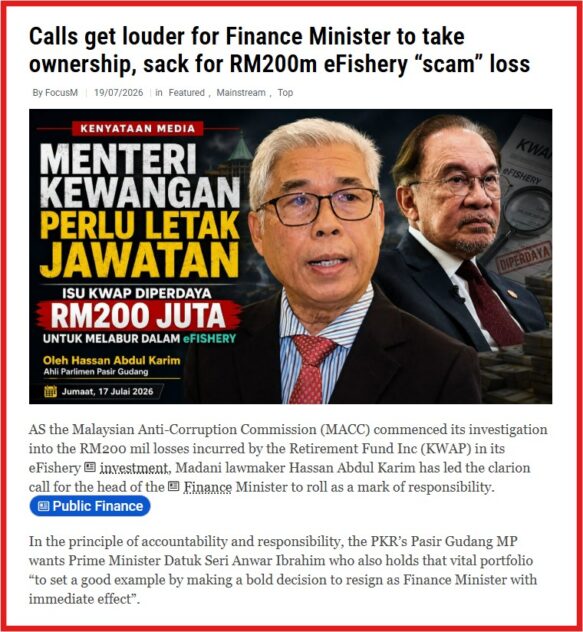
The company was soon transformed into an attractive investment destination that caught the attention of global investors, including KWAP which comes under the purview of the Finance Ministry (MOF) headed by none other than Prime Minister Datuk Seri Anwar Ibrahim.
Anwar might be right in saying that the audit reports of eFishery were not trustworthy.
But the question before him is this: how could the MOF have been duped into investing in eFishery without proper financial scrutiny?
Anwar Ibrahim has defended KWAP’s RM163.4 million investment in eFishery, saying the loss should be viewed against the fund’s overall performance, which recorded RM12.9 billion in net profit.
The PM said preliminary findings found no wrongdoing in the investment activity, adding… https://t.co/OhIWeMQHEo pic.twitter.com/K6UBw4Luva
— BFM News (@NewsBFM) July 20, 2026
Yes, the Malaysian Anti-Corruption Commission (MACC) might be investigating the matter while the Indonesian authorities have charged Gibran who has since been sentenced to eight years’ imprisonment alongside two of his associates.
Excuses uncalled for
Anwar cannot justify KWAP’s actions by saying that the fund had made RM12.9 bil in net profit in 2024 – a RM15.8 bil increase in its fund size – and that it was simply unfortunate to have lost money in the eFishery scandal.
Blaming the international auditors of the aquaculture technology start-up serves no useful purpose.
RM200 juta duit KWAP lesap? Angka sebenar sekitar RM163 juta, dan penipuan eFishery turut memperdaya Temasek serta SoftBank – tapi setiap sen masih perlu dikejar. Pencen penjawat awam tak terjejas, jadi jangan percaya auta angka separuh masak.#TZA #KWAP #eFishery #EkonomiRakyat pic.twitter.com/kwxByeMsDm
— Tengku Zafrul 🇲🇾 (@tzafrul_aziz) July 20, 2026
If KWAP relied on the auditors, then its due diligence was clearly inadequate, especially given what is already known about the role of international auditors in the 1MDB financial scandal.
It serves little purpose for Anwar to constantly emphasise his government’s war against corruption and money laundering when scrutiny over KWAP’s investment failed so miserably.
Anwar should stop blaming the auditors of eFishery for their misleading reports and instead ask KWAP officials to account for their role in this financial fiasco.
In light of KWAP’s financial loss, shouldn’t Anwar demand the resignation of the officials responsible for approving the investment in the eFishery project?
eFishery: KWAP rugi RM163 juta.
1) Temasek & SoftBank pun kena tapi ada beza besar.
Temasek/SoftBank masuk awal, Series C. Series D tu follow-on je ~jaga equity interest, cost basis rendah, dah ada visibility bertahun.2) KWAP? First-time investor. Masuk Series D round paling…
— khalid karim STEMKITA (@khalidkarim) July 20, 2026
More significantly, should Anwar resign from his position as Finance Minister?
What is the point of holding the portfolio if he failed in his duty to instil financial discipline at KWAP?
Beyond this, Anwar should acknowledge the possibility that he has failed in his responsibilities as PM. Shouldn’t he also resign from that position? – July 21, 2026
Former DAP stalwart and Penang deputy chief minister II Prof Ramasamy Palanisamy is chairman of the United Rights of Malaysian Party (Urimai) interim council.
The views expressed are solely of the author and do not necessarily reflect those of Focus Malaysia.