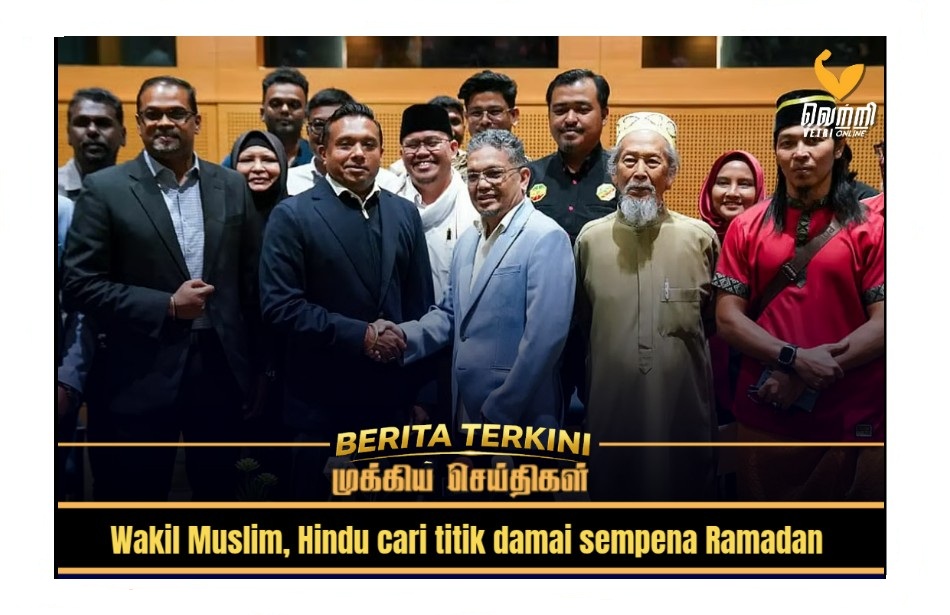
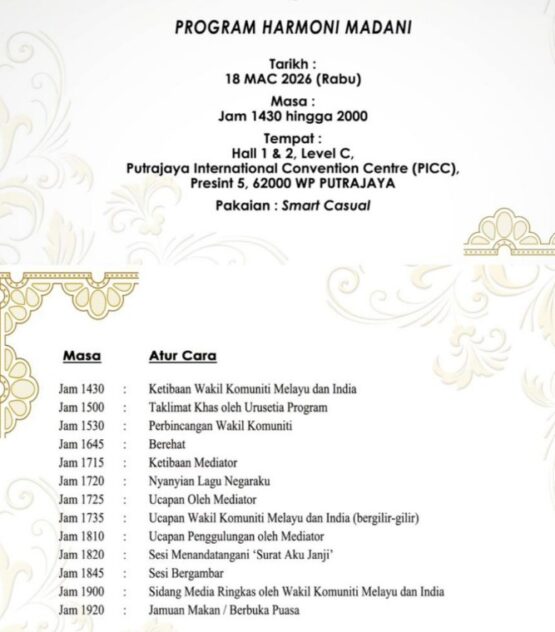
THE dialogue between some members of the Muslim and non-Muslim NGOs on March 18 was apparently organised by the police.
The Program Harmoni Madani gathering was supposed to be attended by Inspector-General of Police (IGP) Datuk Seri Khalid Ismail but the nation’s top cop not show up.
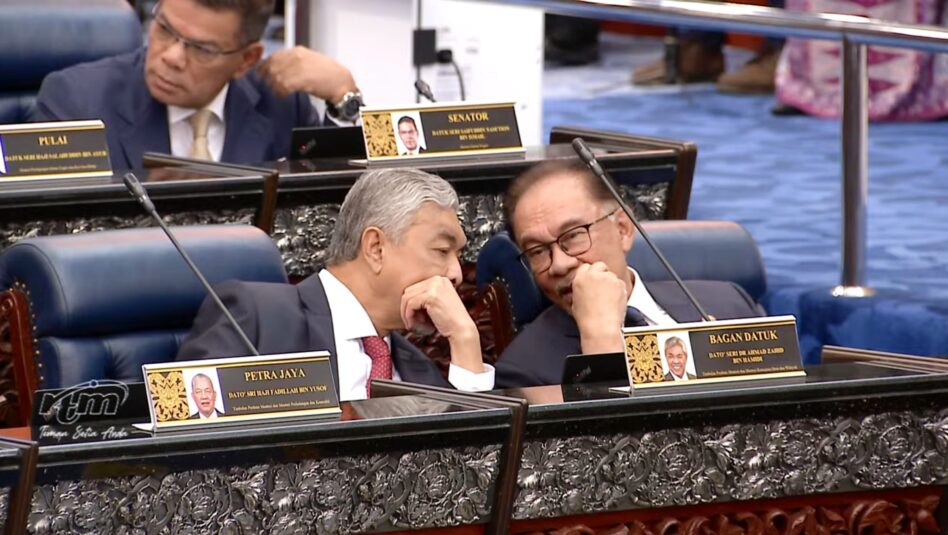
Prime Minister Datuk Seri Anwar Ibrahim praised the dialogue as a way of addressing present religious and ethnic tensions to create inter-ethnic and religious harmony in the country.
I was invited as were the principal leaders of the United Rights of Malaysian Party (Urimai), namely David Marshel (deputy president) and Satees Muniandy (secreyary-general).
We would have attended the dialogue had it been a gathering of community leaders from various ethnic groups.
However, when we realised that those who spearheaded the move against “illegal” Hindu temples such as Zamri Vinoth, Firdaus Wong Wai Hung and S. Chandrasegaran a.k.a. Cikgu Chandra were also invited, we had second thoughts about attending the function.
Boycotted by mainstream Hindu NGOs
The question is how can the dialogue be taken seriously when the very perpetrators of ethnic and religious tensions in the country were invited to participate?
As a result, we decided not to attend the function – not because we were not serious about engaging in dialogue but because of the presence of these individuals.
This is precisely the reason why mainstream Hindu and Indian political organisations refused to participate in the dialogue.
However well-meaning, the organisers failed to realise that inviting these activists would be self-defeating to the very purpose of holding such a dialogue.
The session was intended as an engagement among representatives of the Malay-Muslim and Hindu communities.
The few Hindu representatives who attended the meeting should not have done so. In any case, those present were not from mainstream social, religious or political organisations.
Representatives from the Malaysian Hindu Sangam (MHS) and the MIC were either not invited or chose not to attend because of the presence of individuals primarily responsible for the current ethnic and religious tensions.
Inviting perpetrators
I understand that the MHS has expressed its frustrations – either for not being invited or due to the inclusion of those who were at the forefront of calling for the demolition of “illegal” temples.
Surprisingly, Anwar commended the meeting as a step toward reducing inter-ethnic and religious tensions.
He may have overlooked his own role in calling forthe removal of “illegal” temples in the country. His position on the dialogue is akin to the proverbial act of pinching a baby and then rocking it to sleep.
Had Anwar taken a firmer stance in containing the extremism of vigilante groups, such a dialogue session might not have been necessary.
I am not opposed to dialogue among community leaders to promote peace and stability. However, it was clearly a mistake for the organisers to invite individuals responsible for fuelling current ethnic and religious tensions.
Why should Hindu representatives sit at the same table with Zamri, Firdaus and others who have displayed such hostility towards the Hindu community?
Anwar may praise the dialogue but he should not forget his role in politicising the issue of “illegal” Hindu temples.
Without respect and dignity for Hindus in this country, no dialogue aimed at reducing ethnic and religious tensions can succeed.
The police, too, should not hide behind such initiatives if they have failed to perform their duties without fear or favour. – March 20, 2026
Editor’s Note: Apparently, the Global Human Rights Federation (GHRF) alongside a coalition of civil society organisations also categorically rejected the dialogue held at the Putrajaya International Convention Center (PICC).
Below is a gist of the statement by GHRF’s president S. Shashi Kumar:
No formal agenda was circulated in advance, the notice was inadequate and the engagement was rushed and poorly structured.
Crucially, the meeting carried neither a clear mandate nor legitimate authority, rendering it fundamentally unfit to address a matter of such national importance.
Global Human Rights Federation (GHRF) president S. Shashi Kumar
GHRF firmly asserts that this meeting was conducted on the wrong platform.
Issues involving interfaith sensitivities, constitutional guarantees and long-standing temple land disputes cannot be reduced to ad hoc engagements led by a single enforcement agency.
These are complex, deeply rooted national issues that require a properly mandated, multi-stakeholder and institutionally grounded process that reflects both seriousness and legitimacy.
We are further concerned that several entities invited to the meeting neither possess direct involvement nor demonstrated credibility in relation to the on-going racial and temple land disputes.
This undermines the legitimacy of the process and raises fundamental questions about both the intent and the outcome of the engagement.
Former DAP stalwart and Penang deputy chief minister II Prof Ramasamy Palanisamy is chairman of the United Rights of Malaysian Party (Urimai) interim council.
The views expressed are solely of the author and do not necessarily reflect those of Focus Malaysia.
Main image credit: Vetri Online
Subscribe and get top news delivered to your Inbox everyday for FREE