
ATTRACT customers and build brand recognition. Those would be the key functions of a business signage alongside communicating key information about products and services available.
A thoughtfully-designed and well-positioned signboard acts as round-the-clock marketing agent without actual human interaction.
Quite simply put, it might very well be the first visual contact a customer has with a business. So it is imperative the signboard is done right.
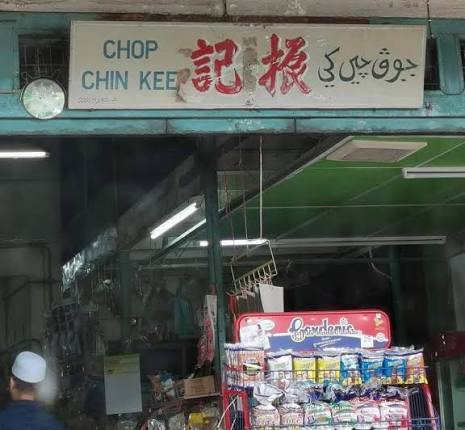
Does this allow for space for mandatory Jawi script to be included in business signages as required by the Kuala Terengganu municipal authorities (MBKT)?
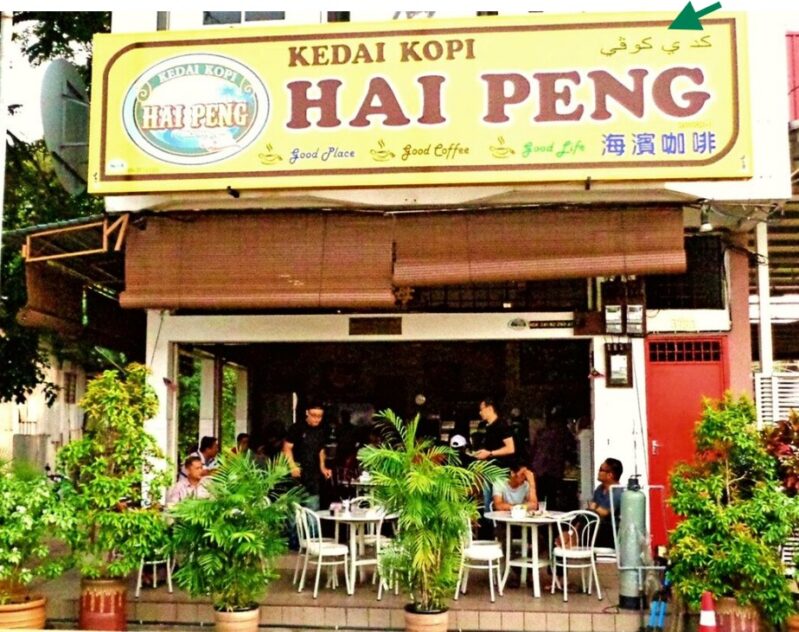
Traders and advertising service operators in this district are reminded to always comply with the conditions for using Jawi writing on every advertising signboard installed in the administrative area of MBKT.
According to Kuala Terengganu mayor Lizan Che Mat, the ruling is one of the main conditions that must be met by any party before any advertisement application approval is issued.
Otherwise, the local authority will not hesitate to reject applications that fail to follow the established guidelines.
“For advertisements displayed without approval, a compound action of RM500 may be imposed,” he told Sinar Harian recently.

Commenting further, Lizan said that continuous monitoring measures will be implemented by the MBKT to ensure that all premises owners and traders comply with the instructions for installing Jawi writing on their respective billboards.
“So far, we’ll be monitoring and warning all entrepreneurs or traders to install advertising signs that follow the prescribed instructions,” he remarked.
News of mandated Jawi requirement was shared on the Malay-language daily’s Facebook platform which has garnered 7.6K likes, 1.1K comments and 187 shares at time of writing, a denotation that this linguistic regulation has raised an eyebrow or two among netizens.
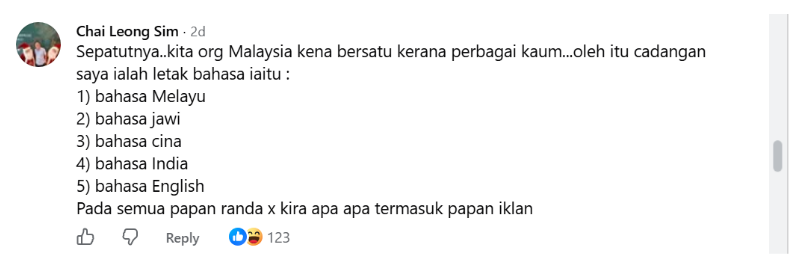
Perhaps with tongue lodged firmly in cheek, branding enthusiast Chai Leong Sim suggested that all signages include every widely used language in Malaysia to underline the multi-cultural makeup of the country.
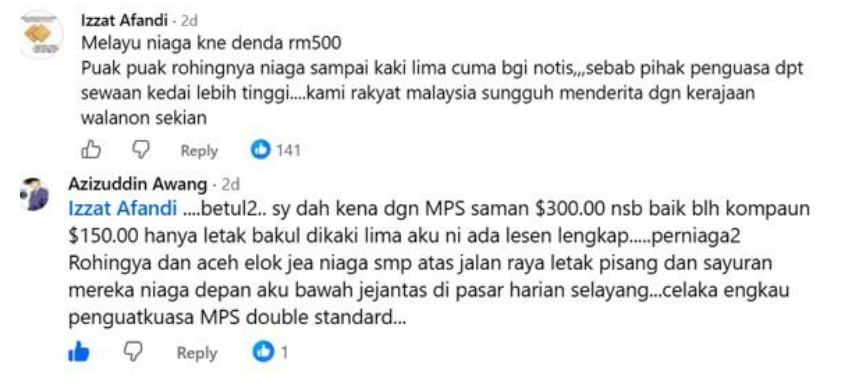
Enforcement of this regulation was also singled out as yet another example of laws being used to squeeze locals whilst foreigners seem to get away with nothing more than a notice of compounds. “It just isn’t fair” was the obvious sentiment here.
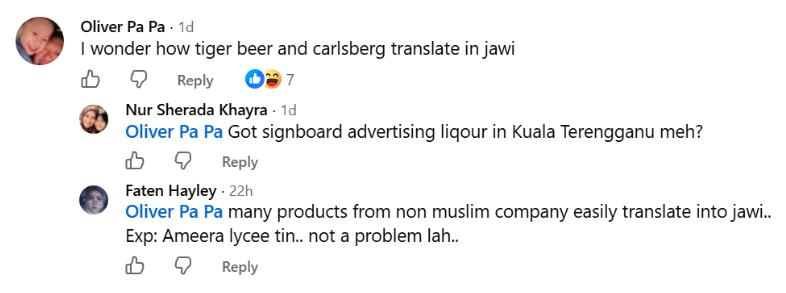
There were also some queries as to how beer brands could be translated but this query was shot down as there is no problem with translations (eg Ameera’s Canned Lychee). Besides, how many shops are there in Kuala Terengganu that would be selling booze?
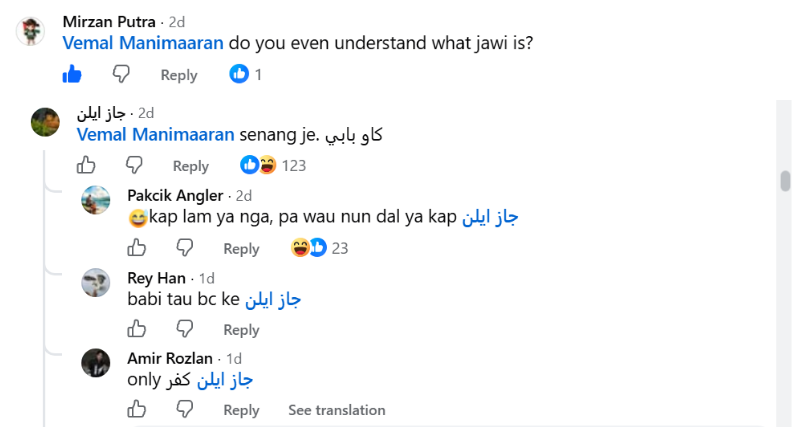
Perhaps misunderstanding the actual purpose of Jawi script, this commenter decided to try instigate some mischief with a porcine-related enquiry.

As explained by quite a few bemused commenters, it was no problems and the appropriate letters were spelled out for him.
Some observers welcomed the move saying that it was an opportune time for them to pick up a new skill from those who were learned in Jawi.
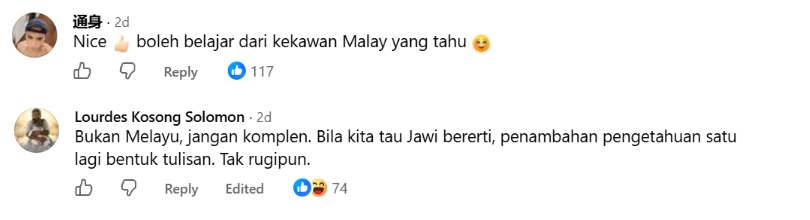
As can be seen, there are numerous issues that is related to MBKT’s insistence on using Jawi script in business signages.
Firstly, as highlighted by one commenter, it is only fair that each and every one of the commonly used languages in Malaysia are featured in signboards.
It may have been made in jest but the insinuation is clear – fair is fair. If script that is not familiar to many Malaysians is mandated, then perhaps other scripts should also be allowed.
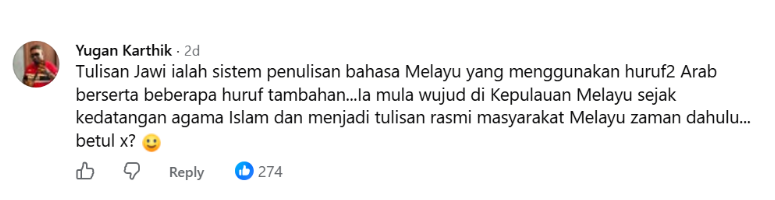
Secondly, Jawi is a script, not a language per se. As some commenters were at pains to point out, the script is used to denote Malay words, not some foreign language. There is nothing to prevent it from describing any item, including beer and swine.
Last but no least, it does appear there are dissenters to this move from all sides of the racial divide.

Why? Because the only benefactors from this move would appear to be the sign board makers and nobody else. –Sept 6, 2026