
RHB maintains an Overweight view on Malaysia’s oil and gas sector, citing continued PETRONAS upstream investment despite a highly polarised 2Q26 earnings season.
Five of nine companies that reported results beat expectations, while four fell short, with market-cap-weighted performance remaining positive as MISC, Dialog Group and Petronas Dagangan offset weaker results elsewhere.
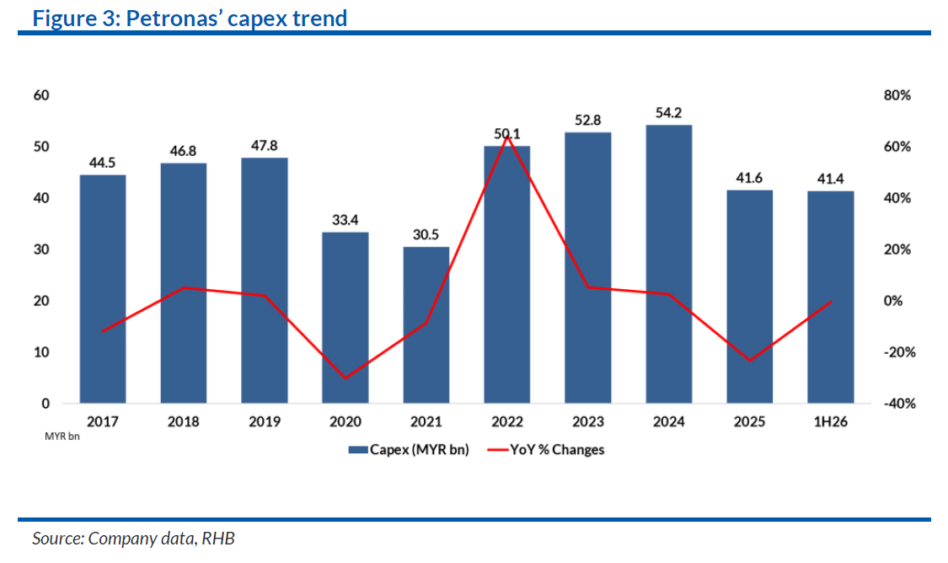
PETRONAS’ RM41.4 billion capital expenditure in 1H26 was heavily skewed towards downstream activities, including a RM26 billion injection into the Pengerang Refining and Petrochemical JV.
RHB considers upstream spending more important for Malaysia’s O&G outlook, with upstream capex rising 19% year-on-year to RM8.7 billion.
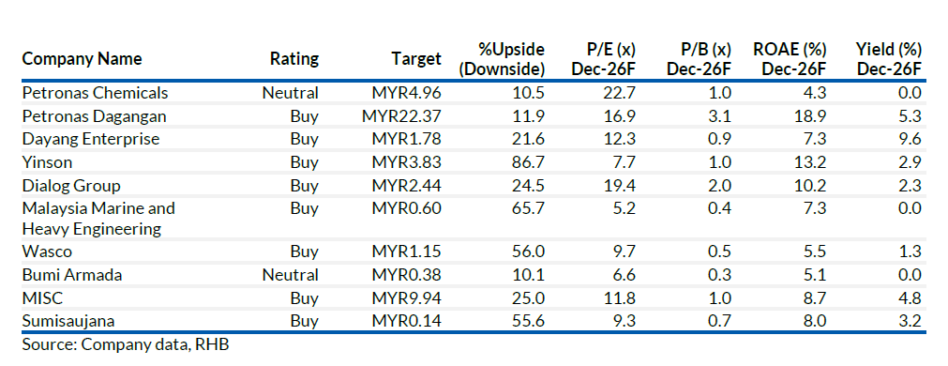
The earnings picture was mixed. MISC benefited from stronger tanker rates, higher earning days and improved margins, while Dialog recorded stronger upstream contributions.
Malaysia Marine and Heavy Engineering saw better project execution, Petronas Dagangan benefited from stronger commercial gross profit, and Sumisaujana posted better margins.
Conversely, Petronas Chemicals was affected by weaker plant utilisation and extensive turnaround activities, Dayang Enterprise faced fewer work orders and lower vessel utilisation, Bumi Armada was hit by operational disruptions and maintenance, while Wasco experienced project delays and lower deliveries.
At the group level, PETRONAS’ upstream segment remained its key earnings pillar in 1H26, with profit after tax rising 70% year-on-year to RM28.1 billion.
Gas & New Energy profit increased 60% to RM16.7 billion, supported by higher LNG and processed gas volumes, while downstream reported a RM15.2 billion loss mainly because of accounting recognition linked to a joint venture.
Excluding that item, downstream would have recorded RM7 billion in profit.
RHB also expects oil prices to remain supported by lingering physical supply constraints following the Middle East conflict.
Refinery capacity remains below pre-war levels, while repairs to damaged infrastructure could take months or years. This should keep oil, refined-product and freight markets supported even if geopolitical risk premiums ease.
Meanwhile, tanker rates remain resilient, supported by higher crude exports, longer-haul trade flows and tight vessel supply.
Petrochemical prices remain volatile, with weaker urea and ammonia prices contrasting with stronger methanol prices.
RHB’s preferred companies are MISC and Dialog Group, while weaker oil prices, softer demand and lower client spending remain key downside risks.—Sept 25, 2026
Main image: synerlitz.com.my