
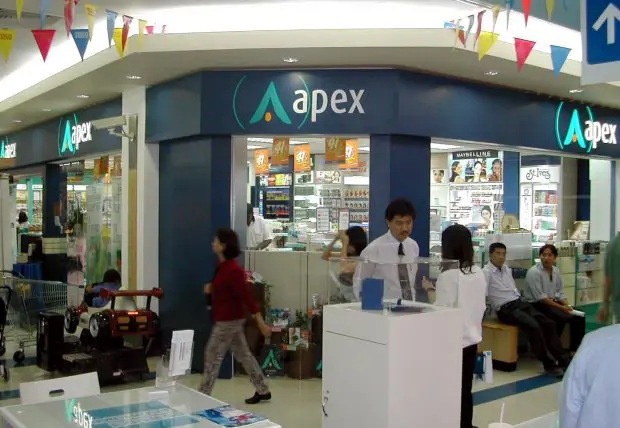
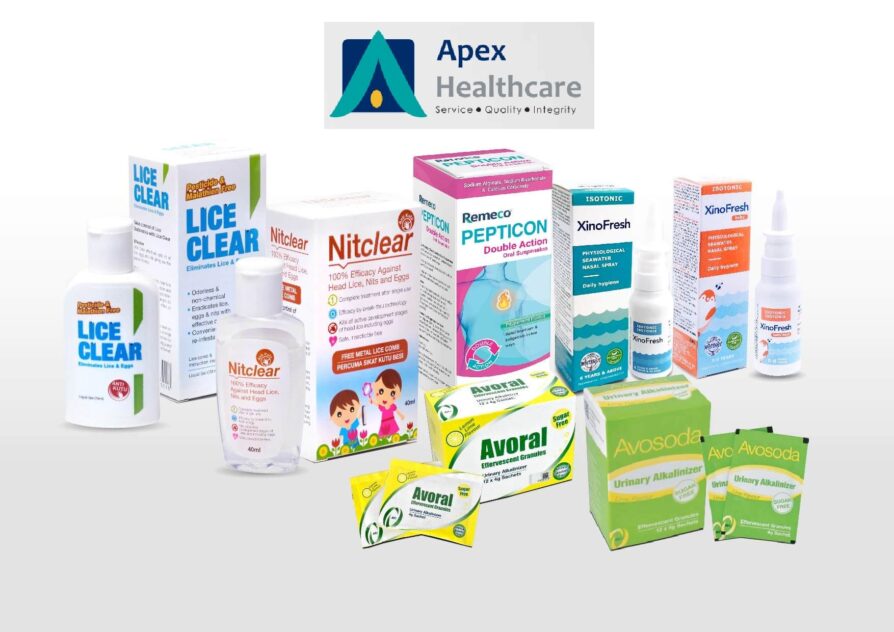
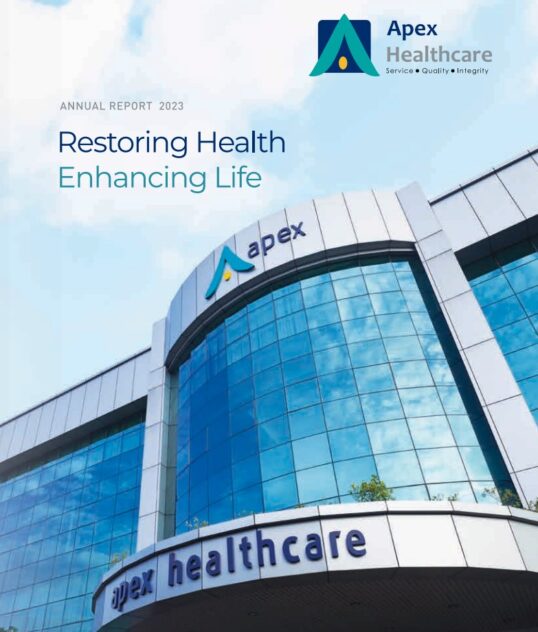
THE relatively quiet and one of Malaysia’s well-known healthcare pharmaceutical group, Apex Healthcare Bhd (Apex) came to the limelight recently as it received a conditional take-over (CTO) offer that could see it being taken private, hence marking a significant moment for Malaysia’s private healthcare sector.
Quadria Capital via its special purpose vehicle (SPV) Pharmora Investment Holdings Pte Ltd has launched a conditional voluntary general offer (VGO) to acquire the remaining ordinary shares in Apex not already held by the offeror and joint ultimate offerors (JUOs) at a cash consideration of RM2.64/share.
The offer will proceed only if Pharmora and its JUO secure at least 90% of Apex’s total shares outstanding, a threshold that is required to de-list the company from Bursa Malaysia’s Main Market.
Pharmora which is the entity making the bid is majority-controlled and led by Quadria Capital (via Quadria Capital Fund III) and is supported financially by other co-investors who are providing capital participation for the transaction.
What do we know about the deal now?
As of the date of the offer notice:
(i) Irrevocable undertakings have been secured from major shareholders representing 71.27% of Apex’s issued shares (including Apex Pharmacy Holdings Sdn Bhd, Xepa Holdings Sdn Bhd, WHSP Holdings Pty Ltd, Tan Su-Ann and Kee Kirk Chuen) to accept the offer; and
(ii) Apex chairman and CEO Dr Kee Kirk Chin and Apex Holdings Pte Ltd (APHL) as the joint ultimate offerors collectively hold about 1.76% interest in Apex.
With the undertakings secured, this will bring the offeror and JUO collective shareholdings in Apex to 73.03%.
This leaves another 16.97% to be secured and accepted by other minority shareholders to meet the 90% threshold level for the purposes of delisting from Bursa Malaysia Main Market.
Upon closing of the VGO, Dr Kee and AHPL will be disposing their entire stake in Apex to the offeror under the conditional share purchase agreement (SPA).
An entity controlled by Dr Kee, APHL will also subscribe for interest in the offeror which will give AHPL approximately 6% interest in Pharmora through a conditional share subscription deed (SSD), thus formally participating as one of the consortium members as JUO alongside Quadria Capital.

It is common in private equity-led transactions for existing shareholders who hold key management roles to be invited to retain minority stake in the business following a change of ownership to facilitate a smooth transition and ensure leadership continuity.
Does this deal make sense?
By taking it private, Apex would be positioned to operate without the constraints of a public listed company, thus being accorded with greater flexibility to pursue its strategic objectives and long-term growth plans.
This also represents an attractive opportunity for the minority shareholders of Apex to realise the value of their investment and receive liquidity at a favourable market price.
The can be a convenient avenue to cash-out their holdings, particularly as the offer price reflects a premium over the company’s recently traded market prices and volume-weighted average prices (VWAP) as detailed in the offer notice.
Moreover, independent market analysts covering the company, too, have noted that the offer is both fair and reasonable, underscoring that the proposed privatisation offer represents a timely opportunity for existing shareholders to secure a meaningful exit and not subject to future market uncertainties.
By accepting the offer, minority shareholders will also reduce the risk of being left holding shares in a potentially delisted and highly illiquid company should the offer become unconditional.
Is this a good deal?
Malaysia’s private healthcare and pharmaceutical sectors are increasingly targeted by private equity and strategic investors, highlighting the attractiveness of privatisation and merger and acquisition (M&A) or consolidation transactions.
The consortium led by Quadria Capital is particularly attractive, valuing Apex’s trailing PER at 27x.
This remains well above the three-year historical average PER (14.7x) and significantly higher than its peers (Duopharma Biotech Bhd at 12x and Pharmaniaga Bhd at 9.5x) and in line with recent acquisition of Imexpharm Corp by Livzon Pharma in Vietnam at 26.51x PER in May 2025.
Based on market consensus from analyst reports, Apex’s core earnings momentum is expected to remain largely flat in the near term, constrained by softer contributions from its associate businesses and the maturity of its core operations.
Against this backdrop, the offer provides a fair and balanced outcome, recognises Apex’s strong fundamentals, net cash position and established market franchise while compensating for limited short-term growth catalysts.

What’s next?
Given the deal structure and the substantial support has already been secured, there is a strong likelihood that the privatisation offer will go through.
The offeror and its JUO have already obtained irrevocable undertakings that will result in their shareholdings to increase to more than 73% of Apex’s current shares outstanding, leaving a minimal gap towards the 90% acceptance threshold.
If the proposed privatisation is successful, the move would offer minority shareholders an opportunity to monetise their holdings at a premium price while at the same time allowing the group to position itself for its next phase of growth under a private ownership structure.
On the contrary, remaining minority investors who choose not to accept the offer risk being trapped with illiquid, unlisted shares with no clear timeline for monetisation or a comparable future exit opportunity.
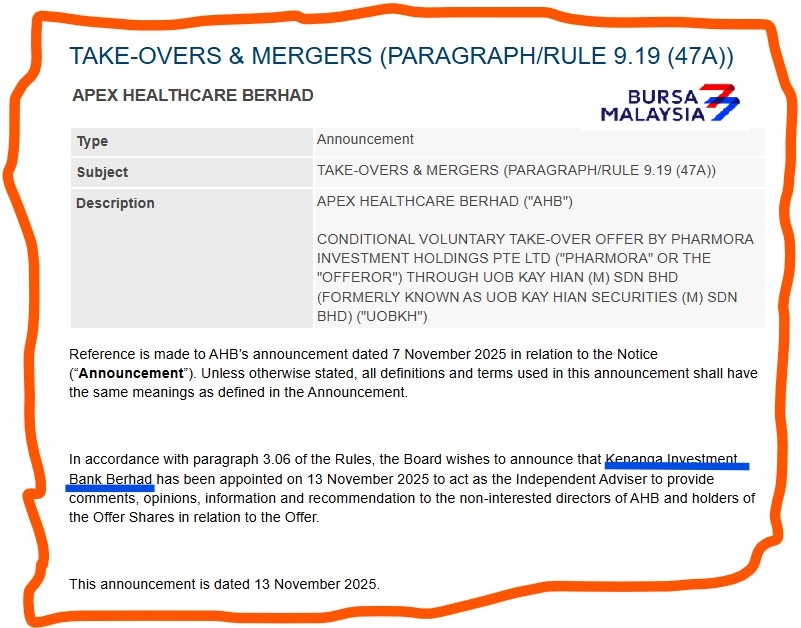
As the offeror has stated its intention to exercise its right under the Malaysian law to compulsorily acquire the remaining minority shares after the close of the offer, it may be in the best interest of minority shareholders to participate early by realising the value on attractive offer rather than waiting for the offer to achieve its unconditional status.
Conversely, if the offer fails to achieve the 90% threshold and turn unconditional, it would create an uncertainty as Apex’s share price could retrace from the current trading levels as well as below the RM2.64 offer price to reflect failure of the VGO and the premium price offered.
Without the flexibility and capital support that the privatisation offers promises, it is our opinion that Apex may face constraints in executing or pursuing its long-term expansion plans while remaining subject to quarterly market expectations.
Ultimately, the VGO provides a clean, value-maximising exit for minority shareholders and positions Apex to embark on its next growth chapter under a structure better suited for its long-term transformation.
In this context, acceptance by minority shareholders appears not only likely, due to the premium price offered but also rational and logical.
Editor’s Note: At today’s (Nov 18) mid-day trading break, Apex Healthcare was down 1 sen or 0.39% to RM2.53 with 301,100 shares traded, thus valuing the company at RM1.82 bil.
Pankaj Kumar is the managing director of Datametrics Research and Information Centre Sdn Bhd (DARE), a Malaysian think tank committed to researching and championing essential sectors in the Malaysian economy while doubling up as a research and strategy consulting firm.
The views expressed are solely of the author and do not necessarily reflect those of Focus Malaysia.